 ChipApex | Global Electronic Components Supplier

SEARCH
Search Product
Search Post
— IC芯片 | 连接器 | 传感器 | 被动器件 —
Search productSearch post
— IC芯片 | 连接器 | 传感器 | 被动器件 —
Consult the customer manager about the wholesale price.
consultation hotline:86-132-6715-2157
email:[email protected]
Contact the product manager for consultation. One-stop consultation is available.
Do you want a lower wholesale price? Please send us your inquiry and we will reply immediately.
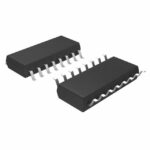
CD4021BNSRE4 is listed in the Shift Registers range at ChipApex. The manufacturer field lists Texas Instruments. Its product description is IC STATIC SHFT REG 8STG 16SO. Review the specifications below when checking this part for your BOM.
The CD4021BNSRE4 is an AC CMOS octal 3-state static shift register manufactured by Texas Instruments. It belongs to the CD4000 series and features serial-to-serial/parallel data conversion capabilities. The device operates within a supply voltage range of 3 V to 18 V and supports a maximum clock frequency of 24 MHz at 5 V. It functions across an extended temperature range from -55°C to +125°C. Packaged in a 16-pin SOIC (SOP) surface-mount format, it includes three-state outputs for bus-driven applications.
Verify the complete part number including the E4 suffix to ensure compliance with lead-free manufacturing standards. Confirm that the SOIC-16 package dimensions match your PCB footprint requirements. Check for RoHS directive compliance documentation prior to integration into regulated products. Ensure operating conditions remain within the specified voltage and temperature limits to maintain signal integrity.
Select this component when designing systems requiring reliable serial-to-parallel conversion with high noise immunity. The wide supply voltage range allows compatibility with various logic families. Consider the 24 MHz speed rating for timing-critical applications. Verify that the three-state output capability meets your bus isolation needs compared to standard logic gates.
This part is a specific variant of the CD4021B family, distinguished by its tape-and-reel packaging and lead-free construction. It serves as a fundamental building block for digital logic designs within the broader 4000-series CMOS ecosystem. The device complements other Texas Instruments logic ICs such as counters and gates for complex system architectures.
The CD4021BNSR is the non-lead-free equivalent. Other manufacturers offer pin-compatible alternatives like the MC14021B, though electrical characteristics may vary. Always consult official datasheets before substituting components to ensure functional equivalence.
Explore related parts through Logic, Integrated Circuits (ICs), all product categories, ChipApex homepage.
 CD4021BNSRE4

CD4021BNSRE4 is listed in the Shift Registers range at ChipApex. The manufacturer field lists Texas Instruments. Its product description is IC STATIC SHFT REG…
Read More
CD4021BNSRE4 is listed in the Shift Registers range at ChipApex. The manufacturer field lists Texas Instruments. Its product description is IC STATIC SHFT REG…
Read More
CD4021BNSRE4 is listed in the Shift Registers range at ChipApex. The manufacturer field lists Texas Instruments. Its product description is IC STATIC SHFT REG…
Read More
CD4021BNSRE4 is listed in the Shift Registers range at ChipApex. The manufacturer field lists Texas Instruments. Its product description is IC STATIC SHFT REG…
Read More
CD4021BNSRE4 is listed in the Shift Registers range at ChipApex. The manufacturer field lists Texas Instruments. Its product description is IC STATIC SHFT REG…
Read More
Choose a DIP switch by contact type, coded positions, footprint and signal ratings. Check logic polarity, assembly conditions and PCB configuration behavior.
Read More
CD4021BNSRE4 is listed in the Shift Registers range at ChipApex. The manufacturer field lists Texas Instruments. Its product description is IC STATIC SHFT REG…
Read More
CD4021BNSRE4 is listed in the Shift Registers range at ChipApex. The manufacturer field lists Texas Instruments. Its product description is IC STATIC SHFT REG…
Read More
CD4021BNSRE4 is listed in the Shift Registers range at ChipApex. The manufacturer field lists Texas Instruments. Its product description is IC STATIC SHFT REG…
Read More
Choose logic inverter ICs by thresholds, supply, output drive and delay. Compare standard and Schmitt-trigger inputs, power sequencing and replacement checks.
Read More
Understand how oscillators generate timing signals, how they differ from crystals, and which frequency, output and stability specs matter when choosing one.
Read More
See when an inductor behaves linearly, how DC bias and saturation reduce inductance, and which current and temperature curves to check.
Read More
The activity of extra discounts on wholesale prices is in full swing…
Please fill in your contact information and we will send you the latest wholesale price list.





