 ChipApex | Global Electronic Components Supplier

SEARCH
Search Product
Search Post
— IC芯片 | 连接器 | 传感器 | 被动器件 —
Search productSearch post
— IC芯片 | 连接器 | 传感器 | 被动器件 —
Consult the customer manager about the wholesale price.
consultation hotline:86-132-6715-2157
email:[email protected]
Contact the product manager for consultation. One-stop consultation is available.
Do you want a lower wholesale price? Please send us your inquiry and we will reply immediately.
DG406EWI+ is listed in the Analog Switches, Multiplexers, Demultiplexers range at ChipApex. The manufacturer field lists Analog Devices Inc./Maxim Integrated. Its product description is IC MUX 16:1 100OHM 28SOIC. Review the specifications below when checking this part for your BOM.
The DG406EWI+ is a CMOS analog multiplexer configured as a 1-of-16 single-ended switch. It operates with +5V to +30V single supplies or ±4.5V to ±20V dual supplies. The device features a maximum on-resistance of 100Ω, guaranteed channel matching of 8Ω, and flatness of 9Ω. Charge injection is limited to 15pC, while input off-leakage current remains below 5nA at +85°C. It provides over 2000V ESD protection and includes TTL/CMOS compatible digital inputs.
Verify the specific suffix 'EWI+' corresponds to the Wide SOIC package and -40°C to +85°C temperature range. Confirm RoHS compliance status through official manufacturer documentation. Ensure ordering details match the exact pinout and functional specifications required for the target application design.
Select this component when a 16-channel multiplexing solution is required with guaranteed resistance matching. It serves as a direct replacement for legacy DG406 units in existing designs. Consider the wide supply voltage range and bidirectional switching capabilities during circuit planning.
This part belongs to the DG406/DG407 series of improved CMOS analog multiplexers manufactured by Analog Devices / Maxim Integrated. The series offers enhanced performance characteristics compared to previous generations, specifically focusing on lower on-resistance and better channel matching for precision signal routing applications.
DG406CWI+
The maximum on-resistance (RDS(ON)) is 100Ω.
Yes, the device supports rail-to-rail signal handling across its specified operating conditions.
It features ESD protection guaranteed to be greater than 2000V per Method 3015.7 of MIL-STD-883.
Explore related parts through Interface, Integrated Circuits (ICs), all product categories, ChipApex homepage.
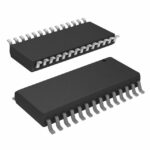 DG406EWI+

Understand tactile switches, PCB and keyboard differences, four-pin wiring, debounce, force, travel and replacement checks for reliable control inputs.
Read More
DG406EWI+ is listed in the Analog Switches, Multiplexers, Demultiplexers range at ChipApex. The manufacturer field lists Analog Devices Inc./Maxim Integrated. Its product description is…
Read More
Understand how oscillators generate timing signals, how they differ from crystals, and which frequency, output and stability specs matter when choosing one.
Read More
DG406EWI+ is listed in the Analog Switches, Multiplexers, Demultiplexers range at ChipApex. The manufacturer field lists Analog Devices Inc./Maxim Integrated. Its product description is…
Read More
Understand how a comparator switches at a voltage threshold, why hysteresis prevents chatter, and which output and input specs matter.
Read More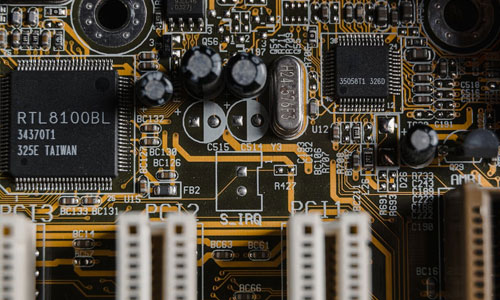
DG406EWI+ is listed in the Analog Switches, Multiplexers, Demultiplexers range at ChipApex. The manufacturer field lists Analog Devices Inc./Maxim Integrated. Its product description is…
Read More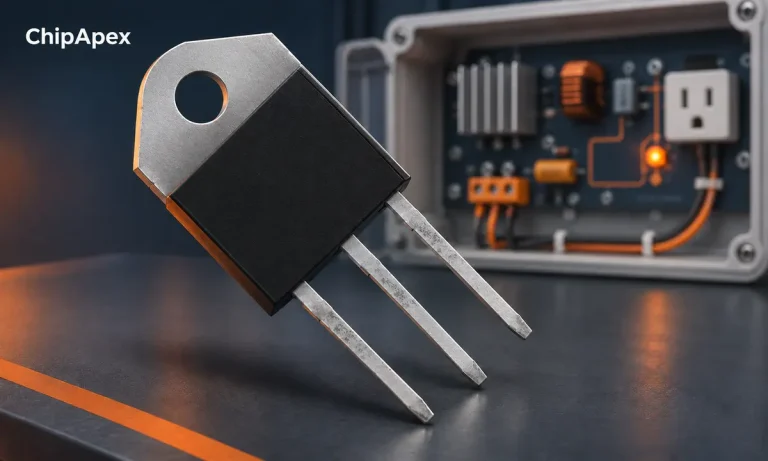
Learn how a TRIAC switches AC loads. Understand triggering, latching, holding current, phase control and thermal limits before choosing a component.
Read More
DG406EWI+ is listed in the Analog Switches, Multiplexers, Demultiplexers range at ChipApex. The manufacturer field lists Analog Devices Inc./Maxim Integrated. Its product description is…
Read More
Learn how rectifiers convert AC to DC, compare half-wave and bridge circuits, and select voltage, current, recovery and thermal ratings for your design.
Read More
DG406EWI+ is listed in the Analog Switches, Multiplexers, Demultiplexers range at ChipApex. The manufacturer field lists Analog Devices Inc./Maxim Integrated. Its product description is…
Read More
DG406EWI+ is listed in the Analog Switches, Multiplexers, Demultiplexers range at ChipApex. The manufacturer field lists Analog Devices Inc./Maxim Integrated. Its product description is…
Read More
Learn why PTC resistance rises with temperature, how it differs from NTC, and which ratings matter for sensing and protection.
Read More
The activity of extra discounts on wholesale prices is in full swing…
Please fill in your contact information and we will send you the latest wholesale price list.





