ChipApex | Global Electronic Components Supplier

SEARCH
Search Product
Search Post
— IC芯片 | 连接器 | 传感器 | 被动器件 —
Search productSearch post
— IC芯片 | 连接器 | 传感器 | 被动器件 —
Consult the customer manager about the wholesale price.
consultation hotline:86-132-6715-2157
email:[email protected]
Contact the product manager for consultation. One-stop consultation is available.
Do you want a lower wholesale price? Please send us your inquiry and we will reply immediately.
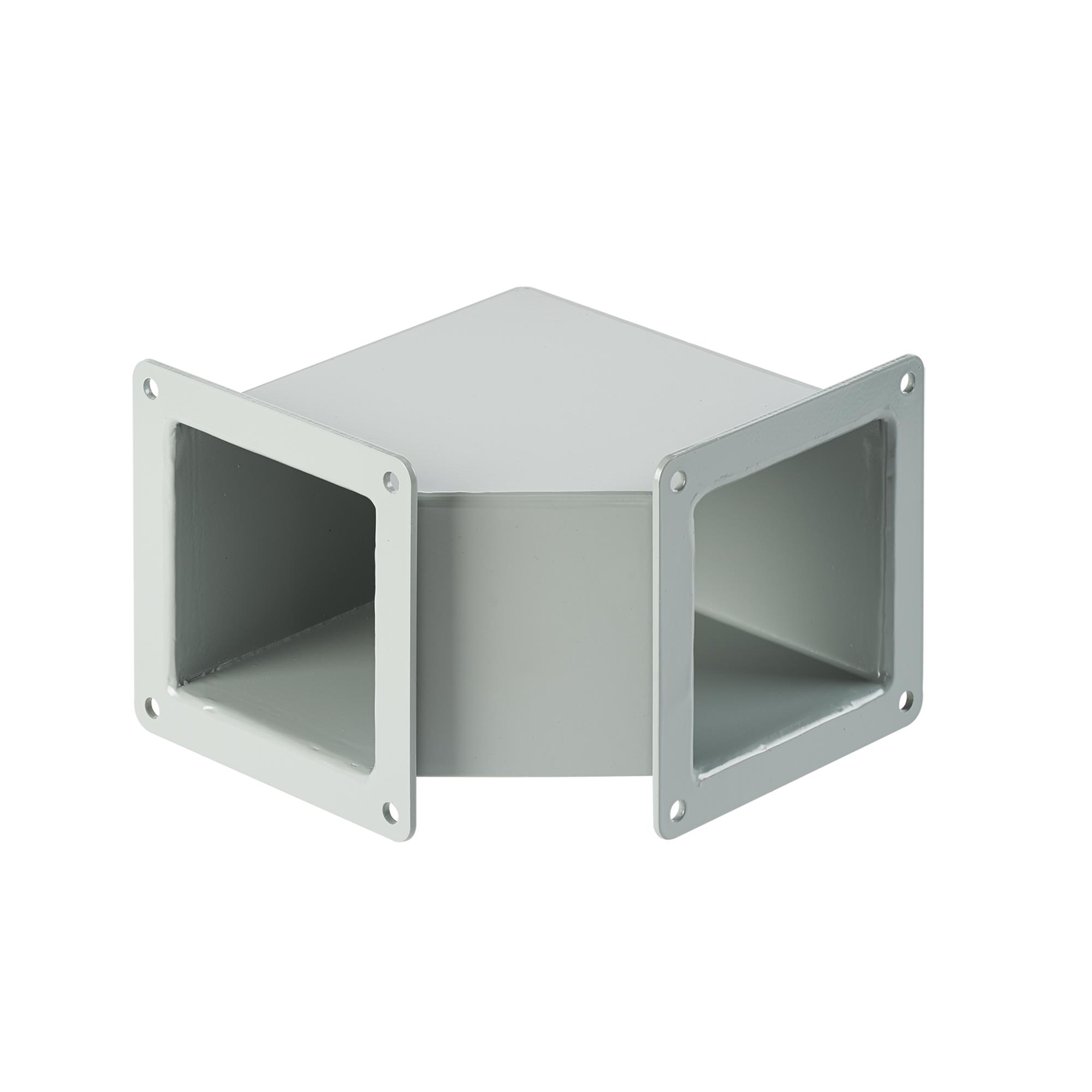
The Hoffman F44WE90 is a 90-degree elbow fitting designed for feed-through wireway systems. It features a 4.00 x 4.00 inch internal cross-section and is constructed from mild steel with a 14-gauge body and 10-gauge end flanges. The component is finished with an ANSI 61 gray polyester powder paint on both interior and exterior surfaces over a pre-treated base. This design facilitates continuous cable runs requiring directional changes while maintaining structural integrity and environmental protection consistent with NEMA 12 standards.
Verify the specific part number F44WE90 against official nVent Hoffman documentation to confirm compatibility with existing 4x4 inch wireway infrastructure. Ensure that the required bend angle and material specifications align with project engineering drawings. Cross-reference the ANSI 61 finish requirement with site-specific environmental conditions. Confirm that the 14-gauge body and 10-gauge flange construction meets the mechanical load requirements of the installation location.
Select this component when a 90-degree transition is required within a 4x4 inch feed-through wireway network. The mild steel construction provides necessary durability for indoor industrial settings. The ANSI 61 gray finish ensures visual consistency with other Hoffman wireway components. Consider the 14-gauge body strength and 10-gauge flange rigidity for secure connections. This fitting is suitable for applications where cable protection and organized routing are prioritized over outdoor exposure resistance.
This elbow fitting belongs to the Hoffman wireway accessories family, specifically designed to complement straight wireway segments. It serves as a critical connector for creating complex cable routing paths within electrical distribution systems. The product is manufactured by nVent Hoffman, a provider of enclosure and cable management solutions. Its design focuses on seamless integration with standard 4x4 inch wireway dimensions, ensuring uniform appearance and reliable performance in controlled indoor environments.
Public confirmed substitute part numbers are not available in the provided source data.
 F44WE90

Find out when a bare shock switch needs a pull resistor, when an MCU internal pull-up is enough, and why sensor modules and piezo…
Read More
PLANO, Texas – March 20, 2026 – Diodes Incorporated (Nasdaq: DIOD), a leading global manufacturer and supplier of high-quality application-specific standard products in the…
Read More
The rapid advancement of artificial intelligence (AI) is transforming industries across the globe, and the world of electronic components is no exception. From smarter…
Read More
Hsinchu, Taiwan – April 18, 2026 – United Microelectronics Corporation (UMC, NYSE: UMC), a leading global semiconductor foundry specializing in mature process technologies, has…
Read More
Explore electronic component types, functions, packages and datasheets. Learn selection, replacement and BOM checks before ordering parts for your PCB.
Read More
Recently, the global electronic component market has witnessed a series of new developments. The strategic layouts and market collaborations of major enterprises are constantly…
Read More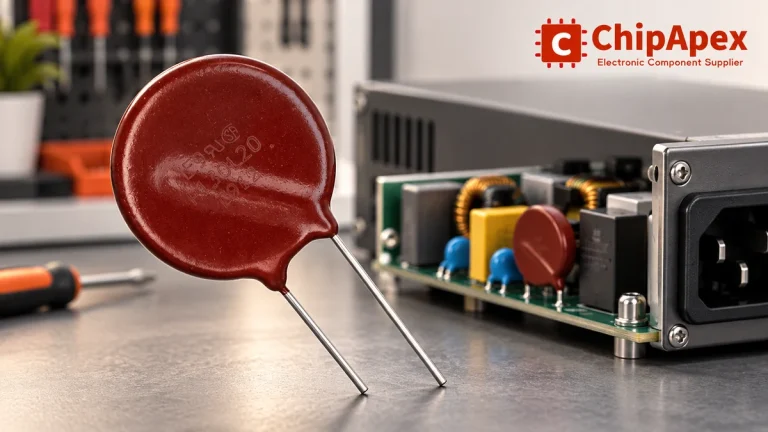
Select MOV varistors by continuous voltage, clamping behavior, surge waveform and repetition. Check thermal disconnection, fuse coordination and replacements.
Read More
ON Semiconductor (onsemi), a global leader in intelligent power and sensing technologies, has announced plans to implement price adjustments for select product lines, effective…
Read More
Selecting the right microcontroller (MCU) isn’t just about specs—it’s about balancing performance, power, cost, and supply chain reliability. As an engineer, you’ve probably faced…
Read More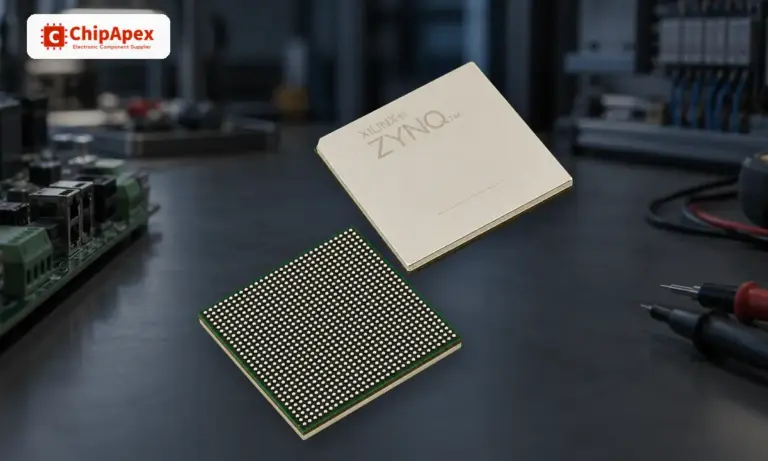
Learn what an integrated circuit is, how ICs work, the main types and the specs to check before choosing a part for your design…
Read More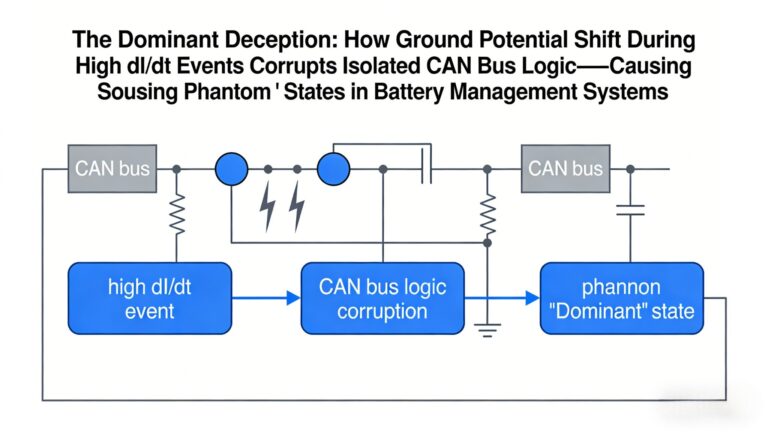
Stay ahead with ChipApex Insights — technical deep dives, market trends, and sourcing tips for memory, microcontrollers, power management, and industrial-grade components. Trusted by…
Read More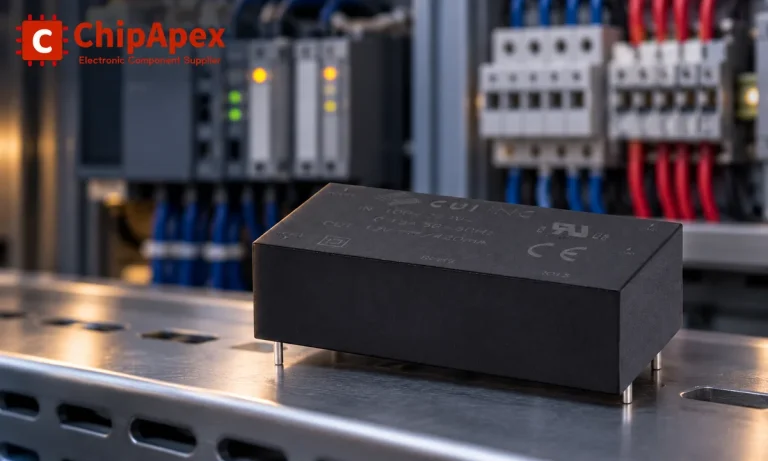
Choose an AC to DC converter by input range, output demand, isolation, efficiency and thermal derating. Compare architectures and check installation needs.
Read More
The activity of extra discounts on wholesale prices is in full swing…
Please fill in your contact information and we will send you the latest wholesale price list.