ChipApex | Global Electronic Components Supplier

SEARCH
Search Product
Search Post
— IC芯片 | 连接器 | 传感器 | 被动器件 —
Search productSearch post
— IC芯片 | 连接器 | 传感器 | 被动器件 —
Consult the customer manager about the wholesale price.
consultation hotline:86-132-6715-2157
email:[email protected]
Contact the product manager for consultation. One-stop consultation is available.
Do you want a lower wholesale price? Please send us your inquiry and we will reply immediately.
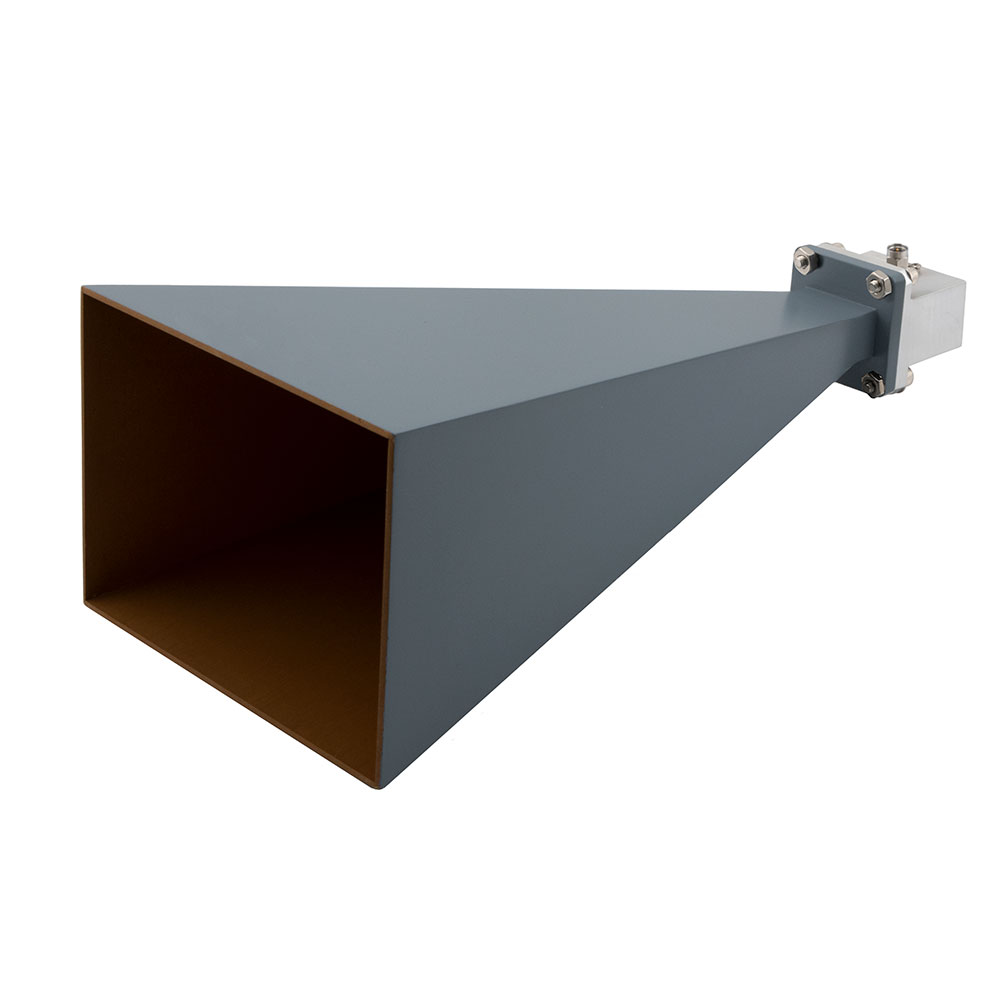
FMWAN102-20SM is listed in the Antennas RF range at ChipApex. The manufacturer field lists Fairview Microwave. Its product description is WG ANTENNA WG COAX ADAPT WR-102-. Review the specifications below when checking this part for your BOM.
The FMWAN102-20SM is a standard gain horn antenna manufactured by Fairview Microwave, designed for WR-102 waveguide applications. It features an SMA male connector and delivers a nominal gain of 20 dBi across the 7 GHz to 11 GHz frequency range. The unit operates with a voltage standing wave ratio (VSWR) of 1.3, ensuring efficient signal transmission. This component serves as a general-purpose antenna solution for microwave systems requiring precise directional radiation patterns within the specified band.
Verify that the SMA male connector type matches your receiving equipment interface requirements. Confirm that the WR-102 waveguide dimensions align with your mounting infrastructure. Ensure operational frequencies fall strictly within the 7 GHz to 11 GHz range to maintain specified gain and VSWR performance levels during procurement validation.
Select this model when a fixed-gain, high-directivity source is required for WR-102 band operations. The SMA male connector simplifies integration with standard coaxial test gear. Consider environmental factors if outdoor use is intended, as standard gain horns typically require protective enclosures for non-laboratory settings compared to specialized weatherproof variants.
This antenna belongs to Fairview Microwave's WR-102 standard gain horn series, which provides consistent performance across the 7–11 GHz band. The product line includes variations with different connectors, such as N-type male options, allowing flexibility in system integration while maintaining identical radiating element characteristics and waveguide compatibility.
The FMWAN102-20NF serves as a direct substitute offering identical WR-102 specifications but utilizes an N-type male connector instead of SMA. Both models share the same 20 dBi gain and 7–11 GHz frequency range, differing only in the interface termination type for system compatibility.
Explore related parts through RF and Wireless, all product categories, ChipApex homepage.
 FMWAN102-20SM

FMWAN102-20SM is listed in the Antennas RF range at ChipApex. The manufacturer field lists Fairview Microwave. Its product description is WG ANTENNA WG COAX…
Read More
FMWAN102-20SM is listed in the Antennas RF range at ChipApex. The manufacturer field lists Fairview Microwave. Its product description is WG ANTENNA WG COAX…
Read More
FMWAN102-20SM is listed in the Antennas RF range at ChipApex. The manufacturer field lists Fairview Microwave. Its product description is WG ANTENNA WG COAX…
Read More
FMWAN102-20SM is listed in the Antennas RF range at ChipApex. The manufacturer field lists Fairview Microwave. Its product description is WG ANTENNA WG COAX…
Read More
FMWAN102-20SM is listed in the Antennas RF range at ChipApex. The manufacturer field lists Fairview Microwave. Its product description is WG ANTENNA WG COAX…
Read More
FMWAN102-20SM is listed in the Antennas RF range at ChipApex. The manufacturer field lists Fairview Microwave. Its product description is WG ANTENNA WG COAX…
Read More
FMWAN102-20SM is listed in the Antennas RF range at ChipApex. The manufacturer field lists Fairview Microwave. Its product description is WG ANTENNA WG COAX…
Read More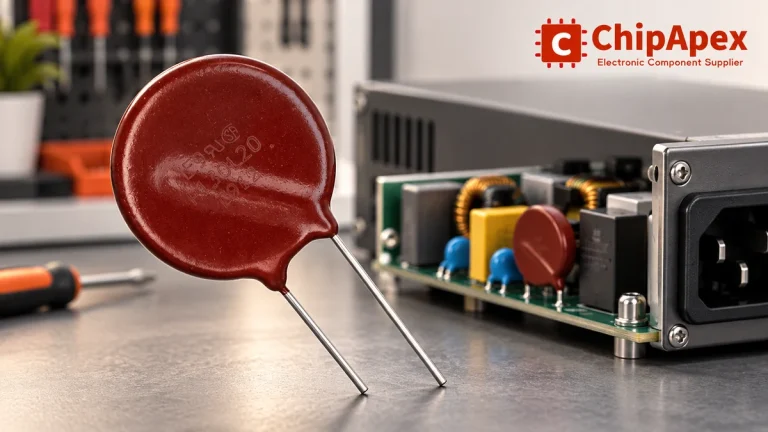
Select MOV varistors by continuous voltage, clamping behavior, surge waveform and repetition. Check thermal disconnection, fuse coordination and replacements.
Read More
Learn how a pressure transducer converts pressure into voltage, current, or digital output, and compare pressure references and key selection specs.
Read More
FMWAN102-20SM is listed in the Antennas RF range at ChipApex. The manufacturer field lists Fairview Microwave. Its product description is WG ANTENNA WG COAX…
Read More
Compare thermistors, RTDs, thermocouples and temperature ICs. Learn how range, accuracy, response, interfaces and mounting affect component selection.
Read More
Learn why PTC resistance rises with temperature, how it differs from NTC, and which ratings matter for sensing and protection.
Read More
The activity of extra discounts on wholesale prices is in full swing…
Please fill in your contact information and we will send you the latest wholesale price list.