 ChipApex | Global Electronic Components Supplier

SEARCH
Search Product
Search Post
— IC芯片 | 连接器 | 传感器 | 被动器件 —
Search productSearch post
— IC芯片 | 连接器 | 传感器 | 被动器件 —
The trend of science and technology is changing rapidly.
A positive temperature coefficient (PTC) thermistor is a resistor whose resistance rises as its temperature rises. Depending on its material and curve, that change can be gradual or very steep around a transition temperature. Designers use PTC parts for temperature sensing, current limiting, and certain protection functions, but the types are not interchangeable.
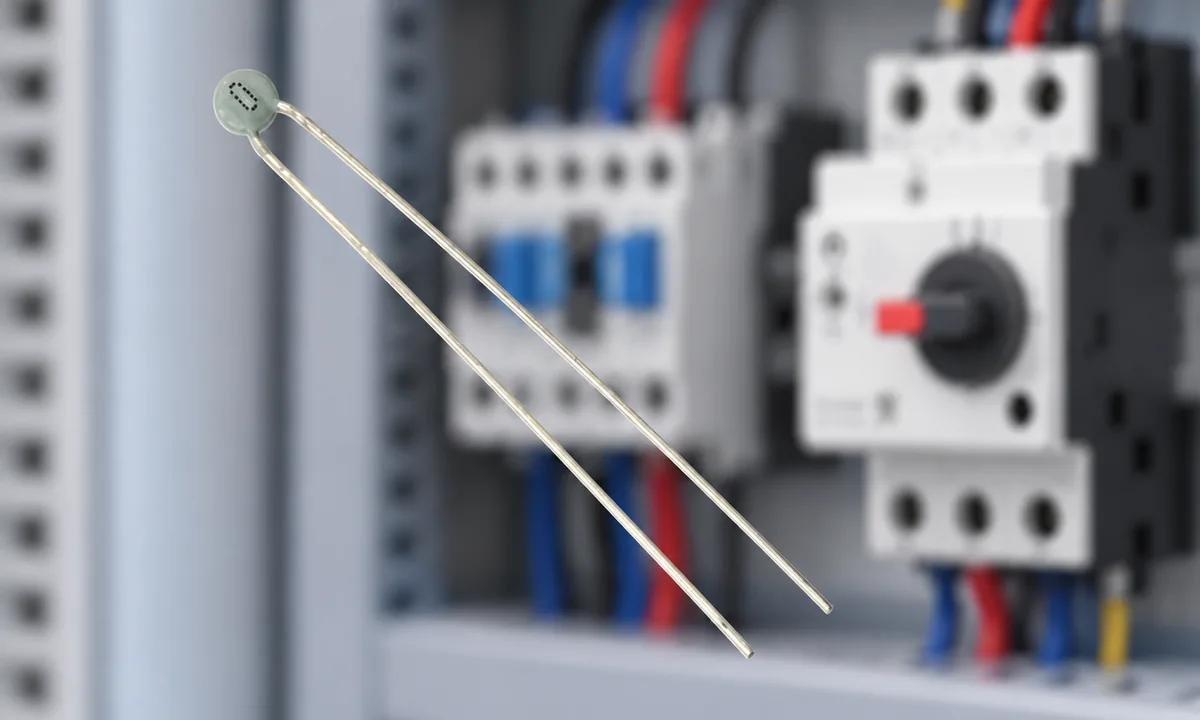
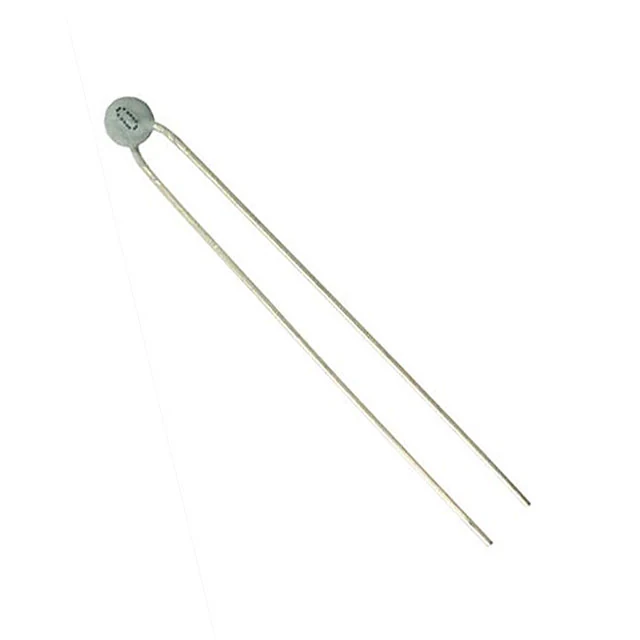
At a given ambient temperature, the part has a specified resistance. Heating changes that resistance. Current through the part also produces heat, so a series PTC can respond to an overload by moving toward a higher-resistance state. Its behavior depends on ambient temperature, board layout, voltage, and available fault current. The ptc resistors category helps locate candidate parts, while the individual resistance-temperature and current curves determine suitability.
An NTC thermistor's resistance generally falls as temperature rises; a PTC's rises. Both can serve sensing roles, but their circuits and calibration differ. If you are comparing designs, review the ChipApex ntc thermistor range separately rather than swapping one type into an existing network.
In a motor-control panel, a PTC element may help detect winding temperature or protect a circuit, depending on the selected device and how it is connected. In a power-input path, a protection-oriented PTC can limit current after heating. Neither example means the component can replace a correctly rated fuse, breaker, or thermal cutout. Follow the specific safety design and manufacturer ratings.
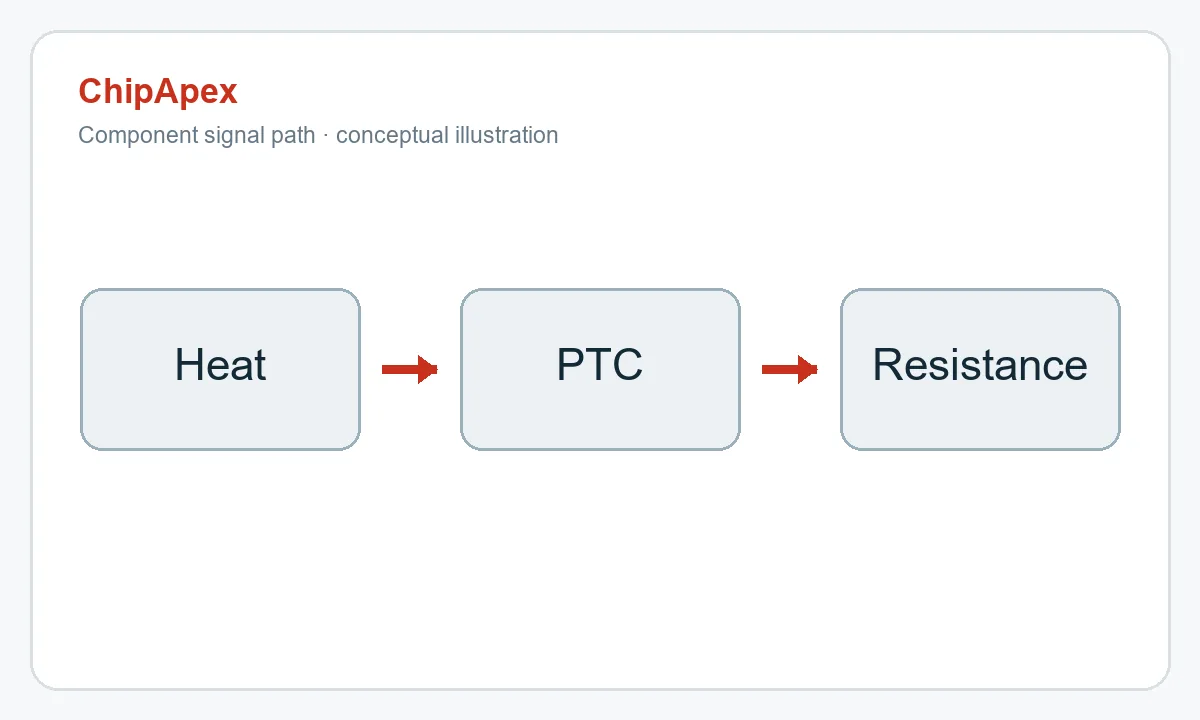
Decide whether the part is for sensing, limiting, or protection. Compare resistance at the relevant temperatures, response curve, maximum voltage, allowable current, trip behavior where specified, recovery conditions, package, and ambient range. A sensing PTC and a protection part can look similar in a photograph while behaving very differently. Share the operating conditions with ChipApex before choosing an alternative.
Many protection-oriented PTC parts return toward their lower-resistance state after power is removed and they cool. The recovery conditions vary by part and circuit.
It can limit current in a fault, but it is not automatically an approved substitute for a fuse. Verify the required protection standard and fault behavior.
Yes, when the circuit is designed to interpret its resistance-temperature curve and limits self-heating enough for the required accuracy.
The part starts closer to or farther from its transition region depending on ambient temperature, changing the heat needed to reach a high-resistance state.
PTC resistance rises with temperature; NTC resistance falls. The curve and intended application matter more than the acronym alone.
Discover how NOR flash enables fast code execution in embedded systems, its key types (Parallel/SPI), and how to source authentic, traceable ICs from trusted suppliers.
View details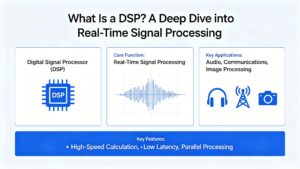
Learn how DSPs (Digital Signal Processors) enable real-time audio, industrial motor control, 5G communications & medical imaging. Compare DSP vs MCU, choose fixed vs floating-point DSPs, and source authentic DSP chips at ChipApex.
View details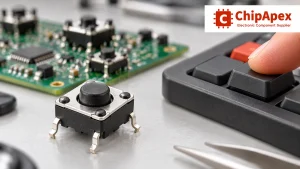
Choose tactile switches by operating force, travel, actuator height, footprint and lifetime. Check debounce, sealing and the assembled button mechanism.
View details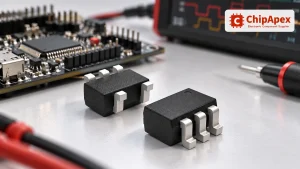
Choose logic inverter ICs by thresholds, supply, output drive and delay. Compare standard and Schmitt-trigger inputs, power sequencing and replacement checks.
View details
The activity of extra discounts on wholesale prices is in full swing…
Please fill in your contact information and we will send you the latest wholesale price list.

