ChipApex | Global Electronic Components Supplier

SEARCH
Search Product
Search Post
— IC芯片 | 连接器 | 传感器 | 被动器件 —
Search productSearch post
— IC芯片 | 连接器 | 传感器 | 被动器件 —
Consult the customer manager about the wholesale price.
consultation hotline:86-132-6715-2157
email:[email protected]
Contact the product manager for consultation. One-stop consultation is available.
Do you want a lower wholesale price? Please send us your inquiry and we will reply immediately.
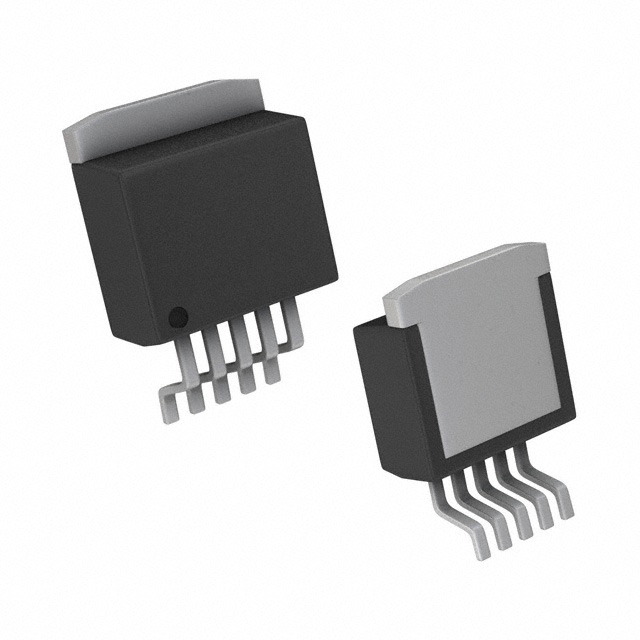
LM2596S-ADJ is listed in the Voltage Regulators - DC DC Switching Regulators range at ChipApex. The manufacturer field lists Texas Instruments. Its product description is IC REG BUCK ADJ 3A TO263. Review the specifications below when checking this part for your BOM.
The LM2596S-ADJ is a SIMPLE SWITCHER power converter from Texas Instruments, functioning as a 150 kHz step-down voltage regulator. It operates with an input voltage range of 4.5 V to 40 V and provides an adjustable output voltage between 1.2 V and 37 V. The device supports a maximum output current of 3 A and utilizes a buck topology. Housed in a TO-263-5 surface-mount package, it is designed for efficient DC-DC conversion within an operating temperature range of -40 °C to +125 °C.
Verify the suffix NOPB indicates lead-free and RoHS compliance when sourcing. Confirm the specific package variant matches the required PCB footprint. Ensure the supplier source aligns with Texas Instruments authorized distribution channels to guarantee component authenticity and traceability.
Select this model for applications requiring an adjustable output voltage up to 37 V with a 3 A load capacity. The TO-263 package offers a balance of thermal performance and surface-mount convenience. Consider the 150 kHz switching frequency when sizing external inductors and capacitors for optimal efficiency and ripple reduction.
This component belongs to the LM2596 series of SIMPLE SWITCHER converters. It shares core architecture with fixed-output variants like the LM2596S-5.0 but allows user-defined output levels via external feedback resistors. The 'S' designation specifically identifies the TO-263 surface-mount package form factor.
LM2596S-ADJ/NOPB serves as the direct lead-free replacement for the non-compliant LM2596S-ADJ variant. Cross-referencing with other SIMPLE SWITCHER family members requires verification of pin compatibility and thermal characteristics.
Explore related parts through Power Management (PMIC), Integrated Circuits (ICs), all product categories, ChipApex homepage.
 LM2596S-ADJ

LM2596S-ADJ is listed in the Voltage Regulators - DC DC Switching Regulators range at ChipApex. The manufacturer field lists Texas Instruments. Its product description…
Read More
Choose a DIP switch by contact type, coded positions, footprint and signal ratings. Check logic polarity, assembly conditions and PCB configuration behavior.
Read More
LM2596S-ADJ is listed in the Voltage Regulators - DC DC Switching Regulators range at ChipApex. The manufacturer field lists Texas Instruments. Its product description…
Read More
LM2596S-ADJ is listed in the Voltage Regulators - DC DC Switching Regulators range at ChipApex. The manufacturer field lists Texas Instruments. Its product description…
Read More
LM2596S-ADJ is listed in the Voltage Regulators - DC DC Switching Regulators range at ChipApex. The manufacturer field lists Texas Instruments. Its product description…
Read More
LM2596S-ADJ is listed in the Voltage Regulators - DC DC Switching Regulators range at ChipApex. The manufacturer field lists Texas Instruments. Its product description…
Read More
LM2596S-ADJ is listed in the Voltage Regulators - DC DC Switching Regulators range at ChipApex. The manufacturer field lists Texas Instruments. Its product description…
Read More
LM2596S-ADJ is listed in the Voltage Regulators - DC DC Switching Regulators range at ChipApex. The manufacturer field lists Texas Instruments. Its product description…
Read More
Compare thermistors, RTDs, thermocouples and temperature ICs. Learn how range, accuracy, response, interfaces and mounting affect component selection.
Read More
LM2596S-ADJ is listed in the Voltage Regulators - DC DC Switching Regulators range at ChipApex. The manufacturer field lists Texas Instruments. Its product description…
Read More
LM2596S-ADJ is listed in the Voltage Regulators - DC DC Switching Regulators range at ChipApex. The manufacturer field lists Texas Instruments. Its product description…
Read More
Learn what an IMU measures, how accelerometers and gyroscopes work together, why orientation estimates drift, and what to compare.
Read More
The activity of extra discounts on wholesale prices is in full swing…
Please fill in your contact information and we will send you the latest wholesale price list.