 ChipApex | Global Electronic Components Supplier

SEARCH
Search Product
Search Post
— IC芯片 | 连接器 | 传感器 | 被动器件 —
Search productSearch post
— IC芯片 | 连接器 | 传感器 | 被动器件 —
Consult the customer manager about the wholesale price.
consultation hotline:86-132-6715-2157
email:[email protected]
Contact the product manager for consultation. One-stop consultation is available.
Do you want a lower wholesale price? Please send us your inquiry and we will reply immediately.
PT7C4337AWE is listed in the Real Time Clock range at ChipApex. The manufacturer field lists Diodes Incorporated. Its product description is IC RTC CLK/CALENDAR I2C 8SOIC. Review the specifications below when checking this part for your BOM.
The PT7C4337A is a Real-time Clock (RTC) module manufactured by Diodes Incorporated. It features an I2C bus interface and supports both 12-hour and 24-hour time formats with a century bit. The device requires an external 32.768kHz crystal connected to X1 and X2 pins. Operating voltage ranges from 1.2V to 5.5V, with a recommended supply of 1.8V to 5.5V. Key electrical parameters include a maximum active current of 150µA at 3.6V–5.5V and a typical timekeeping current of 450nA at 1.3V–1.8V. The component is marked as obsolete.
This part number is officially designated as obsolete by the manufacturer. Customers are required to use the replacement parts RT3A3240N3 or RT3A3241N instead. Verification of the specific package suffix (e.g., WEX for SOIC-8) is necessary when sourcing legacy inventory or evaluating substitutes.
Select the PT7C4337A only if legacy compatibility is strictly required, noting its obsolete status. For new designs, utilize the specified replacements RT3A3240N3 or RT3A3241N. Ensure the design accommodates an external 32.768kHz crystal and provides appropriate pull-up resistors for the SDA, SCL, INTA, and SQW/INTB open-drain pins.
The PT7C4337A belongs to the PT7C4337 series of RTC modules. It is functionally similar to the PT7C4337AC, which integrates the crystal oscillator internally, whereas the PT7C4337A requires an external crystal. Both share identical register maps and I2C interfaces.
The datasheet explicitly states to use RT3A3240N3 and RT3A3241N as replacements for this obsolete part.
No, the PT7C4337A requires an external 32.768kHz crystal connected between the X1 and X2 pins. The PT7C4337AC variant includes an integrated crystal.
The maximum SCL clock frequency is 400 kHz.
It supports two independent alarms (Alarm 1 and Alarm 2), which can be routed to the INTA and SQW/INTB pins via the INTCN control bit.
Explore related parts through Clock/Timing, Integrated Circuits (ICs), all product categories, ChipApex homepage.
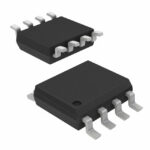 PT7C4337AWE
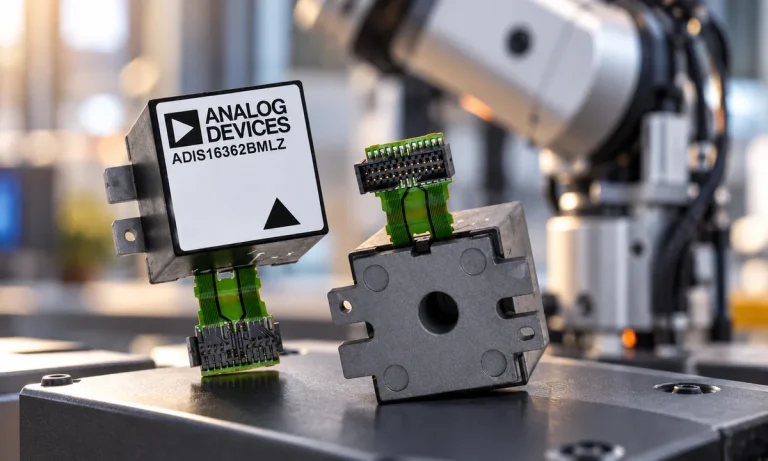
Learn what an IMU measures, how accelerometers and gyroscopes work together, why orientation estimates drift, and what to compare.
Read More
PT7C4337AWE is listed in the Real Time Clock range at ChipApex. The manufacturer field lists Diodes Incorporated. Its product description is IC RTC CLK/CALENDAR…
Read More
PT7C4337AWE is listed in the Real Time Clock range at ChipApex. The manufacturer field lists Diodes Incorporated. Its product description is IC RTC CLK/CALENDAR…
Read More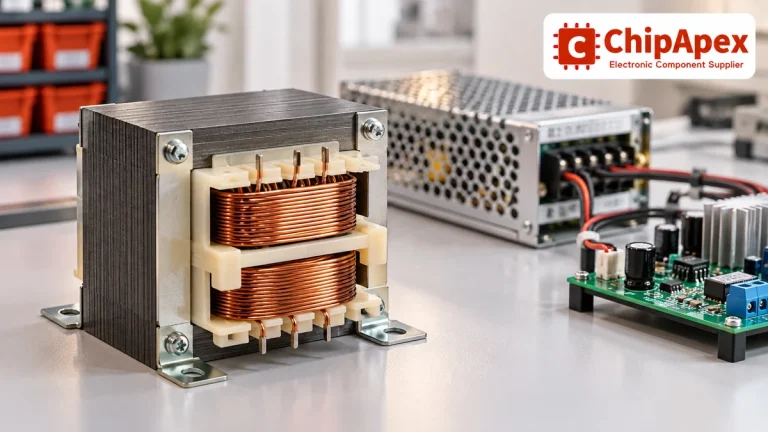
Select power transformers by input frequency, secondary VA, rectifier load, isolation, regulation and inrush. Build a clearer specification for your next RFQ.
Read MorePT7C4337AWE is listed in the Real Time Clock range at ChipApex. The manufacturer field lists Diodes Incorporated. Its product description is IC RTC CLK/CALENDAR…
Read More
PT7C4337AWE is listed in the Real Time Clock range at ChipApex. The manufacturer field lists Diodes Incorporated. Its product description is IC RTC CLK/CALENDAR…
Read More
PT7C4337AWE is listed in the Real Time Clock range at ChipApex. The manufacturer field lists Diodes Incorporated. Its product description is IC RTC CLK/CALENDAR…
Read More
PT7C4337AWE is listed in the Real Time Clock range at ChipApex. The manufacturer field lists Diodes Incorporated. Its product description is IC RTC CLK/CALENDAR…
Read More
PT7C4337AWE is listed in the Real Time Clock range at ChipApex. The manufacturer field lists Diodes Incorporated. Its product description is IC RTC CLK/CALENDAR…
Read More
PT7C4337AWE is listed in the Real Time Clock range at ChipApex. The manufacturer field lists Diodes Incorporated. Its product description is IC RTC CLK/CALENDAR…
Read More
PT7C4337AWE is listed in the Real Time Clock range at ChipApex. The manufacturer field lists Diodes Incorporated. Its product description is IC RTC CLK/CALENDAR…
Read More
Learn how a diode conducts, how to identify anode and cathode, and when to choose rectifier, TVS, Zener or photodiode types for a circuit.
Read More
The activity of extra discounts on wholesale prices is in full swing…
Please fill in your contact information and we will send you the latest wholesale price list.





