 ChipApex | Global Electronic Components Supplier

SEARCH
Search Product
Search Post
— IC芯片 | 连接器 | 传感器 | 被动器件 —
Search productSearch post
— IC芯片 | 连接器 | 传感器 | 被动器件 —
The trend of science and technology is changing rapidly.
A diode is a two-terminal component that conducts more readily in one direction than the other. In a conventional diode, current flows from anode to cathode when it is forward biased and the circuit meets the device's operating conditions. Reverse bias greatly reduces current until the part's limits or intended breakdown behavior become relevant.
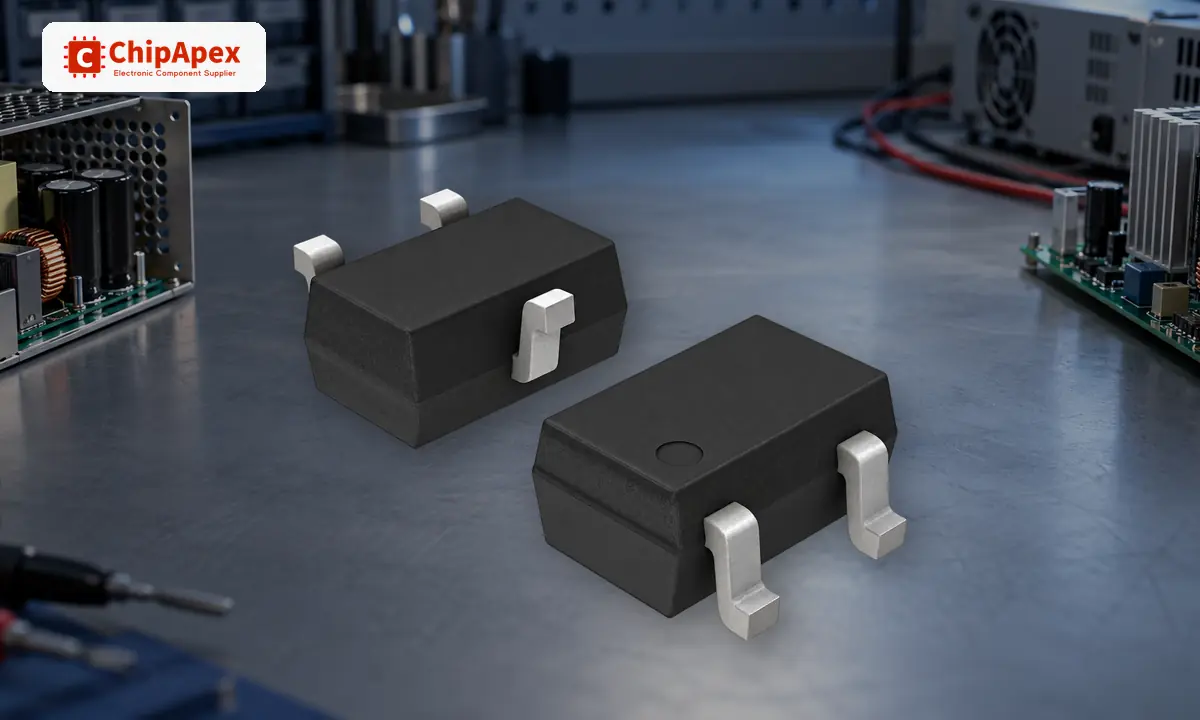
A standard semiconductor diode has a junction between two differently doped regions. Forward bias lowers the barrier to current flow; reverse bias widens the barrier and limits current. This is a useful circuit model, though real devices still have forward voltage drop and reverse leakage. Toshiba's diode explanation describes these operating states in more detail.
The stripe on many packaged diodes marks the cathode, but markings and pinouts must be checked against the actual datasheet. An image cannot establish the electrical rating of a component. ChipApex's diode category contains several device families with different jobs.
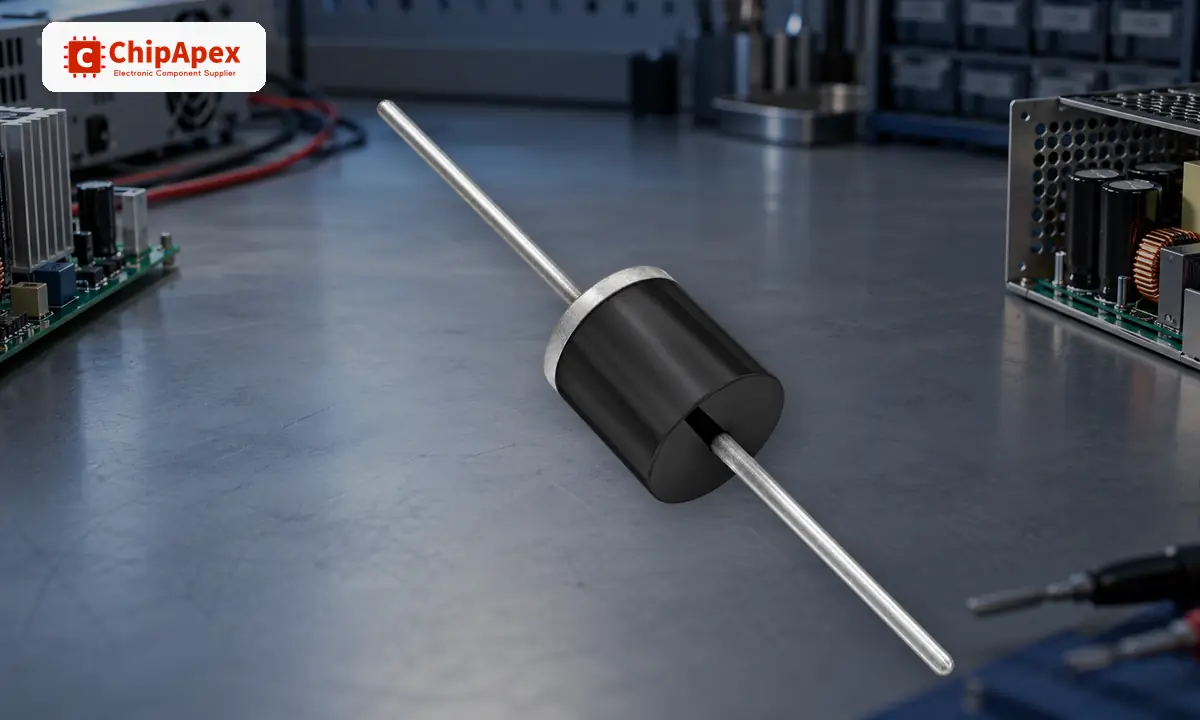
Rectification changes an alternating current waveform into a unidirectional output; a rectifier is chosen with current, reverse-voltage, surge, and thermal limits in mind. A protection diode can route or clamp an unwanted transient. A tvs diode is designed for transient suppression, but its clamping and surge ratings must suit the protected line.
A zener diode operates in a specified reverse-breakdown region for voltage reference or regulation functions. A photodiode responds to light and belongs in an optical sensing circuit. They are all diodes, yet selecting one by the generic name misses the purpose of each type.
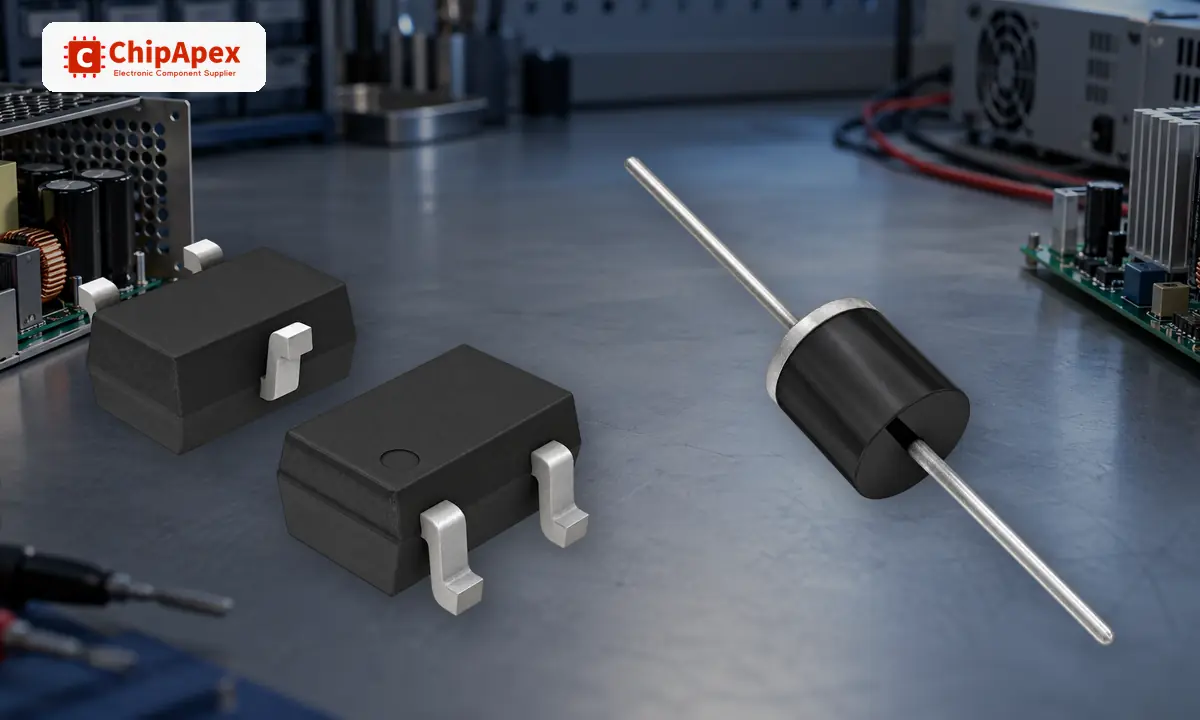
Identify the anode and cathode from the datasheet symbol and package drawing. Then check repetitive reverse voltage, average and peak forward current, forward voltage at the operating current, power dissipation, and temperature limits. Switching applications may also need reverse-recovery or capacitance data. Protection circuits require the relevant surge waveform and clamping figures.
The often-quoted 0.7 V forward drop is only a rough illustration for some silicon PN junctions at certain currents. It is not a universal design value, especially for Schottky, LED, or high-current devices. Calculate heat using the applicable datasheet curve and the circuit's actual current.
A replacement must suit the circuit's function and footprint. Compare voltage, current, forward drop, switching behavior, surge rating, package thermal path, and pin orientation. A device with a higher voltage rating is not automatically a safe substitute if its speed or forward loss differs.
For a ChipApex sourcing request, send the full manufacturer part number, quantity, operating conditions, and whether qualified alternates are acceptable. This gives the team enough context to compare a candidate part against the original application.
Conventional current flows from anode to cathode during forward conduction. Electrons move in the opposite direction. Use the circuit symbol and the part's datasheet when orienting a package on a board.
No. Real diodes have reverse leakage, and excessive reverse voltage can cause breakdown. Some diodes are intentionally used in a controlled reverse-breakdown region.
No. Forward voltage changes with diode type, current, and temperature. Use the manufacturer's curve at the relevant operating point.
A rectifier is selected to conduct the normal operating current in a power-conversion path. A TVS diode is selected to handle brief overvoltage transients and protect a line.
A diode can be part of a reverse-polarity protection circuit. The circuit must account for forward loss, expected current, heat, and what happens under the wrong connection.
A comparator checks which of two input voltages is higher and changes its output state accordingly. It is useful when an analog signal must trigger a clear decision, such as an overvoltage warning or sensor threshold. Its input range, output type,...
View details
Practical MCU selection guide for engineers: compare STM32, ESP32 & NXP, avoid counterfeits, and ensure supply chain reliability. Authored by ChipApex FAE.
View details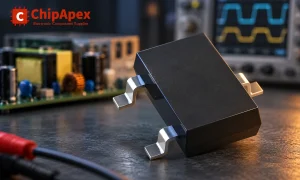
Learn how rectifiers convert AC to DC, compare half-wave and bridge circuits, and select voltage, current, recovery and thermal ratings for your design.
View details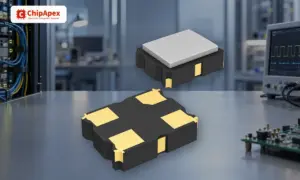
Understand how oscillators generate timing signals, how they differ from crystals, and which frequency, output and stability specs matter when choosing one.
View details
The activity of extra discounts on wholesale prices is in full swing…
Please fill in your contact information and we will send you the latest wholesale price list.

