 ChipApex | Global Electronic Components Supplier

SEARCH
Search Product
Search Post
— IC芯片 | 连接器 | 传感器 | 被动器件 —
Search productSearch post
— IC芯片 | 连接器 | 传感器 | 被动器件 —
Consult the customer manager about the wholesale price.
consultation hotline:86-132-6715-2157
email:[email protected]
Contact the product manager for consultation. One-stop consultation is available.
Do you want a lower wholesale price? Please send us your inquiry and we will reply immediately.
The VSRAF-08-10-50-00-N is a rectangular military specification receptacle from the AirBorn verSI series, manufactured by Molex. It features a 0.050-inch (1.27mm) pitch with a plastic body and right-angle orientation. The connector utilizes press-fit termination for board mounting and includes fixed jacknuts to accommodate a maximum board thickness of 0.125 inches. This specific model provides 20 columns and 10 rows, resulting in a total of 200 circuits. It complies with MIL-DTL-83513 standards.
Verify the exact suffix against official Molex/AirBorn documentation to confirm material composition and termination style. Ensure compatibility with mating plugs regarding column and row counts. Confirm that the press-fit pins align with PCB drill patterns. Check for any specific environmental certifications required by the end application. Validate that the fixed jacknut design meets the mechanical constraints of the target chassis or backplane assembly.
Select this component when MIL-DTL-83513 compliance is mandatory for the project. Choose the plastic body variant if weight reduction or non-conductive housing is preferred over metal alternatives. Ensure the 0.050-inch pitch matches the existing PCB layout density requirements. Verify that the right-angle form factor fits within the available spatial constraints of the enclosure design.
This part belongs to the AirBorn verSI series, which specializes in high-density rectangular connectors for demanding environments. The series offers various configurations including metal and plastic bodies with different termination options. The VSRAF designation indicates a receptacle with specific row and column arrangements tailored for high circuit count applications in military and aerospace sectors.
Cross-reference with other VSRAF models sharing the same 200-circuit configuration but differing in body material or termination type. Verify mechanical fitment with existing mounting hardware before substitution.
 VSRAF-08-10-50-00-N

Learn how a pressure transducer converts pressure into voltage, current, or digital output, and compare pressure references and key selection specs.
Read More
Learn the relay definition, coil and contact operation, NO and NC forms, load ratings and suppression choices. Compare mechanical, reed and solid-state types.
Read More
Over the past week, the global electronic components sector has witnessed dual transformations in policy and technology: Coupled with mounting pressure from a worsening…
Read More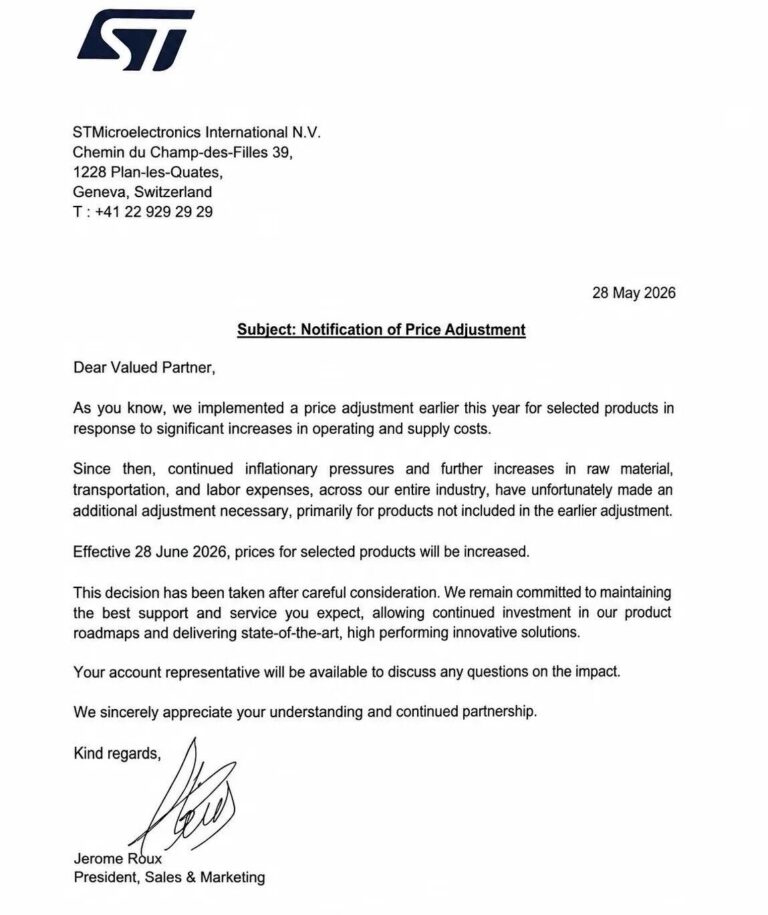
STMicroelectronics (ST), a global leader in semiconductor manufacturing, has officially notified customers of a new round of price increases for selected products, set to…
Read More
The global memory market is entering an unprecedented supply-constrained phase as soaring demand from artificial intelligence (AI) infrastructure collides with strategic capacity reallocations by…
Read More
Recently, global semiconductor manufacturers have been constantly taking actions and presenting numerous new developments in aspects such as process technology and product research and…
Read More
Recently, global semiconductor manufacturers have been constantly making moves in aspects such as technological cooperation, product manufacturing processes, and market layout, demonstrating the rapid…
Read More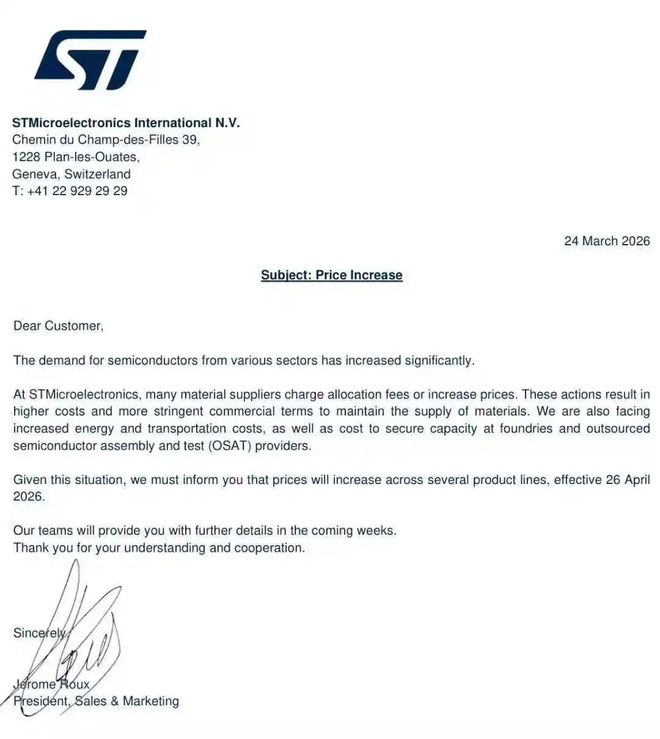
Geneva, Switzerland – March 25, 2026 – STMicroelectronics N.V. (NYSE: STM), a global semiconductor leader serving customers across the electronics applications spectrum, has announced…
Read More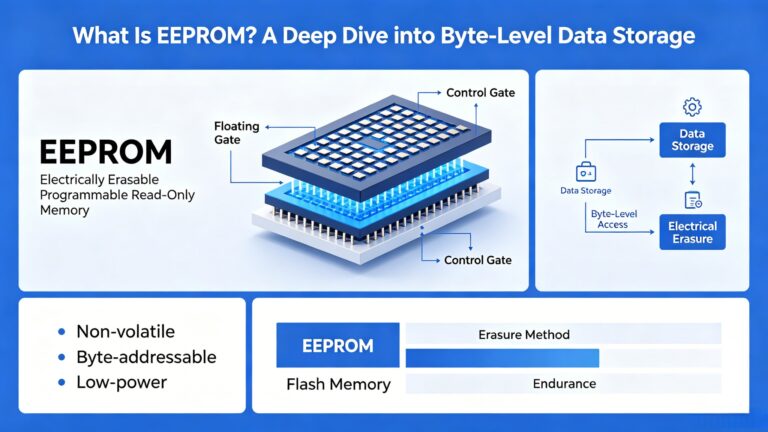
In the vast landscape of memory technology, EEPROM (Electrically Erasable Programmable Read-Only Memory) often plays the unsung hero. While NAND Flash grabs headlines for…
Read More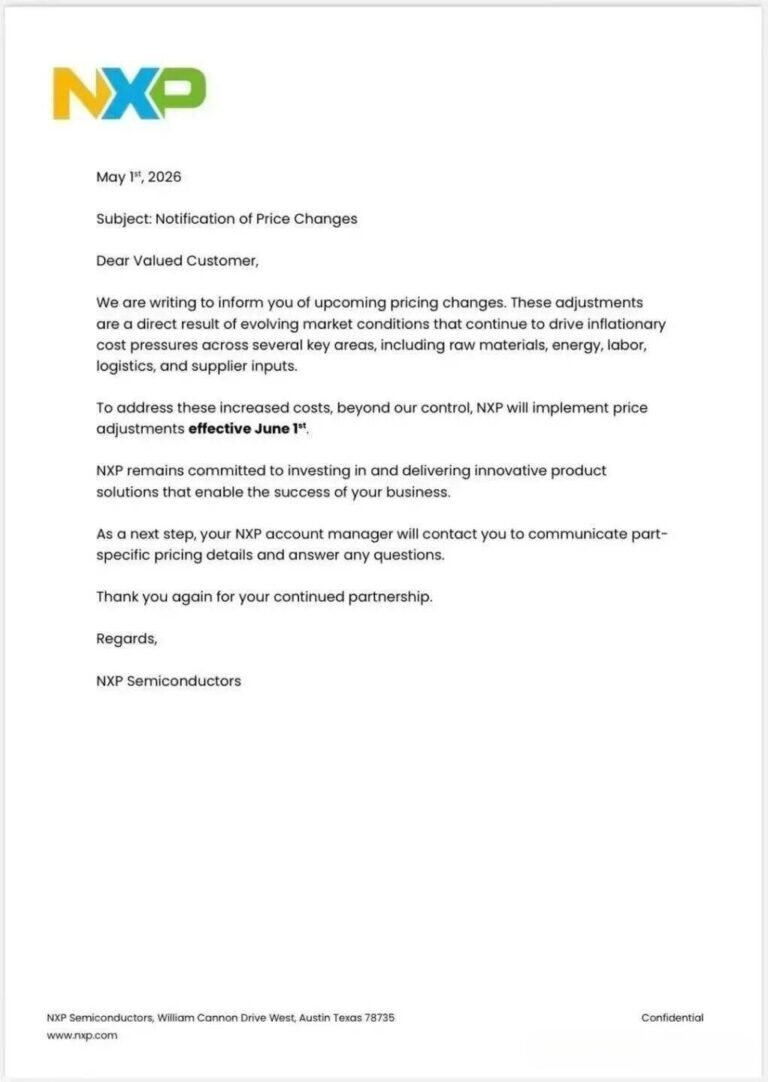
May 8, 2026 – Eindhoven, Netherlands NXP Semiconductors (NXPI), a global leader in automotive and industrial semiconductor solutions, has officially notified its worldwide channel…
Read More
September 16, 2026 – Global — Leading semiconductor manufacturer ON Semiconductor (onsemi, NASDAQ: ON) has officially issued a formal price adjustment letter to global…
Read More
Learn why PTC resistance rises with temperature, how it differs from NTC, and which ratings matter for sensing and protection.
Read More
The activity of extra discounts on wholesale prices is in full swing…
Please fill in your contact information and we will send you the latest wholesale price list.




