 ChipApex | Global Electronic Components Supplier

SEARCH
Search Product
Search Post
— IC芯片 | 连接器 | 传感器 | 被动器件 —
Search productSearch post
— IC芯片 | 连接器 | 传感器 | 被动器件 —
The trend of science and technology is changing rapidly.
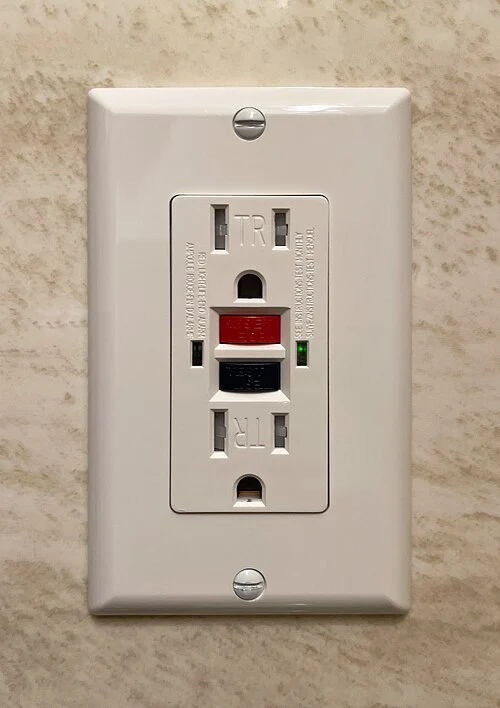
A standard circuit breaker responds to overloads and short circuits. A ground-fault circuit interrupter, or GFCI, senses current leaving the intended return path and opens the circuit to reduce shock risk. If a branch circuit needs both protections, a GFCI circuit breaker provides them in one listed device within its rated application.
An overload means a circuit is carrying more current than intended over time. A short circuit can produce a much larger current quickly. A typical thermal-magnetic breaker responds to these conditions using time-dependent and rapid trip mechanisms. The trip curve and interrupting rating tell you how a specific breaker is designed to behave.
A GFCI compares currents flowing through the monitored conductors. In a simple single-phase example, 5.000 A leaves through the hot conductor and 4.994 A returns through the neutral. The difference is 6 mA. That imbalance is a possible ground-fault signal even though 5 A is below the rating of a typical branch breaker. The numbers illustrate the sensing principle. Use the device’s listing and specifications to determine the required trip behavior. The CPSC GFCI fact sheet explains why ground faults matter for shock protection.
| Device | Detects or protects against | Typical role |
|---|---|---|
| Standard branch breaker | Overload and short circuit | Protects the branch wiring within its ratings |
| GFCI receptacle | Ground-fault current imbalance | Protects the receptacle and can protect compatible downstream outlets when correctly installed |
| GFCI circuit breaker | Overcurrent and ground-fault imbalance | Combines branch overcurrent and GFCI protection at the panel |
| Dual-function AFCI/GFCI breaker | Overcurrent, specified arcing conditions and ground-fault imbalance | Used where both protective functions are required and the device is approved |
A receptacle with GFCI protection still depends on branch overcurrent protection. A ground-fault protective device for equipment can have different thresholds from a personnel-protection GFCI. Verify the marking and listing before assuming a device covers either use.
Start with the protection objective. Determine whether the system needs branch overcurrent protection, personnel ground-fault protection, equipment ground-fault protection, arc-fault protection, or more than one. Identify the rated voltage, load, number of poles, prospective fault current and installation conditions.
For panel devices, verify the equipment manufacturer’s approved breaker type and the required listing. A breaker that physically fits is insufficient evidence of panel compatibility. Product listings can also distinguish personnel protection from equipment protection and specify test procedures. For installation or diagnosis, use the applicable local rules and a qualified electrician. ChipApex’s circuit protection can help identify component categories for a bill of materials.
A product called a GFCI can be a receptacle, a breaker or an electronic sensing component intended for integration into a finished assembly. For a North American branch circuit, establish the protection required and check the listing of the finished device. Other regions use terms such as RCD or RCBO with their own product requirements. Treat the terminology as a starting point and verify the actual application. OSHA explanation of GFCIs
| Example condition | What the monitored currents show | Relevant protection |
|---|---|---|
| Balanced overload | Line and return currents can be equal while both are too high | Branch overcurrent protection |
| Leakage away from the monitored return | Line and return currents differ even at modest total load | Ground-fault protection |
| Direct contact between line and neutral | Some shock paths can leave line and return balanced | A GFCI may not detect that shock path |
In the example above, a 6 mA difference illustrates current imbalance. A mathematical difference alone does not establish when a specific device will trip. Check the product’s tolerance, fault duration and listing. A TEST button, a self-test label and a sensing chip refer to different things. The finished device must meet its applicable requirements, and a controller or sensing IC does not carry over the listing of a complete receptacle or breaker.
For procurement, record where protection is required, what it protects, the voltage and load, and the approved equipment type. Verify panel compatibility and the interrupting rating where applicable. For a tripping or wiring issue, leave the protection in service and have a qualified electrician diagnose the circuit.
A GFCI receptacle provides ground-fault protection and still needs appropriate upstream overcurrent protection. A listed GFCI circuit breaker combines both functions within its stated ratings.
In North American terminology, Class A identifies a personnel-protection GFCI category. Check the device marking and listing for applicable requirements. Equipment ground-fault protection serves a different purpose and may use a different threshold.
A small leakage current may cause a detectable imbalance while the branch remains below the overcurrent breaker’s trip range. Repeated operation calls for a qualified diagnosis of the load or wiring.
It detects an imbalance. A shock path between the monitored line and neutral may return current through the neutral and may not produce the imbalance the GFCI is designed to detect.
Use the device label and listing. AFCIs and dual-function devices can also have a test button. Follow the identified product’s instructions for the test procedure.
For a ChipApex sourcing inquiry, provide the required protective function, voltage, current rating, applicable listing, original part number and quantity.

Choose LED drivers by current, string voltage, dimming and thermal limits. Understand constant-current operation and the checks needed for your load.
View details
Compare momentary and latching push button switches. Check NO/NC contacts, micro-load current, illumination terminals, panel fit and replacement requirements.
View details
Learn how an IGBT works, compare MOSFET and IGBT losses, and check switching energy, gate drive, thermal limits and protection using a worked example.
View details
Select power transformers by input frequency, secondary VA, rectifier load, isolation, regulation and inrush. Build a clearer specification for your next RFQ.
View details
The activity of extra discounts on wholesale prices is in full swing…
Please fill in your contact information and we will send you the latest wholesale price list.

