 ChipApex | Global Electronic Components Supplier

SEARCH
Search Product
Search Post
— IC芯片 | 连接器 | 传感器 | 被动器件 —
Search productSearch post
— IC芯片 | 连接器 | 传感器 | 被动器件 —
Consult the customer manager about the wholesale price.
consultation hotline:86-132-6715-2157
email:[email protected]
Contact the product manager for consultation. One-stop consultation is available.
Do you want a lower wholesale price? Please send us your inquiry and we will reply immediately.
18QHTF21-37.300-OE is listed in the Oscillators range at ChipApex. The manufacturer field lists Mercury Electronics Ind. Co. Ltd. Its product description is 37.3 MHz XO 1.8V 2.0X1.6 MM OE. Review the specifications below when checking this part for your BOM.
The 18QHTF21-37.300-OE is a standard crystal oscillator manufactured by Mercury Electronics Ind. Co. Ltd. It operates at a frequency of 37.3 MHz and utilizes LVCMOS output logic. The device supports a supply voltage of 1.8V and includes an enable/disable control function. It is housed in a compact 4-SMD, no lead package designed for surface mount applications.
Verify the specific operating temperature range and load capacitance requirements against your circuit design before procurement. Ensure that the 1.8V supply voltage aligns with your system's power rails. Confirm that the LVCMOS output levels are compatible with the receiving logic inputs to prevent signal integrity issues during operation.
Select this component when a 37.3 MHz reference clock is required within a low-voltage 1.8V environment. The choice is driven by the need for a small footprint via the 4-SMD package and the necessity for active control over the oscillator state through the enable pin. Consider thermal performance if operating near the upper temperature limits.
This part belongs to the 18QHTF21 series of surface mount oscillators from Mercury Electronics. The series typically offers various frequencies and voltage options. The 'OE' suffix often denotes specific packaging or tape-and-reel configurations, though exact details require datasheet confirmation. This model represents a standard XO variant within the manufacturer's portfolio.
Direct substitutes must match the 37.3 MHz frequency, 1.8V supply, LVCMOS output, and 4-SMD package dimensions. Verify pinout compatibility and electrical characteristics such as current consumption and stability before swapping. Cross-reference with other manufacturers offering similar SMD oscillators if availability is constrained.
Explore related parts through Crystals, Oscillators, Resonators, all product categories, ChipApex homepage.
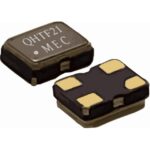 18QHTF21-37.300-OE

Learn how rectifiers convert AC to DC, compare half-wave and bridge circuits, and select voltage, current, recovery and thermal ratings for your design.
Read More
18QHTF21-37.300-OE is listed in the Oscillators range at ChipApex. The manufacturer field lists Mercury Electronics Ind. Co. Ltd. Its product description is 37.3 MHz…
Read More
18QHTF21-37.300-OE is listed in the Oscillators range at ChipApex. The manufacturer field lists Mercury Electronics Ind. Co. Ltd. Its product description is 37.3 MHz…
Read More
18QHTF21-37.300-OE is listed in the Oscillators range at ChipApex. The manufacturer field lists Mercury Electronics Ind. Co. Ltd. Its product description is 37.3 MHz…
Read More
Learn what an integrated circuit is, how ICs work, the main types and the specs to check before choosing a part for your design…
Read More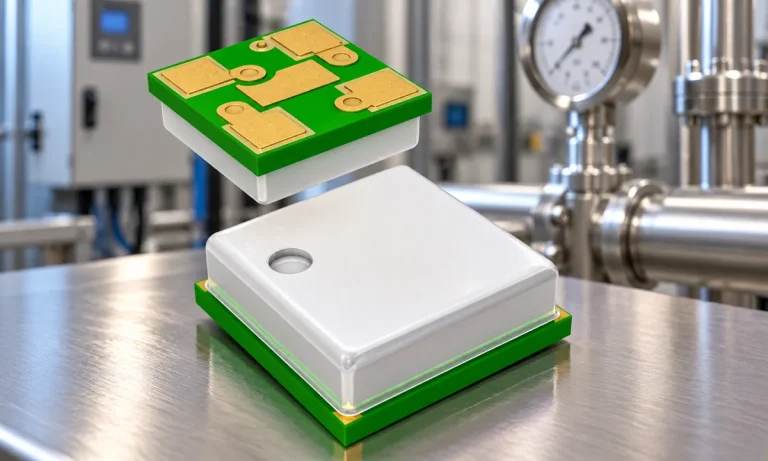
Learn how a pressure transducer converts pressure into voltage, current, or digital output, and compare pressure references and key selection specs.
Read More
18QHTF21-37.300-OE is listed in the Oscillators range at ChipApex. The manufacturer field lists Mercury Electronics Ind. Co. Ltd. Its product description is 37.3 MHz…
Read More
18QHTF21-37.300-OE is listed in the Oscillators range at ChipApex. The manufacturer field lists Mercury Electronics Ind. Co. Ltd. Its product description is 37.3 MHz…
Read More
18QHTF21-37.300-OE is listed in the Oscillators range at ChipApex. The manufacturer field lists Mercury Electronics Ind. Co. Ltd. Its product description is 37.3 MHz…
Read More
18QHTF21-37.300-OE is listed in the Oscillators range at ChipApex. The manufacturer field lists Mercury Electronics Ind. Co. Ltd. Its product description is 37.3 MHz…
Read More
18QHTF21-37.300-OE is listed in the Oscillators range at ChipApex. The manufacturer field lists Mercury Electronics Ind. Co. Ltd. Its product description is 37.3 MHz…
Read More
Find out when a bare shock switch needs a pull resistor, when an MCU internal pull-up is enough, and why sensor modules and piezo…
Read More
The activity of extra discounts on wholesale prices is in full swing…
Please fill in your contact information and we will send you the latest wholesale price list.




