 ChipApex | Global Electronic Components Supplier

SEARCH
Search Product
Search Post
— IC芯片 | 连接器 | 传感器 | 被动器件 —
Search productSearch post
— IC芯片 | 连接器 | 传感器 | 被动器件 —
Consult the customer manager about the wholesale price.
consultation hotline:86-132-6715-2157
email:[email protected]
Contact the product manager for consultation. One-stop consultation is available.
Do you want a lower wholesale price? Please send us your inquiry and we will reply immediately.
Phoenix Contact part number 1944631 is a pluggable terminal block from the MSTBVA 2.5/6-G-RN series, designed for PCB socket applications. It features a single row with six positions and a 5 mm pitch. The component utilizes spring-cage connection technology for secure wiring. Rated for 400 V nominal voltage, it supports wire cross-sections ranging from 0.08 mm² to 2.5 mm². The housing is green, and the unit is intended for through-hole mounting on printed circuit boards.
Verify the specific ordering suffix matches the required insulation color and pin configuration. Confirm that the spring-cage mechanism aligns with the target wire gauge range. Ensure compatibility with mating plugs from the same COMBI series family. Check technical datasheets for peak current ratings under specific ambient temperature conditions before finalizing procurement.
Select this model when a six-position, 5 mm pitch terminal block is required for PCB mounting. The spring-cage connection offers vibration resistance suitable for industrial environments. Consider the 400 V rating and 2.5 mm² maximum cross-section against load requirements. Verify that the green housing color meets visual coding standards for the installation site.
This component belongs to the Phoenix Contact COMBICON M series, specifically the MSTBVA variant. These connectors are standardized according to IEC 61984 for use in low-voltage power distribution and signal transmission. The product line emphasizes modular expansion capabilities and robust mechanical stability for permanent PCB installations.
Direct substitutes must maintain the 6-position count, 5 mm pitch, and spring-cage interface. Verify that alternative models support the same 400 V rating and 2.5 mm² wire capacity. Ensure physical dimensions allow for identical PCB footprint replacement without board modification.
The component supports flexible wires up to 2.5 mm² and rigid wires up to 2.5 mm².
Yes, it is designed to mate with COMBI series plugs according to IEC 61984 standards.
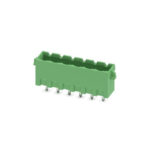 1944631

The Dutch government’s intervention in the control of Nexperia (Anshi Semiconductor) is triggering a chain reaction of turmoil in the global power semiconductor market.…
Read More
Learn why PTC resistance rises with temperature, how it differs from NTC, and which ratings matter for sensing and protection.
Read More
Learn how a diode conducts, how to identify anode and cathode, and when to choose rectifier, TVS, Zener or photodiode types for a circuit.
Read More
Munich, Germany – February 8, 2026 — Infineon Technologies, the German semiconductor giant, officially issued a price increase notice on February 5, announcing that…
Read More
A perfect storm of surging demand and supply chain disruptions is roiling the global electronic components market, with advanced semiconductors and critical materials now…
Read More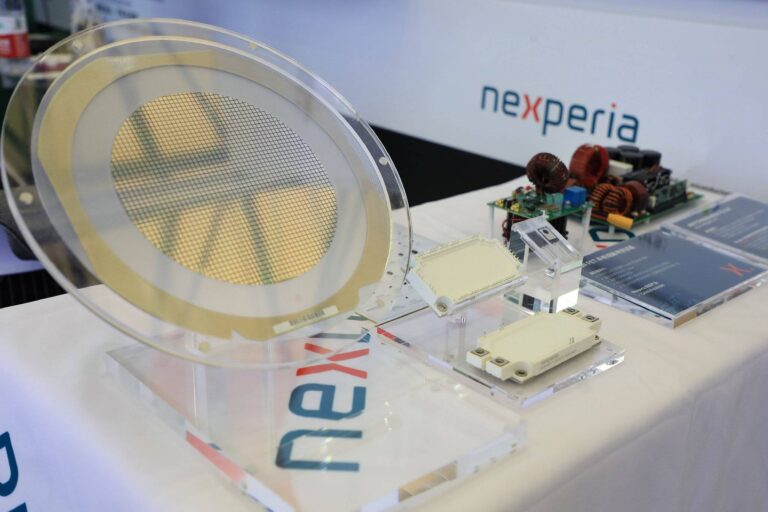
Dutch authorities announced on November 7 the lifting of control measures on Nexperia (formerly NXP Semiconductors’ Standard Products division), marking the end of a…
Read More
Understand how oscillators generate timing signals, how they differ from crystals, and which frequency, output and stability specs matter when choosing one.
Read More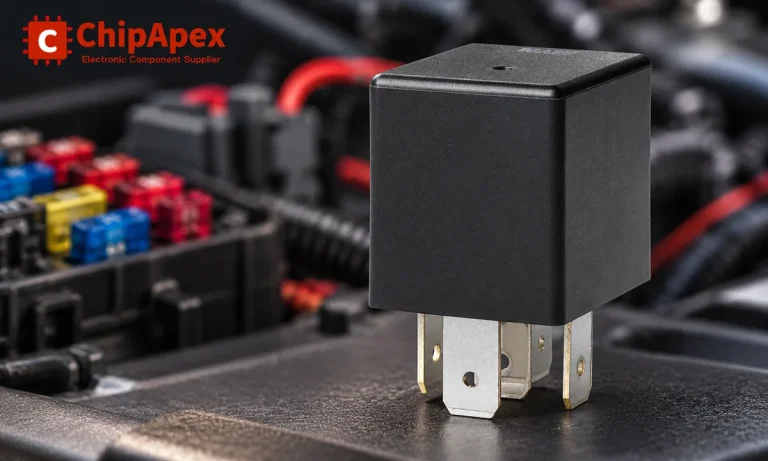
Learn the relay definition, coil and contact operation, NO and NC forms, load ratings and suppression choices. Compare mechanical, reed and solid-state types.
Read More
Recently, global semiconductor manufacturers have been constantly making moves in aspects such as technological cooperation, product manufacturing processes, and market layout, demonstrating the rapid…
Read More
In the embedded world, general-purpose CPUs are great at running operating systems, and MCUs excel at logic control. But when you need to process…
Read More
PLANO, Texas – March 20, 2026 – Diodes Incorporated (Nasdaq: DIOD), a leading global manufacturer and supplier of high-quality application-specific standard products in the…
Read More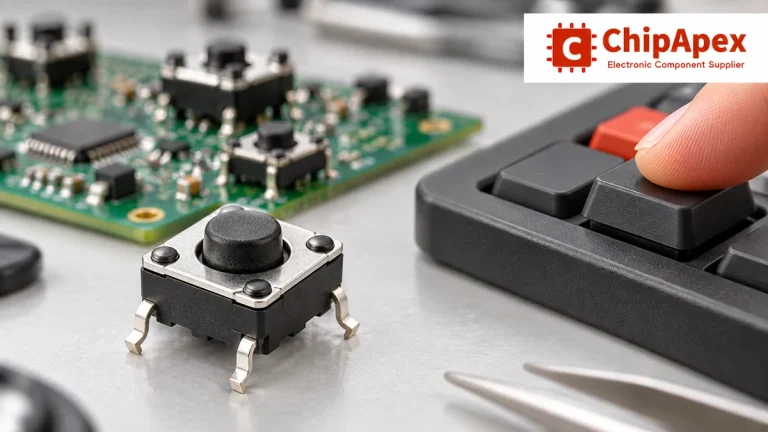
Understand tactile switches, PCB and keyboard differences, four-pin wiring, debounce, force, travel and replacement checks for reliable control inputs.
Read More
The activity of extra discounts on wholesale prices is in full swing…
Please fill in your contact information and we will send you the latest wholesale price list.




