 ChipApex | Global Electronic Components Supplier

SEARCH
Search Product
Search Post
— IC芯片 | 连接器 | 传感器 | 被动器件 —
Search productSearch post
— IC芯片 | 连接器 | 传感器 | 被动器件 —
Consult the customer manager about the wholesale price.
consultation hotline:86-132-6715-2157
email:[email protected]
Contact the product manager for consultation. One-stop consultation is available.
Do you want a lower wholesale price? Please send us your inquiry and we will reply immediately.
The nVent SCHROFF 24571444 is a RATIOPAC PRO WI subrack designed for 19-inch rack mounting systems. It features a 3U height and 84 HP width capacity, with external dimensions of 448.9 mm in width, 132.6 mm in height, and 495.5 mm in depth. Constructed from aluminum alloy, this unshielded enclosure provides structural support for electronic modules within standard industrial racks. The unit complies with IEEE 1101.1 and IEC 60297-3-101 standards, ensuring compatibility with established rack infrastructure protocols.
Verify the specific finish requirements against the manufacturer's finish table prior to ordering, as surface treatment options may vary. Confirm that the unshielded design aligns with your electromagnetic interference mitigation strategy. Ensure the 495mm depth fits within your existing rack cabinet constraints. Cross-reference the part number 24571444 with official nVent SCHROFF documentation to confirm current production status and regional availability.
Select this model when a rigid, non-shielded 3U framework is required for standard 19-inch installations. Consider the 84 HP capacity relative to the width of your target modules. Evaluate the aluminum construction benefits regarding weight and thermal dissipation compared to steel alternatives. Verify IP20 protection sufficiency for the intended environmental conditions, as this model lacks enhanced sealing features.
This component belongs to the RATIOPAC PRO WI series, which offers modular rack solutions for professional electronics applications. The 24571444 variant specifically addresses the need for a compact yet spacious 3U frame. It integrates into broader nVent SCHROFF ecosystem products, allowing for consistent mechanical interfaces across different rack heights and depths within the same product line.
Consult the official nVent SCHROFF cross-reference list for direct substitutes. Alternative models may include variations in depth or height while maintaining the 3U form factor. Ensure any replacement maintains compliance with IEEE 1101.1 standards for mechanical interchangeability.
 24571444
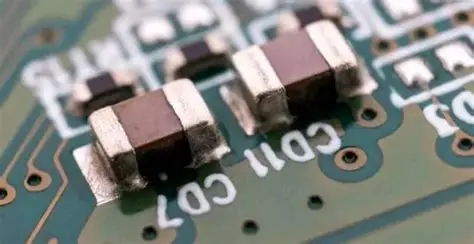
Recently, a survey by the Electronic Components Industry Association (ECIA) revealed that the sales sentiment of global electronic components remained optimistic in the third…
Read More
TOKYO, April 15, 2026 – Taiyo Yuden Co., Ltd. (TAIYO YUDEN), a leading global manufacturer of passive electronic components, has officially notified its worldwide…
Read More
Dutch authorities announced on November 7 the lifting of control measures on Nexperia (formerly NXP Semiconductors’ Standard Products division), marking the end of a…
Read More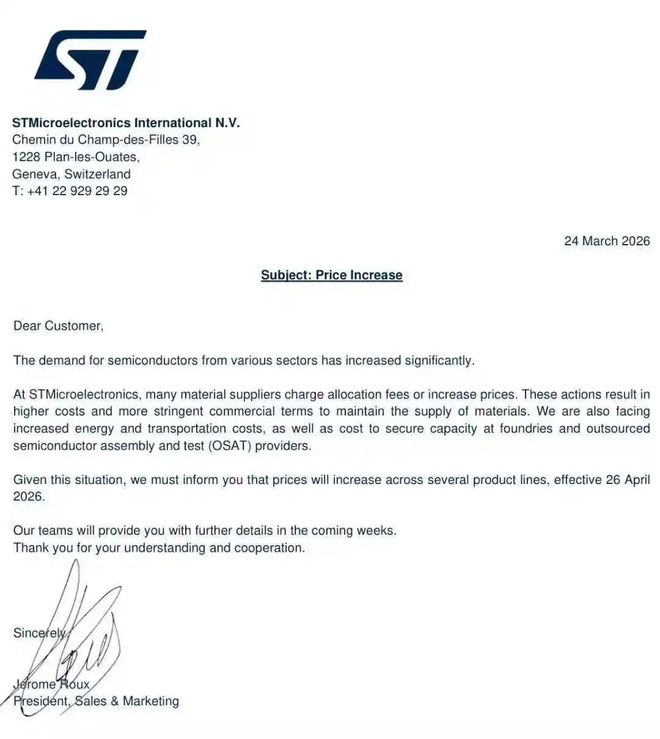
Geneva, Switzerland – March 25, 2026 – STMicroelectronics N.V. (NYSE: STM), a global semiconductor leader serving customers across the electronics applications spectrum, has announced…
Read More
Select a bridge rectifier by reverse voltage, capacitor charging current, startup surge and cooling. Work through a stated DC voltage and ripple example.
Read More
As the backbone of modern technology, electronic components are undergoing revolutionary changes, driven by advancements in materials science, miniaturization, and smart manufacturing. From ultra-efficient…
Read More
Latest updates from leading semiconductor manufacturers: Wolfspeed launches new SiC modules, AMD reveals MI430X with HBM4, TSMC eyes third Japan fab, and Samsung samples…
Read More
Find out when a bare shock switch needs a pull resistor, when an MCU internal pull-up is enough, and why sensor modules and piezo…
Read More
Recently, global semiconductor manufacturers have been constantly making moves in aspects such as technological cooperation, product manufacturing processes, and market layout, demonstrating the rapid…
Read More
Embedded Integrated Circuit Modules: The Backbone of Modern Technology Embedded Integrated Circuit Modules (EICMs) have become an indispensable part of modern technology. Serving as…
Read More
Understand how a comparator switches at a voltage threshold, why hysteresis prevents chatter, and which output and input specs matter.
Read More
Understand how oscillators generate timing signals, how they differ from crystals, and which frequency, output and stability specs matter when choosing one.
Read More
The activity of extra discounts on wholesale prices is in full swing…
Please fill in your contact information and we will send you the latest wholesale price list.




