 ChipApex | Global Electronic Components Supplier

SEARCH
Search Product
Search Post
— IC芯片 | 连接器 | 传感器 | 被动器件 —
Search productSearch post
— IC芯片 | 连接器 | 传感器 | 被动器件 —
Consult the customer manager about the wholesale price.
consultation hotline:86-132-6715-2157
email:[email protected]
Contact the product manager for consultation. One-stop consultation is available.
Do you want a lower wholesale price? Please send us your inquiry and we will reply immediately.
5SGXEA9N1F45I2G is listed in the Field Programmable Gate Array range at ChipApex. The manufacturer field lists Altera. Its product description is IC FPGA 840 I/O 1932FBGA. Review the specifications below when checking this part for your BOM.
The Altera 5SGXEA9N1F45I2G is a Stratix V GX Field Programmable Gate Array (FPGA) designed for high-performance digital signal processing and networking applications. It features 840,000 logic elements and 317,000 adaptive logic modules within its fabric. The device integrates 52 Mbit of embedded memory and supports up to 840 I/Os. It includes 48 transceivers capable of data rates up to 14.1 Gb/s. Operating at a core voltage of 850 mV, it functions within a temperature range of -40°C to +85°C. The component is housed in a 1932-pin FBGA package.
Verify the specific ordering suffix N1F45I2G against official Intel/Altera documentation to confirm pinout, speed grade, and environmental rating. Confirm RoHS compliance status and moisture sensitivity level prior to PCB assembly planning. Check for obsolescence notices as this series may have limited availability through authorized channels.
Compare the 5SGXEA9N1F45I2G against other Stratix V variants based on required logic density and transceiver count. Ensure the 1932-ball FBGA footprint matches the board layout constraints. Validate that the 850 mV core voltage aligns with the power delivery network design specifications for the target application environment.
This component belongs to the Stratix V GX family, which targets high-bandwidth applications. It sits between lower-density models and higher-end Stratix V devices offering greater resource counts. The GX designation specifically highlights the inclusion of high-speed serial transceivers essential for modern communication protocols.
Direct replacements are limited due to the discontinued status of the Stratix V family. Evaluate Intel Agilex or Arria 10 families for migration, noting significant architectural differences in logic structure and transceiver technology. Consult official cross-reference guides for functional equivalents.
Explore related parts through Embedded, Integrated Circuits (ICs), all product categories, ChipApex homepage.


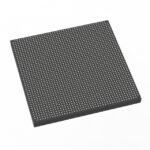 5SGXEA9N1F45I2G

5SGXEA9N1F45I2G is listed in the Field Programmable Gate Array range at ChipApex. The manufacturer field lists Altera. Its product description is IC FPGA 840…
Read More
5SGXEA9N1F45I2G is listed in the Field Programmable Gate Array range at ChipApex. The manufacturer field lists Altera. Its product description is IC FPGA 840…
Read More
5SGXEA9N1F45I2G is listed in the Field Programmable Gate Array range at ChipApex. The manufacturer field lists Altera. Its product description is IC FPGA 840…
Read More
5SGXEA9N1F45I2G is listed in the Field Programmable Gate Array range at ChipApex. The manufacturer field lists Altera. Its product description is IC FPGA 840…
Read More
5SGXEA9N1F45I2G is listed in the Field Programmable Gate Array range at ChipApex. The manufacturer field lists Altera. Its product description is IC FPGA 840…
Read More
5SGXEA9N1F45I2G is listed in the Field Programmable Gate Array range at ChipApex. The manufacturer field lists Altera. Its product description is IC FPGA 840…
Read More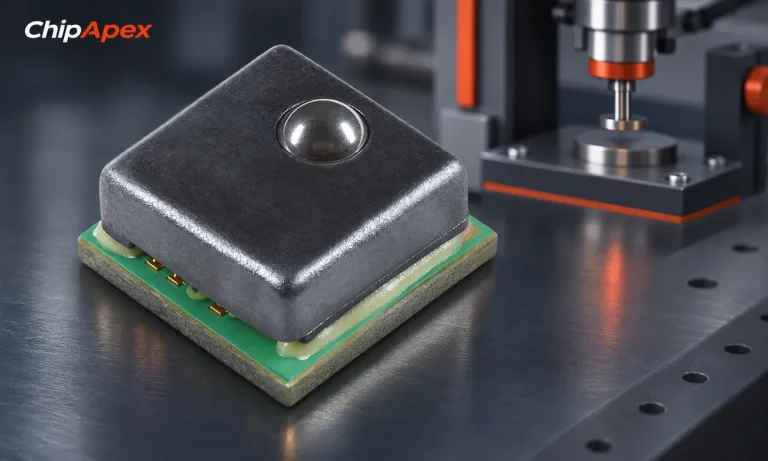
Understand load cell sensor output, bridge wiring and calibration. Learn how mV/V sensitivity, mechanics and ADC noise affect measurement accuracy.
Read More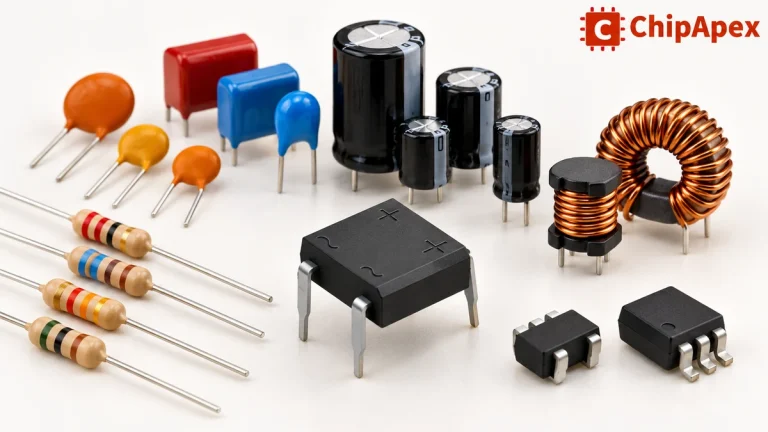
Explore electronic component types, functions, packages and datasheets. Learn selection, replacement and BOM checks before ordering parts for your PCB.
Read More
5SGXEA9N1F45I2G is listed in the Field Programmable Gate Array range at ChipApex. The manufacturer field lists Altera. Its product description is IC FPGA 840…
Read More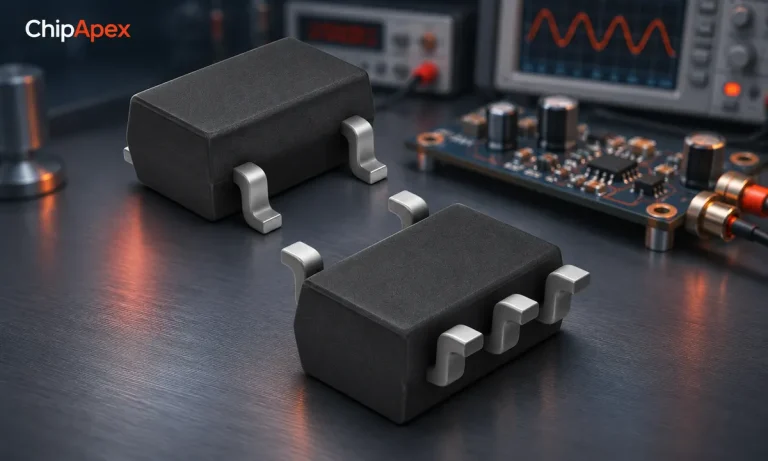
Learn how a JFET works and how to compare bias, leakage, noise and pinout. Review practical selection questions for high-impedance analog circuits.
Read More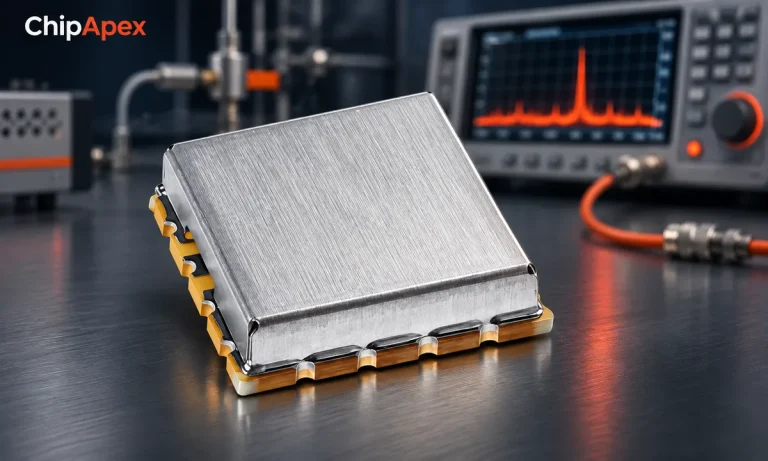
Understand voltage controlled oscillator tuning, phase noise and PLL operation. Check supply noise, output loading and requirements before selection.
Read More
See when an inductor behaves linearly, how DC bias and saturation reduce inductance, and which current and temperature curves to check.
Read More
The activity of extra discounts on wholesale prices is in full swing…
Please fill in your contact information and we will send you the latest wholesale price list.




