 ChipApex | Global Electronic Components Supplier

SEARCH
Search Product
Search Post
— IC芯片 | 连接器 | 传感器 | 被动器件 —
Search productSearch post
— IC芯片 | 连接器 | 传感器 | 被动器件 —
Consult the customer manager about the wholesale price.
consultation hotline:86-132-6715-2157
email:[email protected]
Contact the product manager for consultation. One-stop consultation is available.
Do you want a lower wholesale price? Please send us your inquiry and we will reply immediately.
ADC10158CIN/NOPB is listed in the Analog To Digital Converters (ADC) range at ChipApex. The manufacturer field lists Texas Instruments. Its product description is IC ADC 10BIT SAR 28DIP. Review the specifications below when checking this part for your BOM.
The ADC10158CIN/NOPB is a CMOS 10-bit plus sign successive approximation analog-to-digital converter featuring an 8-channel multiplexer, track/hold function, and internal 2.5V band-gap reference. It operates on a single +5V supply or dual ±5V supplies with an analog input range of 0V to 5V or -5V to +5V respectively. The device supports programmable resolution (8-bit or 10-bit) and output data formats. Key electrical specifications include a maximum conversion time of 4.4 µs for 10-bit mode, a sampling rate of 166 kHz, and integral linearity error of ±1 LSB. It utilizes a parallel interface and is housed in a 28-pin SOIC package.
Verify the manufacturer origin as the 'NOPB' suffix typically indicates Texas Instruments, whereas the base model originates from National Semiconductor. Confirm RoHS compliance status and current availability through authorized distributors, as this component may be subject to obsolescence or replacement by newer series members.
Select the CIN suffix for the 28-lead Small Outline Integrated Circuit (SOIC) package suitable for surface mount applications. Ensure the system design accommodates the required clock frequency (up to 5 MHz) and power supply configurations (+5V unipolar or ±5V bipolar). Consider the 166 kHz sampling rate limit when designing for high-speed data acquisition requirements.
This component belongs to the ADC1015x family of 10-bit successive approximation ADCs. The ADC10158 variant specifically provides eight analog input channels, distinguishing it from the four-channel ADC10154. Both devices share identical core architecture, performance characteristics, and pinout compatibility regarding the analog and digital interfaces.
Public confirmed substitute part numbers are not available in the provided documentation.
Explore related parts through Data Acquisition, Integrated Circuits (ICs), all product categories, ChipApex homepage.
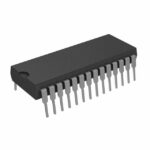 ADC10158CIN/NOPB
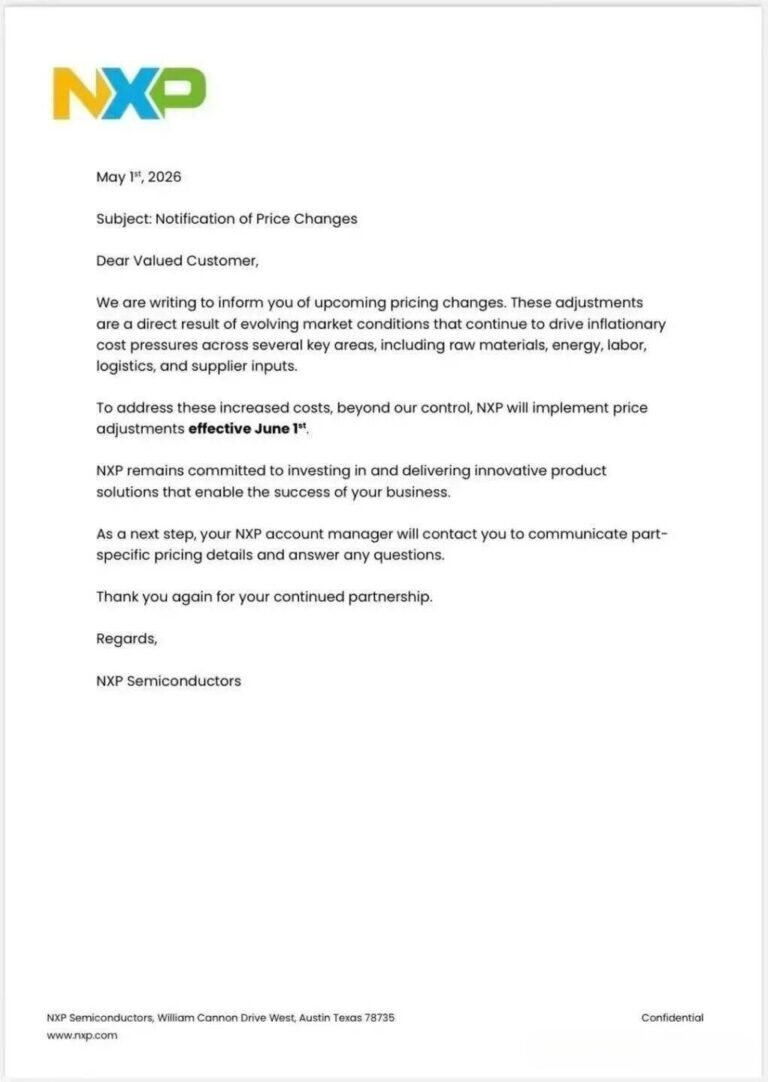
ADC10158CIN/NOPB is listed in the Analog To Digital Converters (ADC) range at ChipApex. The manufacturer field lists Texas Instruments. Its product description is IC…
Read More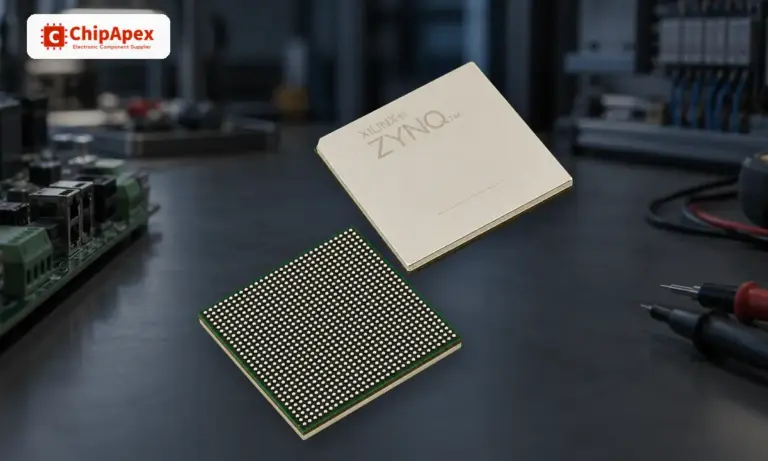
Learn what an integrated circuit is, how ICs work, the main types and the specs to check before choosing a part for your design…
Read More
ADC10158CIN/NOPB is listed in the Analog To Digital Converters (ADC) range at ChipApex. The manufacturer field lists Texas Instruments. Its product description is IC…
Read More
ADC10158CIN/NOPB is listed in the Analog To Digital Converters (ADC) range at ChipApex. The manufacturer field lists Texas Instruments. Its product description is IC…
Read More
ADC10158CIN/NOPB is listed in the Analog To Digital Converters (ADC) range at ChipApex. The manufacturer field lists Texas Instruments. Its product description is IC…
Read More
ADC10158CIN/NOPB is listed in the Analog To Digital Converters (ADC) range at ChipApex. The manufacturer field lists Texas Instruments. Its product description is IC…
Read More
ADC10158CIN/NOPB is listed in the Analog To Digital Converters (ADC) range at ChipApex. The manufacturer field lists Texas Instruments. Its product description is IC…
Read More
See how a MEMS gyroscope measures angular rate, why its angle estimate drifts, and which range, noise, interface and temperature specs to compare.
Read More
Learn what an IMU measures, how accelerometers and gyroscopes work together, why orientation estimates drift, and what to compare.
Read More
ADC10158CIN/NOPB is listed in the Analog To Digital Converters (ADC) range at ChipApex. The manufacturer field lists Texas Instruments. Its product description is IC…
Read More
ADC10158CIN/NOPB is listed in the Analog To Digital Converters (ADC) range at ChipApex. The manufacturer field lists Texas Instruments. Its product description is IC…
Read More
Learn why PTC resistance rises with temperature, how it differs from NTC, and which ratings matter for sensing and protection.
Read More
The activity of extra discounts on wholesale prices is in full swing…
Please fill in your contact information and we will send you the latest wholesale price list.





