 ChipApex | Global Electronic Components Supplier

SEARCH
Search Product
Search Post
— IC芯片 | 连接器 | 传感器 | 被动器件 —
Search productSearch post
— IC芯片 | 连接器 | 传感器 | 被动器件 —
Consult the customer manager about the wholesale price.
consultation hotline:86-132-6715-2157
email:[email protected]
Contact the product manager for consultation. One-stop consultation is available.
Do you want a lower wholesale price? Please send us your inquiry and we will reply immediately.
AM29C853/BLA is listed in the Buffers, Drivers, Receivers, Transceivers range at ChipApex. The manufacturer field lists Advanced Micro Devices. Its product description is IC TXRX NON-INVERT 5.5V 24CDIP. Review the specifications below when checking this part for your BOM.
The AM29C853/BLA is a CMOS bus transceiver manufactured by Advanced Micro Devices. It features one element with eight bits per element and provides non-inverting true outputs. The device utilizes an open-drain output configuration, supporting operation at 5.5V. It is housed in a 24-CDIP package and belongs to the CMOS series of logic components.
Verify the specific suffix BLA against the manufacturer's official documentation to confirm pinout compatibility and voltage specifications. Ensure the component source provides valid traceability records. Cross-reference the part number with Advanced Micro Devices or authorized distributors to avoid counterfeit units. Confirm the package type matches the required PCB footprint before procurement.
Select this component when a single eight-bit non-inverting transceiver with open-drain outputs is required. The CMOS construction suits applications needing low static power dissipation. The 24-CDIP package is suitable for through-hole mounting in industrial or legacy systems. Verify that the 5.5V operating range aligns with the target circuit design requirements.
This component falls under the category of interface bus line transceivers within the Advanced Micro Devices logic portfolio. It serves as a buffer and driver for digital signals, facilitating communication between different logic blocks. The device is part of the broader family of CMOS bus transceivers designed for reliable data transfer in complex electronic systems.
Consult official substitution guides for compatible parts. No direct public substitute part numbers are confirmed in the provided documentation.
Explore related parts through Logic, Integrated Circuits (ICs), all product categories, ChipApex homepage.
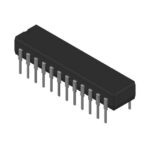 AM29C853/BLA
Choose LED drivers by current, string voltage, dimming and thermal limits. Understand constant-current operation and the checks needed for your load.
Read More
AM29C853/BLA is listed in the Buffers, Drivers, Receivers, Transceivers range at ChipApex. The manufacturer field lists Advanced Micro Devices. Its product description is IC…
Read More
Choose logic inverter ICs by thresholds, supply, output drive and delay. Compare standard and Schmitt-trigger inputs, power sequencing and replacement checks.
Read More
Compare Pt100 and Pt1000 RTDs, two-, three- and four-wire connections, excitation and self-heating. Build an error budget from element to reported temperature.
Read More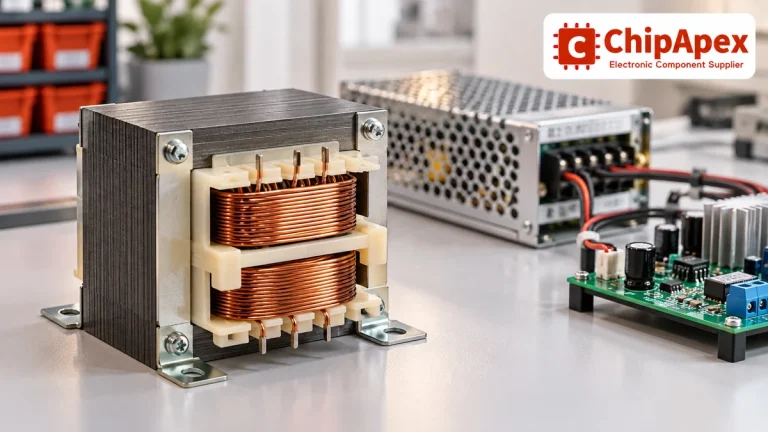
Select power transformers by input frequency, secondary VA, rectifier load, isolation, regulation and inrush. Build a clearer specification for your next RFQ.
Read More
AM29C853/BLA is listed in the Buffers, Drivers, Receivers, Transceivers range at ChipApex. The manufacturer field lists Advanced Micro Devices. Its product description is IC…
Read More
Understand motor controller types, driver functions, startup current, feedback and braking. Use practical checks to match control electronics to your motor.
Read More
AM29C853/BLA is listed in the Buffers, Drivers, Receivers, Transceivers range at ChipApex. The manufacturer field lists Advanced Micro Devices. Its product description is IC…
Read More
AM29C853/BLA is listed in the Buffers, Drivers, Receivers, Transceivers range at ChipApex. The manufacturer field lists Advanced Micro Devices. Its product description is IC…
Read More
AM29C853/BLA is listed in the Buffers, Drivers, Receivers, Transceivers range at ChipApex. The manufacturer field lists Advanced Micro Devices. Its product description is IC…
Read More
AM29C853/BLA is listed in the Buffers, Drivers, Receivers, Transceivers range at ChipApex. The manufacturer field lists Advanced Micro Devices. Its product description is IC…
Read More
Choose a vibration sensor for machine monitoring. Compare sensing methods, bandwidth, noise and mounting, then define the signal-chain requirements.
Read More
The activity of extra discounts on wholesale prices is in full swing…
Please fill in your contact information and we will send you the latest wholesale price list.





