 ChipApex | Global Electronic Components Supplier

SEARCH
Search Product
Search Post
— IC芯片 | 连接器 | 传感器 | 被动器件 —
Search productSearch post
— IC芯片 | 连接器 | 传感器 | 被动器件 —
Consult the customer manager about the wholesale price.
consultation hotline:86-132-6715-2157
email:[email protected]
Contact the product manager for consultation. One-stop consultation is available.
Do you want a lower wholesale price? Please send us your inquiry and we will reply immediately.
CC1125RHMR is listed in the RF Transceiver ICS range at ChipApex. The manufacturer field lists Texas Instruments. Its product description is IC RF TXRX+MCU ISM. Review the specifications below when checking this part for your BOM.
The CC1125RHMR is an ultra-high performance RF narrowband transceiver from Texas Instruments, operating in the sub-1 GHz range. It supports frequency bands of 164–192 MHz, 274–320 MHz, 410–480 MHz, and 820–960 MHz. The device features a maximum data rate of 200 kb/s with modulation formats including 2-FSK, 2-GFSK, 4-FSK, 4-GFSK, ASK, MSK, and OOK. It operates on a supply voltage of 2 V to 3.6 V, drawing 17 mA during reception and 47 mA during transmission. The output power reaches 16 dBm, with a sensitivity of -129 dBm. It utilizes an SPI interface and is housed in a VQFN-32 package.
Verify the specific suffix RHMR against the official Texas Instruments datasheet to confirm pinout and packaging details. Ensure compatibility with the required frequency bands and modulation standards for your design. Check moisture sensitivity levels and reflow soldering profiles prior to assembly. Confirm that the VQFN-32 package dimensions match your PCB footprint requirements exactly.
Select this component when high sensitivity and strong adjacent channel rejection are critical for reliable communication in noisy environments. The programmable power amplifier allows for optimized battery life in low-power applications. Consider the SPI interface complexity and available GPIO pins for system integration. Evaluate the thermal performance within the specified -40°C to +85°C operating range for your enclosure design.
The CC1125 belongs to Texas Instruments' family of high-performance RF transceivers targeting sub-1 GHz ISM bands. It is designed to replace older discrete solutions by integrating the radio, synthesizer, and baseband processor into a single chip. This integration reduces board space and simplifies design complexity for industrial and commercial wireless applications requiring robust long-range connectivity.
Public confirmed substitute part numbers: CC1125RHBR.
Explore related parts through RF and Wireless, all product categories, ChipApex homepage.
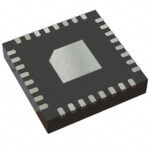 CC1125RHMR

CC1125RHMR is listed in the RF Transceiver ICS range at ChipApex. The manufacturer field lists Texas Instruments. Its product description is IC RF TXRX+MCU…
Read More
Select MOV varistors by continuous voltage, clamping behavior, surge waveform and repetition. Check thermal disconnection, fuse coordination and replacements.
Read More
CC1125RHMR is listed in the RF Transceiver ICS range at ChipApex. The manufacturer field lists Texas Instruments. Its product description is IC RF TXRX+MCU…
Read More
See how a MEMS gyroscope measures angular rate, why its angle estimate drifts, and which range, noise, interface and temperature specs to compare.
Read More
CC1125RHMR is listed in the RF Transceiver ICS range at ChipApex. The manufacturer field lists Texas Instruments. Its product description is IC RF TXRX+MCU…
Read More
Understand RF attenuator dB values, fixed and programmable types, impedance, power limits and noise tradeoffs before choosing parts for an RF signal path.
Read More
CC1125RHMR is listed in the RF Transceiver ICS range at ChipApex. The manufacturer field lists Texas Instruments. Its product description is IC RF TXRX+MCU…
Read More
CC1125RHMR is listed in the RF Transceiver ICS range at ChipApex. The manufacturer field lists Texas Instruments. Its product description is IC RF TXRX+MCU…
Read More
CC1125RHMR is listed in the RF Transceiver ICS range at ChipApex. The manufacturer field lists Texas Instruments. Its product description is IC RF TXRX+MCU…
Read More
CC1125RHMR is listed in the RF Transceiver ICS range at ChipApex. The manufacturer field lists Texas Instruments. Its product description is IC RF TXRX+MCU…
Read More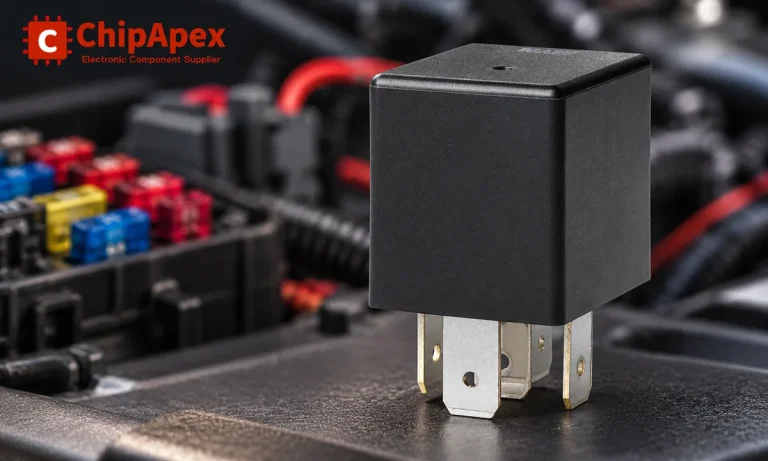
Learn the relay definition, coil and contact operation, NO and NC forms, load ratings and suppression choices. Compare mechanical, reed and solid-state types.
Read More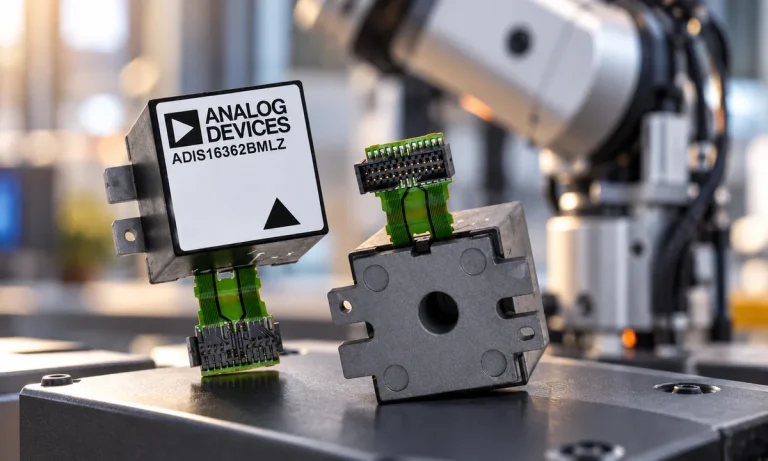
Learn what an IMU measures, how accelerometers and gyroscopes work together, why orientation estimates drift, and what to compare.
Read More
The activity of extra discounts on wholesale prices is in full swing…
Please fill in your contact information and we will send you the latest wholesale price list.





