 ChipApex | Global Electronic Components Supplier

SEARCH
Search Product
Search Post
— IC芯片 | 连接器 | 传感器 | 被动器件 —
Search productSearch post
— IC芯片 | 连接器 | 传感器 | 被动器件 —
Consult the customer manager about the wholesale price.
consultation hotline:86-132-6715-2157
email:[email protected]
Contact the product manager for consultation. One-stop consultation is available.
Do you want a lower wholesale price? Please send us your inquiry and we will reply immediately.
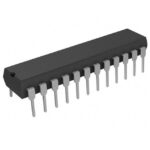
DS2176 is listed in the Telecom range at ChipApex. The manufacturer field lists Analog Devices Inc./Maxim Integrated. Its product description is IC TELECOM INTERFACE 24DIP. Review the specifications below when checking this part for your BOM.
The DS2176 is a low-power CMOS T1 receive buffer designed to synchronize loop-timed T-carrier data streams with system-side timing. It features a two-frame (386-bit) PCM buffer that samples incoming serial data on the falling edge of RCLK and outputs it on the rising edge of SYSCLK. The device supports both 1.544 MHz and 2.048 MHz backplane frequencies via the SCLKSEL pin. It extracts, buffers, and integrates ABCD robbed-bit signaling, presenting it on dedicated outputs A through D. The component operates at a supply voltage of 5.0V with a typical current draw of 10mA.
Verify the specific package variant required for the design, as the standard DS2176 uses a 24-pin DIP while the surface mount version is designated DS2176Q. Confirm the operating temperature range matches the application needs, noting that industrial grades are available as DS2176N. Ensure compatibility with the intended transceiver, such as the DS2180A, before finalizing procurement specifications.
Select the DS2176 when interfacing loop-timed T1 data to system-timed parallel or serial backplanes. Choose the DS2176Q for surface mount requirements or the DS2176N for extended industrial temperature ranges. Ensure the system clock frequency aligns with the SCLKSEL configuration for either 1.544 MHz or 2.048 MHz operation. Verify framing mode requirements to configure FMS correctly for D4 or extended framing.
The DS2176 belongs to the Maxim Integrated T1/CEPT interface family, functioning specifically as a receive buffer. It complements line interface units like the DS2156L by handling the synchronization between the physical layer and the digital multiplexing backplane. This component simplifies hardware designs by integrating buffering and signaling supervision into a single package.
The DS2176QN/T&R is a reel-and-reel packaging variant of the same functional device. No direct functional replacements are documented in the provided datasheet; however, designers should verify if newer generation T1 receivers meet the specific signaling integration and freeze requirements of this legacy component.
During a slip condition, the DS2176 freezes signaling updates to prevent corrupted data from propagating. The SIGFRZ output goes high to indicate this state, and 'old' data is recirculated in the output registers until the next valid update occurs.
The ALN (Align) pin forces the buffer to recenter on the next system side frame boundary. This is typically used during power-up or initialization. If the buffer depth is not optimum during this process, a slip will occur.
Signaling integration is configured using the SM0 and SM1 pins. These pins select the degree of integration (e.g., bypass, 2 multiframes, or 5 multiframes) and determine how many multiframes the signaling data must remain stable before appearing at the outputs.
Explore related parts through Interface, Integrated Circuits (ICs), all product categories, ChipApex homepage.
 DS2176

Find out when a bare shock switch needs a pull resistor, when an MCU internal pull-up is enough, and why sensor modules and piezo…
Read More
DS2176 is listed in the Telecom range at ChipApex. The manufacturer field lists Analog Devices Inc./Maxim Integrated. Its product description is IC TELECOM INTERFACE…
Read More
DS2176 is listed in the Telecom range at ChipApex. The manufacturer field lists Analog Devices Inc./Maxim Integrated. Its product description is IC TELECOM INTERFACE…
Read More
DS2176 is listed in the Telecom range at ChipApex. The manufacturer field lists Analog Devices Inc./Maxim Integrated. Its product description is IC TELECOM INTERFACE…
Read More
DS2176 is listed in the Telecom range at ChipApex. The manufacturer field lists Analog Devices Inc./Maxim Integrated. Its product description is IC TELECOM INTERFACE…
Read More
DS2176 is listed in the Telecom range at ChipApex. The manufacturer field lists Analog Devices Inc./Maxim Integrated. Its product description is IC TELECOM INTERFACE…
Read More
See how a MEMS gyroscope measures angular rate, why its angle estimate drifts, and which range, noise, interface and temperature specs to compare.
Read More
Select a bridge rectifier by reverse voltage, capacitor charging current, startup surge and cooling. Work through a stated DC voltage and ripple example.
Read More
DS2176 is listed in the Telecom range at ChipApex. The manufacturer field lists Analog Devices Inc./Maxim Integrated. Its product description is IC TELECOM INTERFACE…
Read More
Choose logic inverter ICs by thresholds, supply, output drive and delay. Compare standard and Schmitt-trigger inputs, power sequencing and replacement checks.
Read More
DS2176 is listed in the Telecom range at ChipApex. The manufacturer field lists Analog Devices Inc./Maxim Integrated. Its product description is IC TELECOM INTERFACE…
Read More
DS2176 is listed in the Telecom range at ChipApex. The manufacturer field lists Analog Devices Inc./Maxim Integrated. Its product description is IC TELECOM INTERFACE…
Read More
The activity of extra discounts on wholesale prices is in full swing…
Please fill in your contact information and we will send you the latest wholesale price list.






