ChipApex | Global Electronic Components Supplier

SEARCH
Search Product
Search Post
— IC芯片 | 连接器 | 传感器 | 被动器件 —
Search productSearch post
— IC芯片 | 连接器 | 传感器 | 被动器件 —
Consult the customer manager about the wholesale price.
consultation hotline:86-132-6715-2157
email:[email protected]
Contact the product manager for consultation. One-stop consultation is available.
Do you want a lower wholesale price? Please send us your inquiry and we will reply immediately.
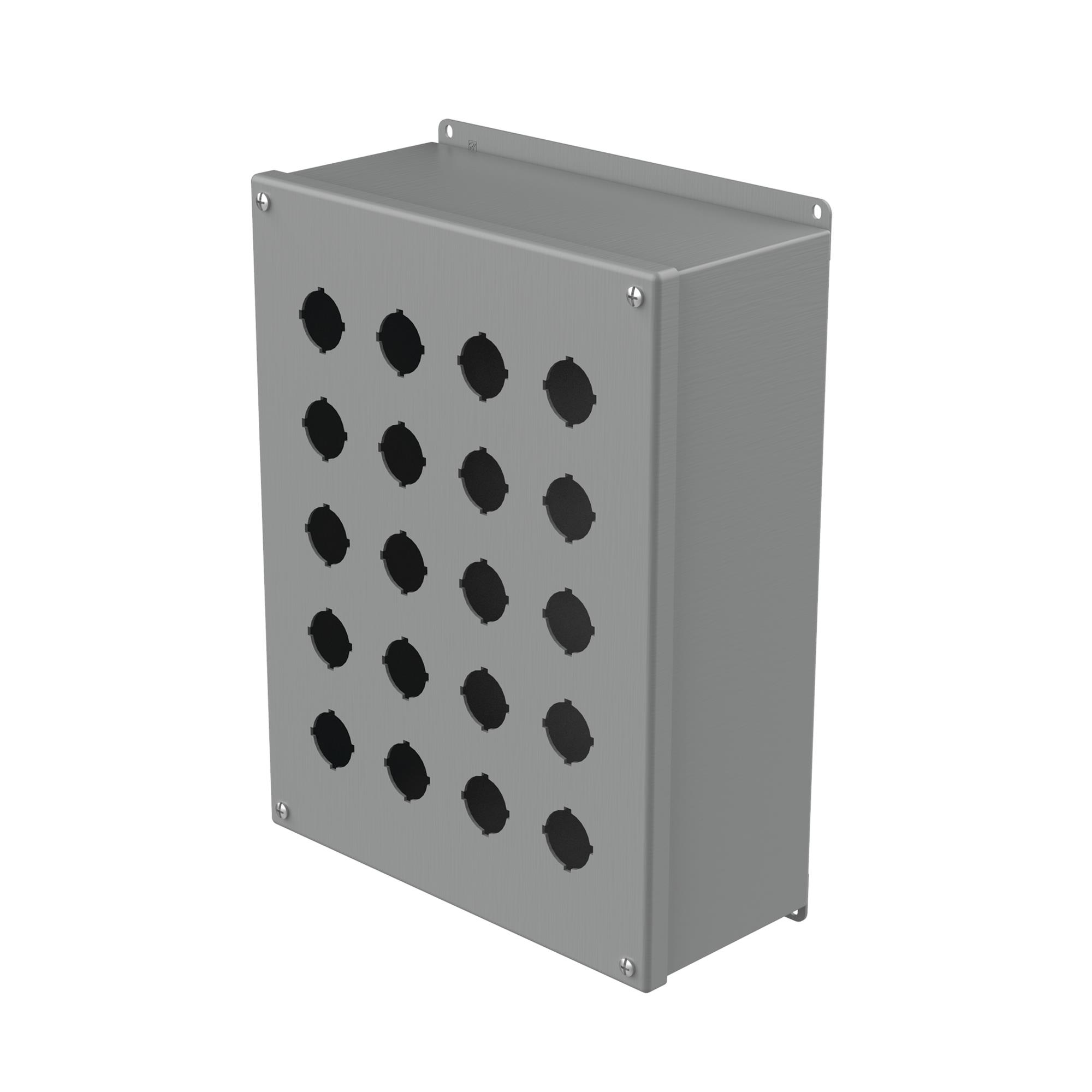
The Hoffman E20PBX is an extra deep pushbutton enclosure constructed from 14 AWG mild steel. It features a polyester powder-coated ANSI 61 gray finish and provides NEMA Type 12 and IP65 protection for indoor use, ensuring resistance to dust and light splashing water. The unit measures 14 inches in height, 10.75 inches in width, and 4.75 inches in depth, offering 20 pushbutton outlets. It includes one door and carries UL 508A and CUL certifications for industrial control panel applications.
Verify the specific manufacturer part number E20PBX matches the required dimensions and rating before ordering. Confirm that the NEMA 12 rating aligns with the environmental conditions of the installation site. Ensure compatibility with existing panel mounting standards. Check for any regional certification requirements such as UL or CUL compliance relevant to the project location. Validate that the extra deep profile accommodates all internal components without obstruction.
Select this model when a robust steel enclosure is needed for indoor pushbutton applications. The extra deep design allows for deeper component placement compared to standard PB enclosures. Consider the 14 AWG gauge for structural rigidity in high-vibration environments. The NEMA 12 rating makes it suitable for dirty or dusty indoor areas where liquid exposure is limited to light splashing. Verify that the 20-outlet capacity meets the interface count requirements.
This product belongs to the Hoffman Enclosures PB series, which specializes in pushbutton-specific housing solutions. The E20PBX variant represents the extra deep configuration within this line, designed to accommodate larger internal mechanisms or wiring harnesses. It is manufactured by nVent Hoffman, a provider of electrical enclosure systems for industrial automation and control applications.
Publicly confirmed substitute part numbers are not available in the provided documentation. Consult the manufacturer's cross-reference guide for compatible alternatives if the E20PBX is discontinued or unavailable.
 E20PBX
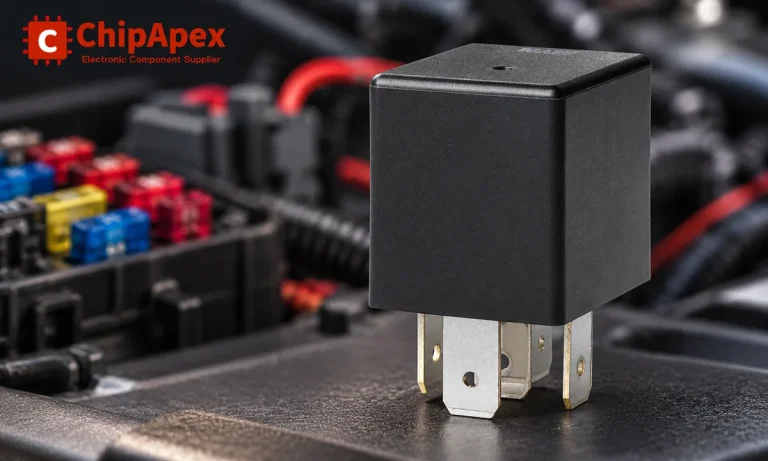
Learn the relay definition, coil and contact operation, NO and NC forms, load ratings and suppression choices. Compare mechanical, reed and solid-state types.
Read More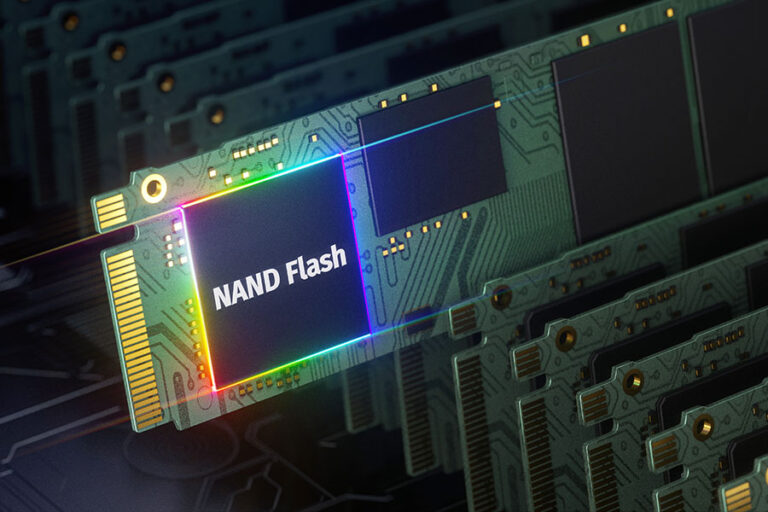
What Is NAND Flash? A Practical Guide for Engineers & Procurement Teams In today’s data-driven world—from smartphones and SSDs to industrial IoT devices—NAND flash…
Read More
Recently, the global electronic component market has witnessed a series of new developments. The strategic layouts and market collaborations of major enterprises are constantly…
Read More
Selecting the right microcontroller (MCU) isn’t just about specs—it’s about balancing performance, power, cost, and supply chain reliability. As an engineer, you’ve probably faced…
Read More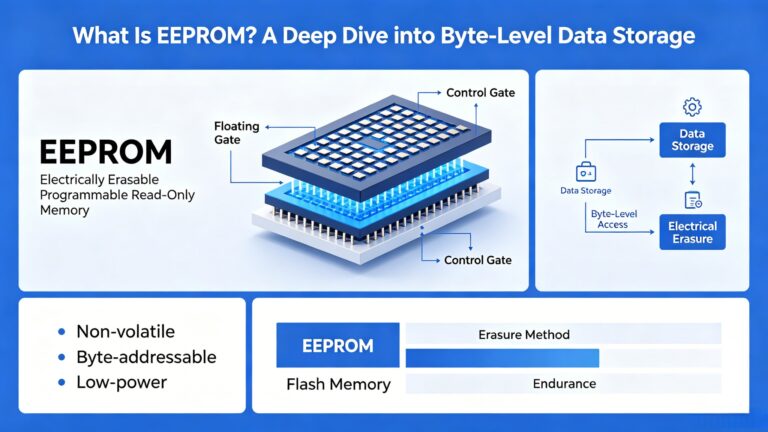
In the vast landscape of memory technology, EEPROM (Electrically Erasable Programmable Read-Only Memory) often plays the unsung hero. While NAND Flash grabs headlines for…
Read More
CHICAGO, USA – May 27, 2026 – Global leading interconnect manufacturer Molex officially issued a global distributor price adjustment notice on May 27, confirming…
Read More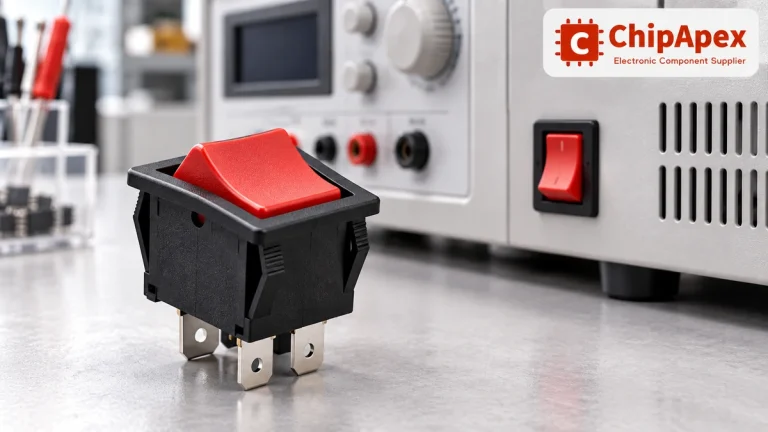
Choose a rocker switch by AC/DC ratings, contact arrangement, illumination, panel fit and sealing. Get practical checks for engineering and component sourcing.
Read More
Select a bridge rectifier by reverse voltage, capacitor charging current, startup surge and cooling. Work through a stated DC voltage and ripple example.
Read More
Recently, global semiconductor manufacturers have been constantly making moves in aspects such as technological cooperation, product manufacturing processes, and market layout, demonstrating the rapid…
Read More
Stay ahead with ChipApex Insights — technical deep dives, market trends, and sourcing tips for memory, microcontrollers, power management, and industrial-grade components. Trusted by…
Read More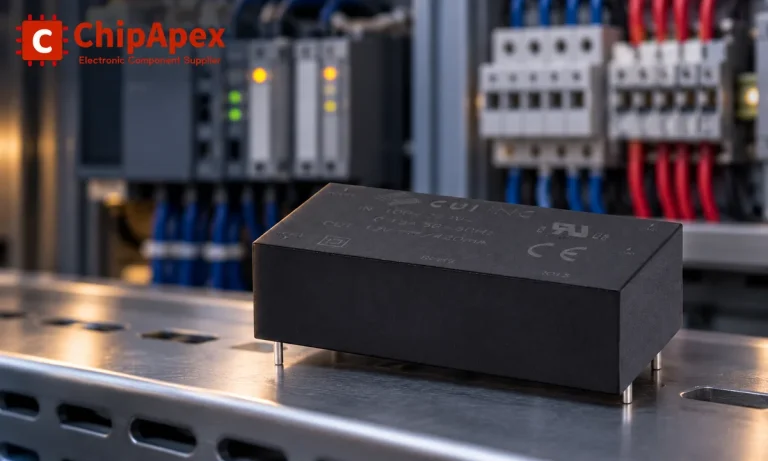
Choose an AC to DC converter by input range, output demand, isolation, efficiency and thermal derating. Compare architectures and check installation needs.
Read More
See when an inductor behaves linearly, how DC bias and saturation reduce inductance, and which current and temperature curves to check.
Read More
The activity of extra discounts on wholesale prices is in full swing…
Please fill in your contact information and we will send you the latest wholesale price list.