ChipApex | Global Electronic Components Supplier

SEARCH
Search Product
Search Post
— IC芯片 | 连接器 | 传感器 | 被动器件 —
Search productSearch post
— IC芯片 | 连接器 | 传感器 | 被动器件 —
Consult the customer manager about the wholesale price.
consultation hotline:86-132-6715-2157
email:[email protected]
Contact the product manager for consultation. One-stop consultation is available.
Do you want a lower wholesale price? Please send us your inquiry and we will reply immediately.
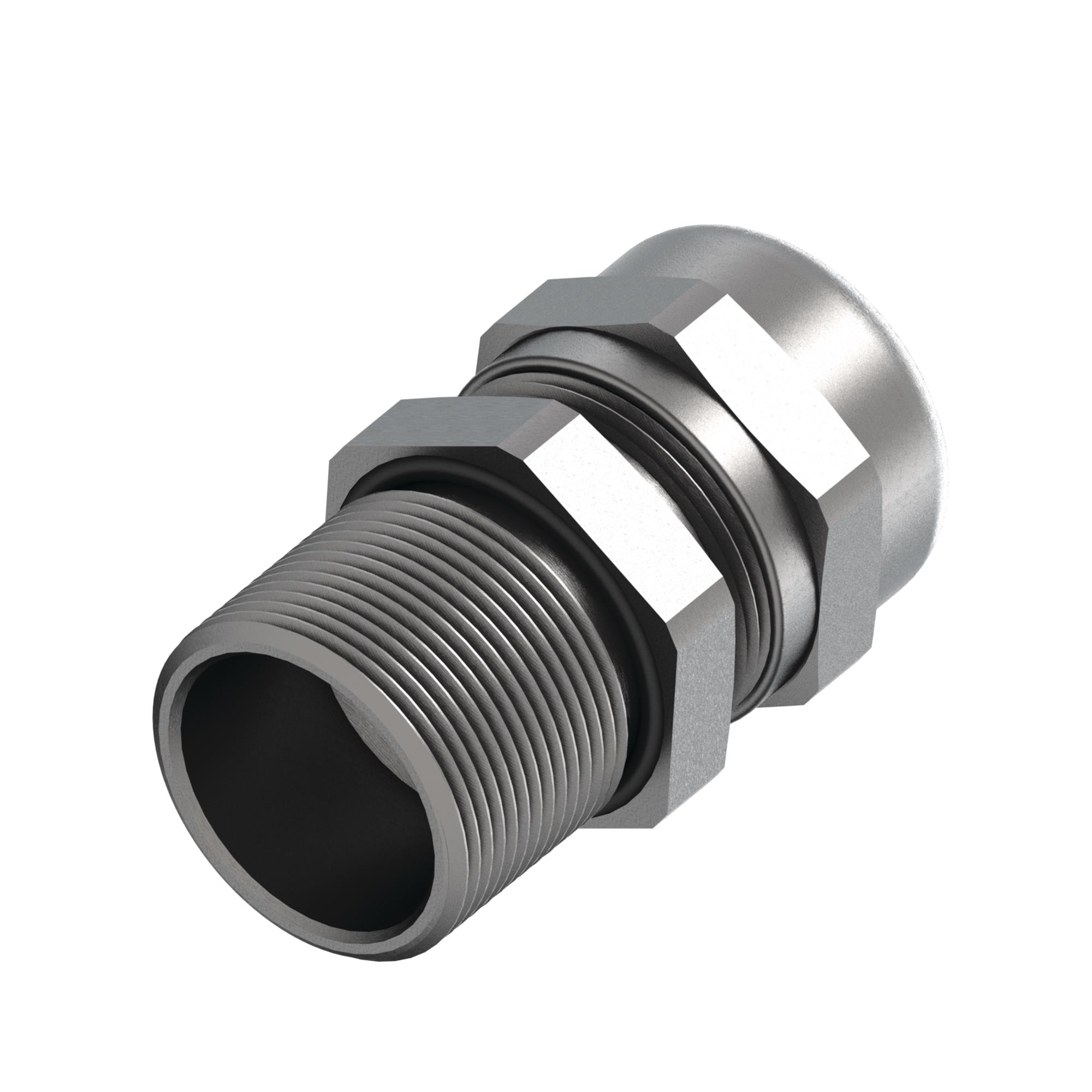
The EBU3MBNCWCLE is an ATEX-certified cable gland manufactured by Hoffman Enclosures, Inc., designed for non-armored cables. It features a brass body with nickel plating and an M32 thread size. The unit supports a cable diameter range of 0.55 to 0.67 inches (14 to 17 mm) and provides a clamping capacity of 0.55 to 0.94 inches. Physical dimensions are 1.54 inches in diameter by 1.38 inches in length.
Verify the specific hazardous area classification (Zone 1/2 or 21/22) matches your site requirements before procurement. Confirm that the cable outer diameter falls strictly within the 0.55 to 0.67-inch range to ensure proper sealing and certification compliance. Ensure the enclosure entry hole size corresponds to the M32 thread specification.
Select this model when working with non-armored cables requiring robust protection in potentially explosive atmospheres. The nickel-plated brass construction offers durability against corrosion. Consider the wide clamping range if cable tolerances vary slightly, but verify the specific diameter fits the tighter 0.55-0.67 inch operational limit for certified performance.
This component belongs to the nVent Hoffman Hazloc series of cable glands. These products are specifically engineered for industrial environments where flammable gases, vapors, or combustible dusts may be present. The series ensures integrity of the enclosure's explosion-proof rating at cable entry points.
No public substitute part numbers are confirmed for this specific model. Replacement requires matching the M32 thread, brass material, nickel finish, and exact hazardous area certifications.
No, the EBU3MBNCWCLE is explicitly designed for non-armored cables only.
The gland accommodates a cable diameter range of 0.55 to 0.67 inches.
 EBU3MBNCWCLE
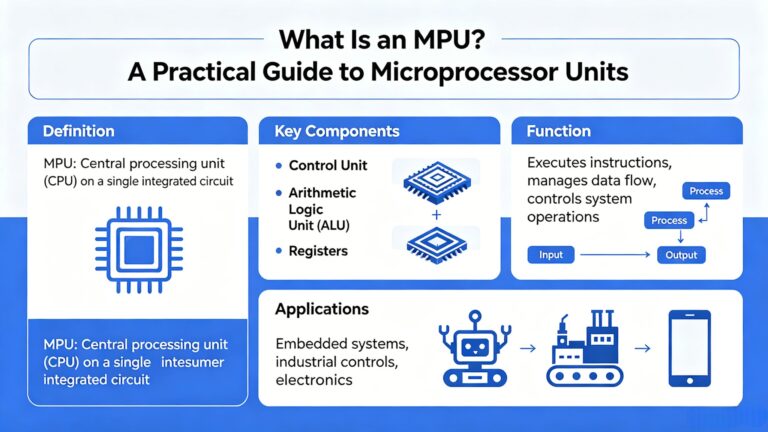
In embedded design, the tug-of-war between cost and performance is constant. On one side, you have Microcontrollers (MCUs)—cheap, simple, and efficient. On the other,…
Read More
Find out when a bare shock switch needs a pull resistor, when an MCU internal pull-up is enough, and why sensor modules and piezo…
Read More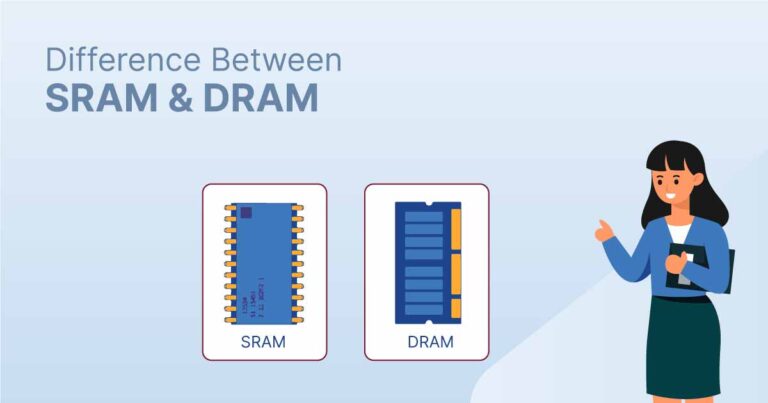
In an era dominated by AI accelerators with terabytes of HBM memory and consumer devices racing toward LPDDR5X bandwidth, it’s easy to wonder: why…
Read More
Learn how a diode conducts, how to identify anode and cathode, and when to choose rectifier, TVS, Zener or photodiode types for a circuit.
Read More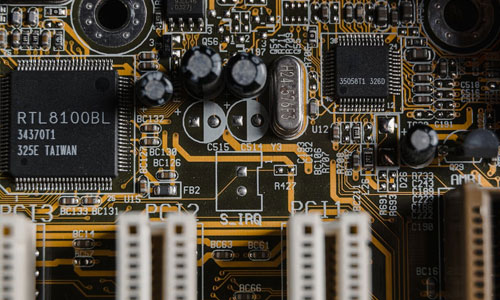
The rapid advancement of artificial intelligence (AI) is transforming industries across the globe, and the world of electronic components is no exception. From smarter…
Read More
A perfect storm of surging demand and supply chain disruptions is roiling the global electronic components market, with advanced semiconductors and critical materials now…
Read More
CHICAGO, USA – May 27, 2026 – Global leading interconnect manufacturer Molex officially issued a global distributor price adjustment notice on May 27, confirming…
Read More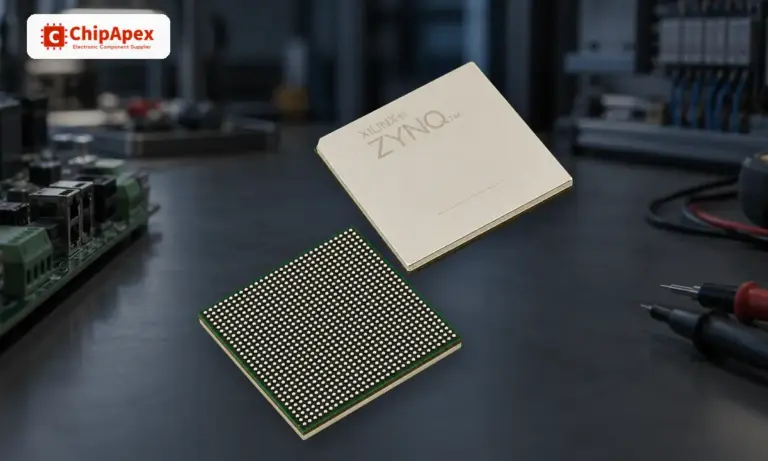
Learn what an integrated circuit is, how ICs work, the main types and the specs to check before choosing a part for your design…
Read More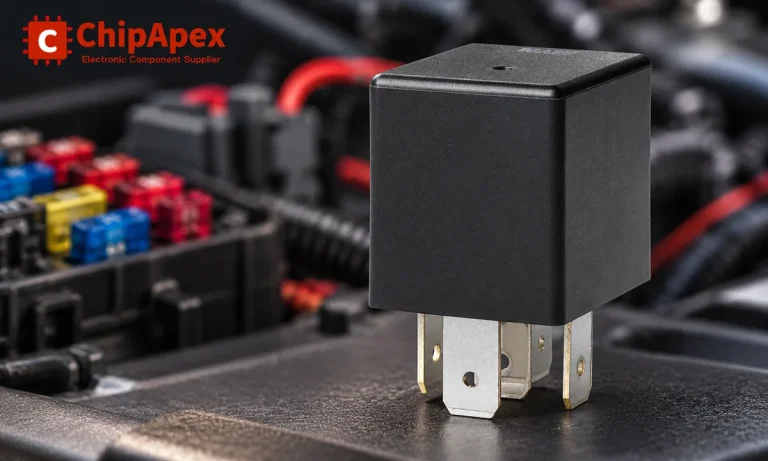
Learn the relay definition, coil and contact operation, NO and NC forms, load ratings and suppression choices. Compare mechanical, reed and solid-state types.
Read More
On October 1, 2025 local time, OpenAI, an artificial intelligence research company, announced the establishment of a cooperative relationship with Samsung Electronics and SK…
Read More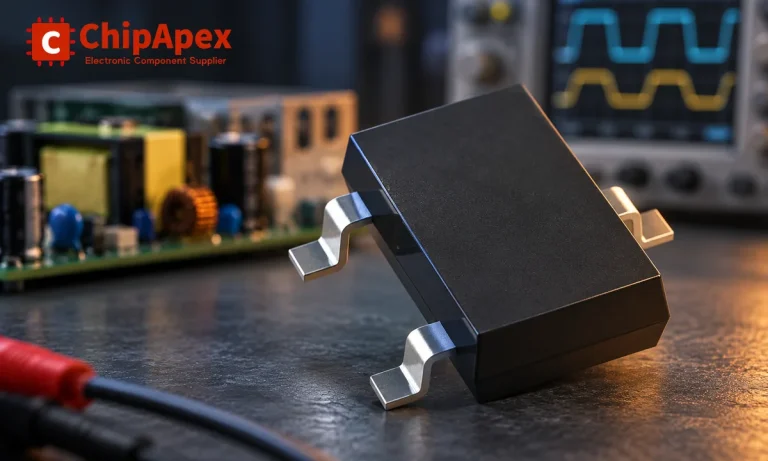
Learn how rectifiers convert AC to DC, compare half-wave and bridge circuits, and select voltage, current, recovery and thermal ratings for your design.
Read More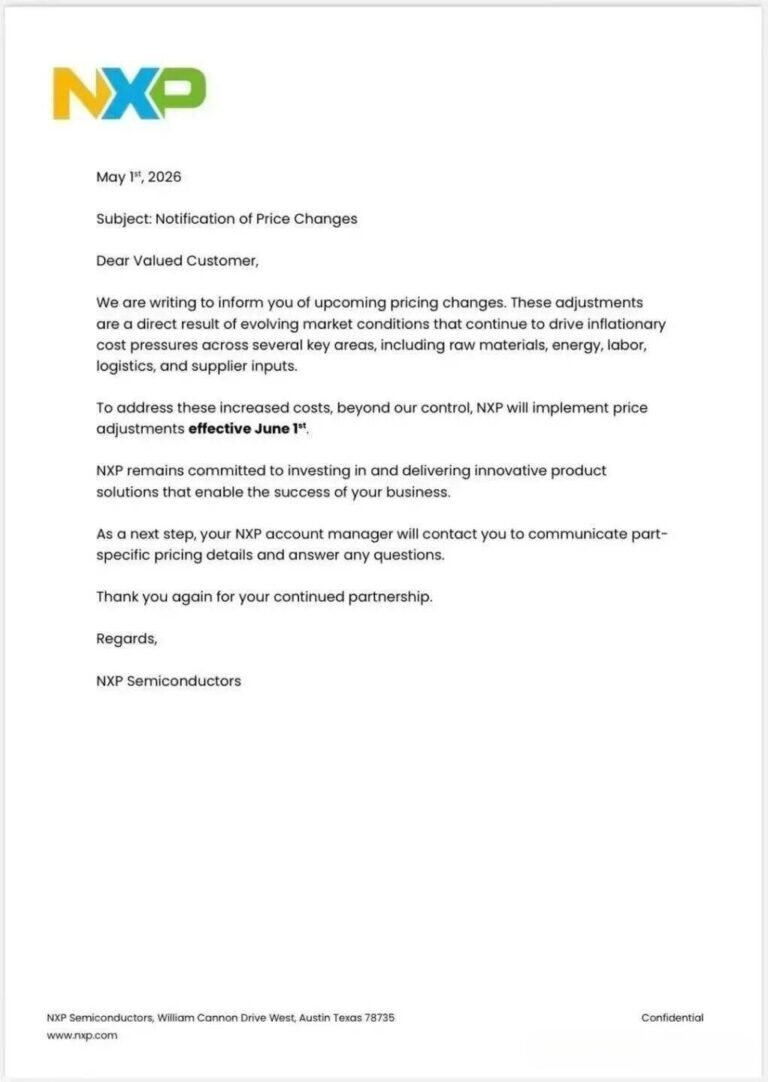
May 8, 2026 – Eindhoven, Netherlands NXP Semiconductors (NXPI), a global leader in automotive and industrial semiconductor solutions, has officially notified its worldwide channel…
Read More
The activity of extra discounts on wholesale prices is in full swing…
Please fill in your contact information and we will send you the latest wholesale price list.