 ChipApex | Global Electronic Components Supplier

SEARCH
Search Product
Search Post
— IC芯片 | 连接器 | 传感器 | 被动器件 —
Search productSearch post
— IC芯片 | 连接器 | 传感器 | 被动器件 —
Consult the customer manager about the wholesale price.
consultation hotline:86-132-6715-2157
email:[email protected]
Contact the product manager for consultation. One-stop consultation is available.
Do you want a lower wholesale price? Please send us your inquiry and we will reply immediately.
IXD1504A131MR-G is listed in the Voltage Regulators - Linear, Low Drop Out (LDO) Regulators range at ChipApex. The manufacturer field lists Zilog. Its product description is IC REG LINEAR 1.3V 150MA SOT-25. Review the specifications below when checking this part for your BOM.
The IXD1504A131MR-G is a linear voltage regulator manufactured by Zilog, classified under PMIC - Power Management ICs. It features an ultra-low quiescent current of 0.6uA, making it suitable for battery-powered applications. The device provides a fixed output voltage and is housed in a small SOT-25 package. As part of the IXD1504 series, it offers low dropout regulation capabilities with high efficiency at light loads.
Verify the specific output voltage configuration against the official datasheet before procurement, as suffixes may indicate different voltage options within the same family. Confirm package availability and ensure compliance with RoHS standards as indicated in the product attributes. Cross-reference the manufacturer part number with distributor listings to confirm authenticity and current stock status.
Select this component when ultra-low static current is critical for system power budget. Ensure the input voltage range exceeds the required output voltage plus the dropout voltage. Verify thermal performance requirements based on load current and ambient temperature conditions. Consider the SOT-25 footprint constraints during PCB layout design.
This part belongs to the Zilog IXD1504 series of low-dropout regulators designed for low-power applications. The series includes various output voltage options and packages. The IXD1504A131MR-G specifically denotes a variant with 0.6uA quiescent current, distinguishing it from higher-current counterparts in the same product line.
Check for direct pin-compatible alternatives within the IXD1504 series with matching output voltages. Verify that substitute components offer equal or lower quiescent current and compatible dropout characteristics. Ensure the replacement package matches the existing PCB footprint.
Explore related parts through Power Management (PMIC), Integrated Circuits (ICs), all product categories, ChipApex homepage.
 IXD1504A131MR-G
IXD1504A131MR-G is listed in the Voltage Regulators - Linear, Low Drop Out (LDO) Regulators range at ChipApex. The manufacturer field lists Zilog. Its product…
Read More
IXD1504A131MR-G is listed in the Voltage Regulators - Linear, Low Drop Out (LDO) Regulators range at ChipApex. The manufacturer field lists Zilog. Its product…
Read More
Learn what an integrated circuit is, how ICs work, the main types and the specs to check before choosing a part for your design…
Read More
IXD1504A131MR-G is listed in the Voltage Regulators - Linear, Low Drop Out (LDO) Regulators range at ChipApex. The manufacturer field lists Zilog. Its product…
Read More
IXD1504A131MR-G is listed in the Voltage Regulators - Linear, Low Drop Out (LDO) Regulators range at ChipApex. The manufacturer field lists Zilog. Its product…
Read More
Compare Pt100 and Pt1000 RTDs, two-, three- and four-wire connections, excitation and self-heating. Build an error budget from element to reported temperature.
Read More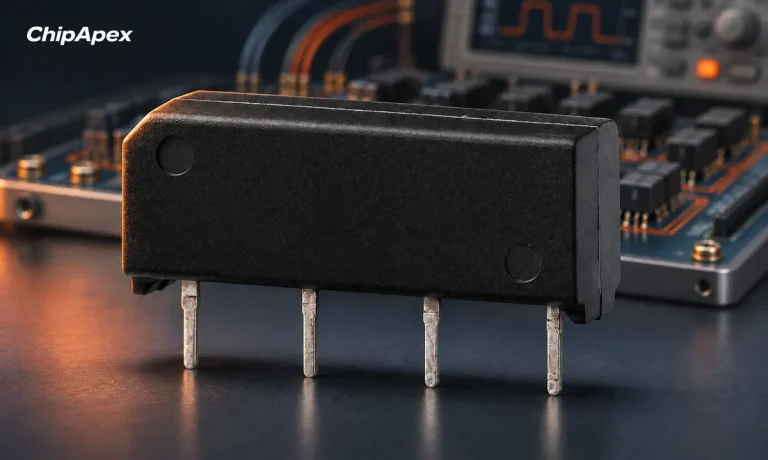
Choose a reed relay for signal switching. Understand hot and cold switching, leakage, contact resistance, isolation and measurement settling requirements.
Read More
IXD1504A131MR-G is listed in the Voltage Regulators - Linear, Low Drop Out (LDO) Regulators range at ChipApex. The manufacturer field lists Zilog. Its product…
Read More
IXD1504A131MR-G is listed in the Voltage Regulators - Linear, Low Drop Out (LDO) Regulators range at ChipApex. The manufacturer field lists Zilog. Its product…
Read More
Learn what data acquisition means, from sensors and conditioning to sampling and storage. Review channel timing, wiring, calibration and data quality.
Read More
IXD1504A131MR-G is listed in the Voltage Regulators - Linear, Low Drop Out (LDO) Regulators range at ChipApex. The manufacturer field lists Zilog. Its product…
Read More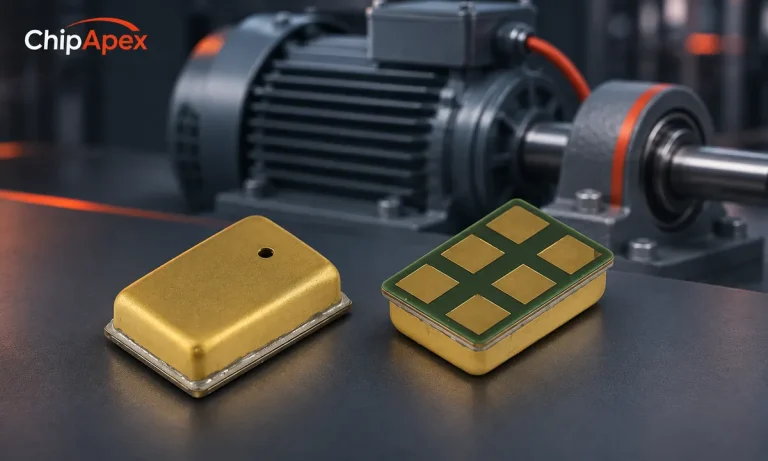
Choose a vibration sensor for machine monitoring. Compare sensing methods, bandwidth, noise and mounting, then define the signal-chain requirements.
Read More
The activity of extra discounts on wholesale prices is in full swing…
Please fill in your contact information and we will send you the latest wholesale price list.




