 ChipApex | Global Electronic Components Supplier
K2500E70
Search Product
Search Post
— IC芯片 | 连接器 | 传感器 | 被动器件 —
Search productSearch post
— IC芯片 | 连接器 | 传感器 | 被动器件 —
Consult the customer manager about the wholesale price.
consultation hotline:86-132-6715-2157
email:[email protected]
Contact the product manager for consultation. One-stop consultation is available.
Do you want a lower wholesale price? Please send us your inquiry and we will reply immediately.
The Littelfuse K2500E70 is a standard bidirectional SIDAC from the Kxxxzy series, functioning as a silicon voltage-triggered switch. It features a breakover voltage (VBO) range of 240 V to 280 V and a repetitive peak off-state voltage (VDRM) of 200 V. The device supports an on-state RMS current (IT(RMS)) of 1 A at 50/60 Hz with a junction temperature below 125°C. Key electrical parameters include a maximum dynamic holding current (IH) of 150 mA, a peak on-state voltage (VTM) of 1.5 V, and a breakover current (IBO) of 10 μA. It withstands a peak non-repetitive surge current (ITSM) of 20 A for single cycles at 60 Hz. The component operates within a junction temperature range of -40°C to 125°C and is housed in a TO-92 package.
Verify the specific ordering suffix against the manufacturer's official datasheet to confirm the package type and lead form configuration. The 'E70' designation corresponds to the TO-92 package with Type 70 lead form. Ensure that the required packaging mode, such as bulk or reel pack, matches the project specifications by checking the packing options table in the documentation. Confirm compliance requirements including RoHS status directly from the source material before procurement.
Select this component when a breakover voltage between 240 V and 280 V is required for AC circuit triggering. Ensure the application current does not exceed the 1 A RMS rating at the specified junction temperature. Consider the thermal resistance characteristics of the TO-92 package for heat dissipation calculations. Verify that the dv/dt rating of 1500 V/μs is sufficient for the transient voltage conditions present in the target circuit design.
The K2500E70 belongs to the Kxxxzy series of standard bidirectional SIDACs manufactured by Littelfuse. This series includes various voltage ratings ranging from 79 V to 330 V. The part number structure indicates the voltage rating (250), circuit function (0 for standard), package type (E for TO-92), and lead form option (70). Other variants in the series utilize different packages such as DO-15 or DO-214.
Direct substitutes within the same voltage class include other K250zy series parts like K2500G or K2500S, provided the package difference is acceptable. For identical TO-92 mounting, verify availability of K2500E70 in alternative packaging modes like RP2 or RP3. Cross-reference with other manufacturers' high-voltage trigger diodes only if pinout and electrical parameters are strictly matched.
The primary difference is the package type. The K2500E70 uses a TO-92 package with Type 70 lead form, while the K2500G utilizes a DO-15 package. Both share the same electrical characteristics and voltage ratings.
According to Figure 6 in the datasheet, the breakover voltage decreases as the junction temperature increases. At -40°C, the VBO may increase slightly above the nominal range, while at higher temperatures up to 125°C, it decreases by approximately 10-12%.
The critical rate of rise of off-state voltage (dv/dt) is rated at 1500 V/μs. Exceeding this rate may cause unintended triggering of the device without reaching the breakover voltage.
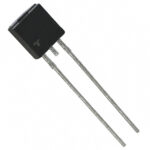 K2500E70
The activity of extra discounts on wholesale prices is in full swing…
Please fill in your contact information and we will send you the latest wholesale price list.