 ChipApex | Global Electronic Components Supplier

SEARCH
Search Product
Search Post
— IC芯片 | 连接器 | 传感器 | 被动器件 —
Search productSearch post
— IC芯片 | 连接器 | 传感器 | 被动器件 —
Consult the customer manager about the wholesale price.
consultation hotline:86-132-6715-2157
email:[email protected]
Contact the product manager for consultation. One-stop consultation is available.
Do you want a lower wholesale price? Please send us your inquiry and we will reply immediately.
LM2575HVN-12/NOPB is listed in the Voltage Regulators - DC DC Switching Regulators range at ChipApex. The manufacturer field lists Texas Instruments. Its product description is IC REG BUCK 12V 1A 16PDIP. Review the specifications below when checking this part for your BOM.
The LM2575HVN-12/NOPB is a SIMPLE SWITCHER® step-down voltage regulator from Texas Instruments, designed for high-voltage input applications. It operates with an input voltage range of 4V to 60V and provides a fixed 12V output at up to 1A load current. The device utilizes a buck topology with a typical switching frequency of 52kHz. It is housed in a TO-263 (D²PAK) surface-mount package, supporting operation across a junction temperature range of -40°C to +125°C.
Verify the specific suffix 'N' indicates the TO-263 surface-mount package variant distinct from through-hole or other package options. Confirm RoHS compliance status via the official datasheet as manufacturing processes may evolve. Ensure the ordering part number matches the required thermal performance and pinout configuration for your PCB layout.
Select this component when a fixed 12V output is required from a wide input voltage range up to 60V. The TO-263 package offers improved thermal dissipation compared to smaller SMD packages, suitable for 1A continuous loads. Consider the 52kHz switching frequency for passive component sizing relative to higher-frequency alternatives.
This part belongs to the LM2575 family of SIMPLE SWITCHER regulators, which are known for ease of use and robust performance. The 'HV' designation signifies high-voltage input capability, while the '-12' indicates a fixed 12V output version. The '/NOPB' suffix denotes lead-free and halogen-free construction compliant with environmental standards.
LM2575HVS-12/NOPB: Surface-mount alternative with similar electrical characteristics but potentially different thermal resistance values due to package variations.
Explore related parts through Power Management (PMIC), Integrated Circuits (ICs), all product categories, ChipApex homepage.
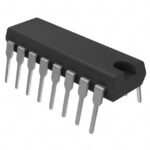 LM2575HVN-12/NOPB
Understand how a comparator switches at a voltage threshold, why hysteresis prevents chatter, and which output and input specs matter.
Read More
Explore electronic component types, functions, packages and datasheets. Learn selection, replacement and BOM checks before ordering parts for your PCB.
Read More
Learn how a pressure transducer converts pressure into voltage, current, or digital output, and compare pressure references and key selection specs.
Read More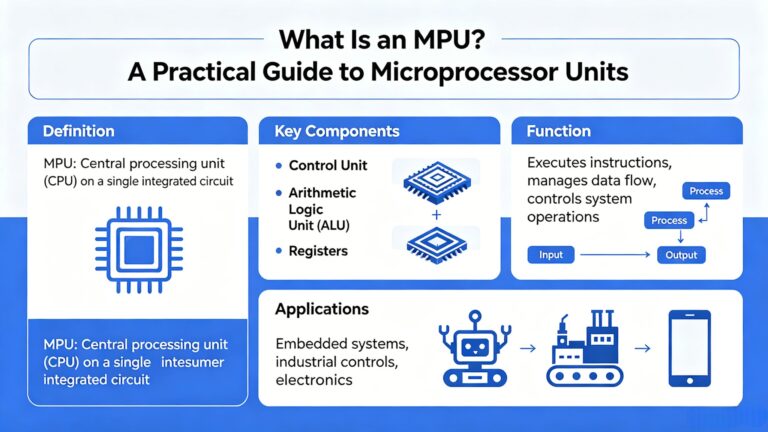
LM2575HVN-12/NOPB is listed in the Voltage Regulators - DC DC Switching Regulators range at ChipApex. The manufacturer field lists Texas Instruments. Its product description…
Read More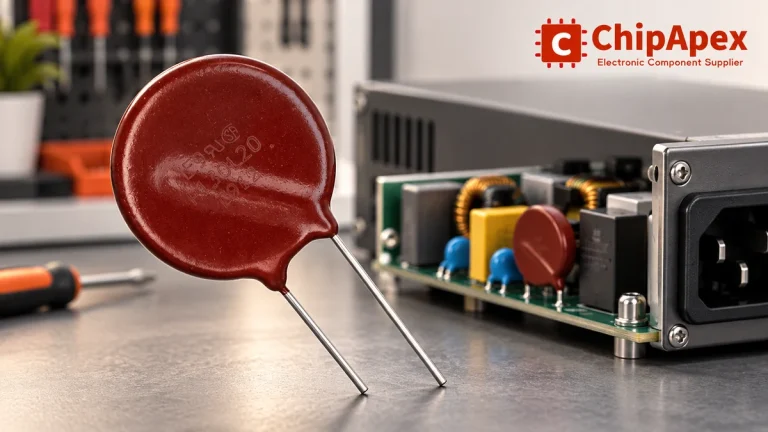
Select MOV varistors by continuous voltage, clamping behavior, surge waveform and repetition. Check thermal disconnection, fuse coordination and replacements.
Read More
LM2575HVN-12/NOPB is listed in the Voltage Regulators - DC DC Switching Regulators range at ChipApex. The manufacturer field lists Texas Instruments. Its product description…
Read More
LM2575HVN-12/NOPB is listed in the Voltage Regulators - DC DC Switching Regulators range at ChipApex. The manufacturer field lists Texas Instruments. Its product description…
Read More
LM2575HVN-12/NOPB is listed in the Voltage Regulators - DC DC Switching Regulators range at ChipApex. The manufacturer field lists Texas Instruments. Its product description…
Read More
LM2575HVN-12/NOPB is listed in the Voltage Regulators - DC DC Switching Regulators range at ChipApex. The manufacturer field lists Texas Instruments. Its product description…
Read More
LM2575HVN-12/NOPB is listed in the Voltage Regulators - DC DC Switching Regulators range at ChipApex. The manufacturer field lists Texas Instruments. Its product description…
Read More
LM2575HVN-12/NOPB is listed in the Voltage Regulators - DC DC Switching Regulators range at ChipApex. The manufacturer field lists Texas Instruments. Its product description…
Read More
See when an inductor behaves linearly, how DC bias and saturation reduce inductance, and which current and temperature curves to check.
Read More
The activity of extra discounts on wholesale prices is in full swing…
Please fill in your contact information and we will send you the latest wholesale price list.





