 ChipApex | Global Electronic Components Supplier

SEARCH
Search Product
Search Post
— IC芯片 | 连接器 | 传感器 | 被动器件 —
Search productSearch post
— IC芯片 | 连接器 | 传感器 | 被动器件 —
Consult the customer manager about the wholesale price.
consultation hotline:86-132-6715-2157
email:[email protected]
Contact the product manager for consultation. One-stop consultation is available.
Do you want a lower wholesale price? Please send us your inquiry and we will reply immediately.
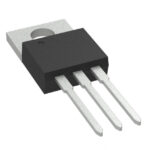
LM2990T-5.0/NOPB is listed in the Voltage Regulators - Linear, Low Drop Out (LDO) Regulators range at ChipApex. The manufacturer field lists Texas Instruments. Its product description is IC REG LINEAR -5V 1.8A TO220-3. Review the specifications below when checking this part for your BOM.
The LM2990T-5.0/NOPB is a negative low-dropout (LDO) voltage regulator manufactured by Texas Instruments, designed for applications requiring stable negative voltage rails. It provides a fixed output of -5 V with a maximum load current capability of 1 A. The device operates within an input voltage range from 6.25 V to 26 V and maintains regulation with a typical dropout voltage of 500 mV at full load. It features a quiescent current of approximately 10 mA and is housed in a TO-220 package suitable for through-hole mounting.
Verify the specific suffix 'NOPB' confirms lead-free and RoHS compliance status as per the manufacturer's latest documentation. Ensure the ordering part number matches the required negative polarity and fixed -5 V output specification. Confirm that the TO-220 through-hole package aligns with the target PCB footprint and thermal management requirements before finalizing procurement.
Select this component when a stable negative voltage source is required for analog or mixed-signal circuits. It is appropriate for designs needing high current capacity with minimal heat dissipation compared to standard regulators. Consider the input voltage headroom relative to the dropout characteristics to ensure proper regulation across the entire operating temperature range.
This device belongs to the LM2990 series of negative LDO regulators from Texas Instruments. It serves as a complement to positive LDO families like the LM2940, providing symmetrical power solutions. The series is characterized by robust performance in industrial and commercial environments, offering reliable regulation for sensitive downstream components requiring precise negative voltage references.
Public confirmed substitute part numbers are not available in the provided data.
Explore related parts through Power Management (PMIC), Integrated Circuits (ICs), all product categories, ChipApex homepage.
 LM2990T-5.0/NOPB

Learn the relay definition, coil and contact operation, NO and NC forms, load ratings and suppression choices. Compare mechanical, reed and solid-state types.
Read More
LM2990T-5.0/NOPB is listed in the Voltage Regulators - Linear, Low Drop Out (LDO) Regulators range at ChipApex. The manufacturer field lists Texas Instruments. Its…
Read More
LM2990T-5.0/NOPB is listed in the Voltage Regulators - Linear, Low Drop Out (LDO) Regulators range at ChipApex. The manufacturer field lists Texas Instruments. Its…
Read More
Choose a DIP switch by contact type, coded positions, footprint and signal ratings. Check logic polarity, assembly conditions and PCB configuration behavior.
Read More
LM2990T-5.0/NOPB is listed in the Voltage Regulators - Linear, Low Drop Out (LDO) Regulators range at ChipApex. The manufacturer field lists Texas Instruments. Its…
Read More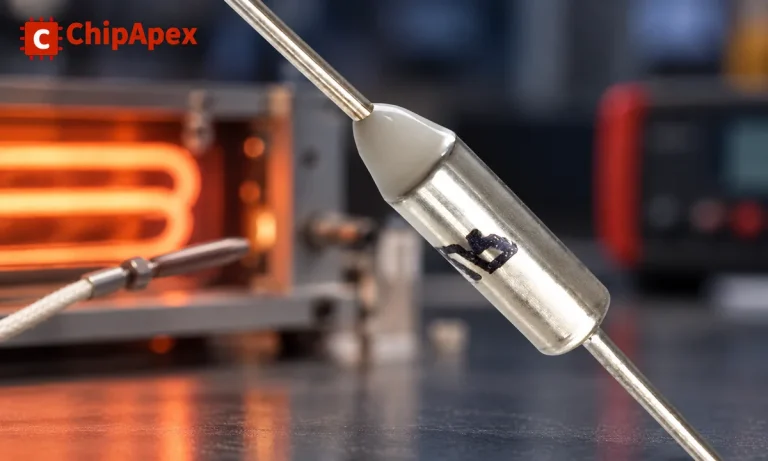
Understand thermal fuse operation, Tf, Th and Tm, electrical ratings and mounting. Check temperature limits and replacement requirements for your design.
Read More
LM2990T-5.0/NOPB is listed in the Voltage Regulators - Linear, Low Drop Out (LDO) Regulators range at ChipApex. The manufacturer field lists Texas Instruments. Its…
Read More
LM2990T-5.0/NOPB is listed in the Voltage Regulators - Linear, Low Drop Out (LDO) Regulators range at ChipApex. The manufacturer field lists Texas Instruments. Its…
Read More
LM2990T-5.0/NOPB is listed in the Voltage Regulators - Linear, Low Drop Out (LDO) Regulators range at ChipApex. The manufacturer field lists Texas Instruments. Its…
Read More
Compare RC, crystal and MEMS oscillator circuits. Check ppm, jitter, load capacitance, startup margin and output compatibility before choosing a clock source.
Read More
Learn how a pressure transducer converts pressure into voltage, current, or digital output, and compare pressure references and key selection specs.
Read More
Choose an AC to DC converter by input range, output demand, isolation, efficiency and thermal derating. Compare architectures and check installation needs.
Read More
The activity of extra discounts on wholesale prices is in full swing…
Please fill in your contact information and we will send you the latest wholesale price list.




