ChipApex | Global Electronic Components Supplier

SEARCH
Search Product
Search Post
— IC芯片 | 连接器 | 传感器 | 被动器件 —
Search productSearch post
— IC芯片 | 连接器 | 传感器 | 被动器件 —
Consult the customer manager about the wholesale price.
consultation hotline:86-132-6715-2157
email:[email protected]
Contact the product manager for consultation. One-stop consultation is available.
Do you want a lower wholesale price? Please send us your inquiry and we will reply immediately.
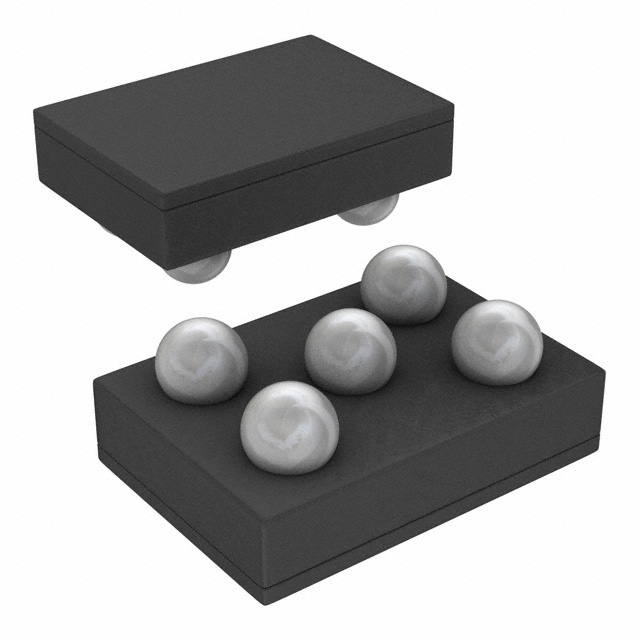
LM3671TL-2.8/NOPB is listed in the Voltage Regulators - DC DC Switching Regulators range at ChipApex. The manufacturer field lists Texas Instruments. Its product description is IC REG BUCK 2.8V 600MA 5DSBGA. Review the specifications below when checking this part for your BOM.
The LM3671TL-2.8/NOPB is a step-down DC-DC converter manufactured by Texas Instruments, belonging to the LM3671 series. It features a fixed 2.8 V output voltage and supports up to 600 mA of load current. The device operates with an input voltage range from 2.7 V to 5.5 V and utilizes a buck topology. It incorporates a typical switching frequency of 2.6 MHz and functions within a temperature range of -40°C to +85°C. The component is housed in a DSBGA-5 package.
Verify that the specific suffix TL indicates the DSBGA-5 package configuration rather than other variants like MFX (SOT-23-5). Confirm the 2.8 designation matches the required fixed output voltage. Ensure the NOPB suffix confirms lead-free compliance and RoHS standards as specified in the official datasheet documentation.
Select this model when a fixed 2.8 V output is required without external resistor programming. Choose the TL package variant if board space constraints favor the DSBGA-5 footprint over the SOT-23-5 option. Consider the 2.6 MHz frequency for minimizing passive component size while maintaining stability within the 2.7 V to 5.5 V input range.
This component is part of the LM3671 family of step-down converters designed for portable applications. It provides regulated power from single-cell lithium batteries or 5 V rails. The family includes adjustable versions and various package options to suit different design requirements for mobile phones and similar systems.
LM3671MFX-2.8/NOPB offers identical electrical performance but utilizes an SOT-23-5 package instead of DSBGA-5. LM3671TLX-2.8/NOPB shares the same DSBGA-5 form factor and specifications. Verify pinout compatibility before substitution.
Explore related parts through Power Management (PMIC), Integrated Circuits (ICs), all product categories, ChipApex homepage.
 LM3671TL-2.8/NOPB

LM3671TL-2.8/NOPB is listed in the Voltage Regulators - DC DC Switching Regulators range at ChipApex. The manufacturer field lists Texas Instruments. Its product description…
Read More
LM3671TL-2.8/NOPB is listed in the Voltage Regulators - DC DC Switching Regulators range at ChipApex. The manufacturer field lists Texas Instruments. Its product description…
Read More
LM3671TL-2.8/NOPB is listed in the Voltage Regulators - DC DC Switching Regulators range at ChipApex. The manufacturer field lists Texas Instruments. Its product description…
Read More
Learn what data acquisition means, from sensors and conditioning to sampling and storage. Review channel timing, wiring, calibration and data quality.
Read More
Learn how a pressure transducer converts pressure into voltage, current, or digital output, and compare pressure references and key selection specs.
Read More
LM3671TL-2.8/NOPB is listed in the Voltage Regulators - DC DC Switching Regulators range at ChipApex. The manufacturer field lists Texas Instruments. Its product description…
Read More
LM3671TL-2.8/NOPB is listed in the Voltage Regulators - DC DC Switching Regulators range at ChipApex. The manufacturer field lists Texas Instruments. Its product description…
Read More
LM3671TL-2.8/NOPB is listed in the Voltage Regulators - DC DC Switching Regulators range at ChipApex. The manufacturer field lists Texas Instruments. Its product description…
Read More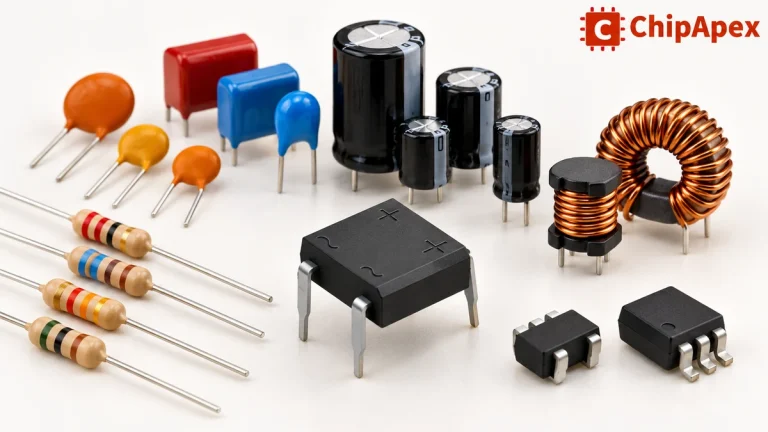
Explore electronic component types, functions, packages and datasheets. Learn selection, replacement and BOM checks before ordering parts for your PCB.
Read More
LM3671TL-2.8/NOPB is listed in the Voltage Regulators - DC DC Switching Regulators range at ChipApex. The manufacturer field lists Texas Instruments. Its product description…
Read More
Learn how rectifiers convert AC to DC, compare half-wave and bridge circuits, and select voltage, current, recovery and thermal ratings for your design.
Read More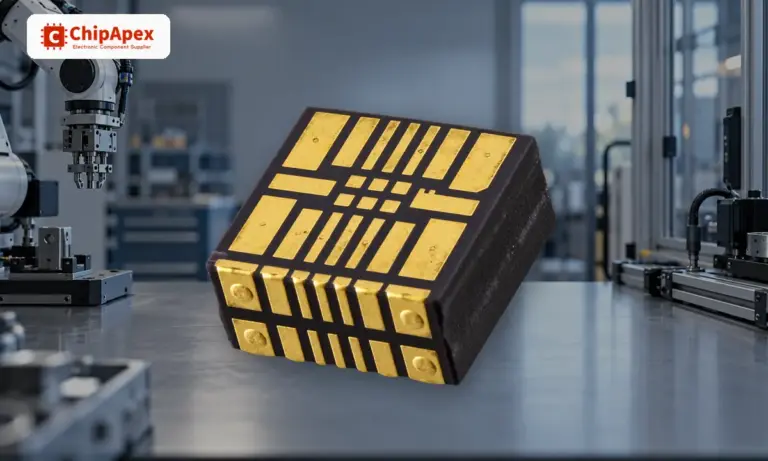
See how a MEMS gyroscope measures angular rate, why its angle estimate drifts, and which range, noise, interface and temperature specs to compare.
Read More
The activity of extra discounts on wholesale prices is in full swing…
Please fill in your contact information and we will send you the latest wholesale price list.