 ChipApex | Global Electronic Components Supplier

SEARCH
Search Product
Search Post
— IC芯片 | 连接器 | 传感器 | 被动器件 —
Search productSearch post
— IC芯片 | 连接器 | 传感器 | 被动器件 —
Consult the customer manager about the wholesale price.
consultation hotline:86-132-6715-2157
email:[email protected]
Contact the product manager for consultation. One-stop consultation is available.
Do you want a lower wholesale price? Please send us your inquiry and we will reply immediately.
M4A3-384/192-12SAC is listed in the Complex Programmable Logic Devices range at ChipApex. The manufacturer field lists Lattice Semiconductor Corporation. Its product description is IC CPLD 384MC 12NS 256SBGA. Review the specifications below when checking this part for your BOM.
The M4A3-384/192-12SAC is a high-performance Complex Programmable Logic Device (CPLD) from the Lattice ispMACH 4A family. It features 384 macrocells and supports up to 192 user I/Os in a BGA package. Operating at a nominal 3.3 V supply, it delivers a maximum propagation delay of 12 ns and a counter frequency of 154 MHz. The device utilizes E2CMOS technology with EEPROM storage for non-volatile configuration. It includes JTAG boundary scan compliance and SpeedLocking architecture for guaranteed fixed timing performance.
Verify the specific suffix 'SAC' against the manufacturer's current datasheet to confirm package type and temperature range. Confirm end-of-life status or obsolescence notices prior to procurement planning. Ensure design tools support the ispMACH 4A family for compilation and programming.
Select this model when designs require 384 macrocells with high I/O counts (up to 192). The -12 speed grade provides 12 ns delay suitable for moderate-to-high frequency applications. Verify that the system operates within the 3.0 V to 3.6 V supply range and requires 3.3 V I/O levels compatible with 5 V inputs.
This component belongs to the ispMACH 4A family, which offers flexible architecture with central switch matrices for 100% routability. The M4A3 series specifically denotes 3.3 V operation. The part number indicates the density (384 macrocells), I/O count (192), speed grade (-12), and package variant (SAC).
Direct replacements within the same family include other M4A3-384 variants with different speed grades or packages. Cross-family migration to newer Lattice CPLDs may require architectural adaptation due to differences in macrocell structure and toolchains.
Explore related parts through Embedded, Integrated Circuits (ICs), all product categories, ChipApex homepage.
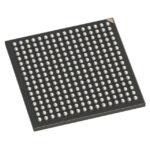 M4A3-384/192-12SAC
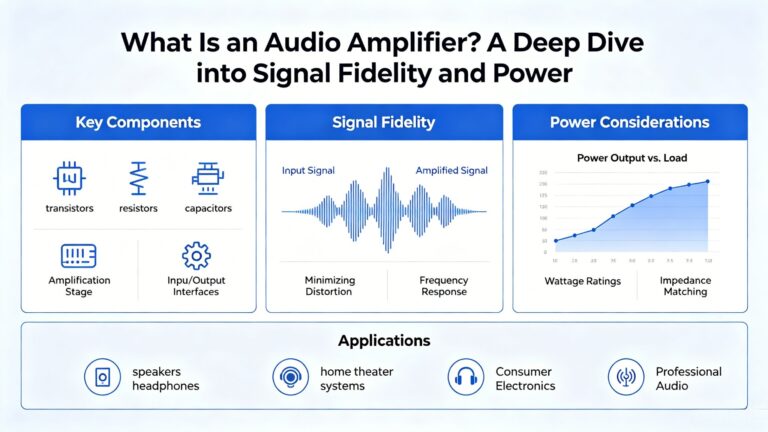
M4A3-384/192-12SAC is listed in the Complex Programmable Logic Devices range at ChipApex. The manufacturer field lists Lattice Semiconductor Corporation. Its product description is IC…
Read More
M4A3-384/192-12SAC is listed in the Complex Programmable Logic Devices range at ChipApex. The manufacturer field lists Lattice Semiconductor Corporation. Its product description is IC…
Read More
M4A3-384/192-12SAC is listed in the Complex Programmable Logic Devices range at ChipApex. The manufacturer field lists Lattice Semiconductor Corporation. Its product description is IC…
Read More
M4A3-384/192-12SAC is listed in the Complex Programmable Logic Devices range at ChipApex. The manufacturer field lists Lattice Semiconductor Corporation. Its product description is IC…
Read More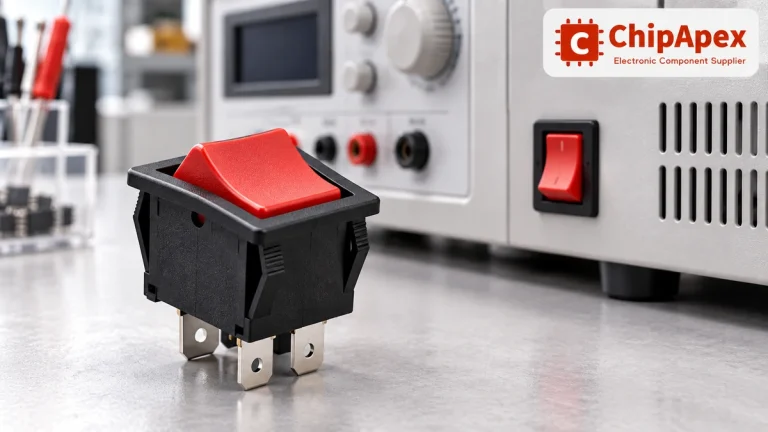
Choose a rocker switch by AC/DC ratings, contact arrangement, illumination, panel fit and sealing. Get practical checks for engineering and component sourcing.
Read More
M4A3-384/192-12SAC is listed in the Complex Programmable Logic Devices range at ChipApex. The manufacturer field lists Lattice Semiconductor Corporation. Its product description is IC…
Read More
Learn how a pressure transducer converts pressure into voltage, current, or digital output, and compare pressure references and key selection specs.
Read More
Understand RF attenuator dB values, fixed and programmable types, impedance, power limits and noise tradeoffs before choosing parts for an RF signal path.
Read More
Find out when a bare shock switch needs a pull resistor, when an MCU internal pull-up is enough, and why sensor modules and piezo…
Read More
M4A3-384/192-12SAC is listed in the Complex Programmable Logic Devices range at ChipApex. The manufacturer field lists Lattice Semiconductor Corporation. Its product description is IC…
Read More
M4A3-384/192-12SAC is listed in the Complex Programmable Logic Devices range at ChipApex. The manufacturer field lists Lattice Semiconductor Corporation. Its product description is IC…
Read More
M4A3-384/192-12SAC is listed in the Complex Programmable Logic Devices range at ChipApex. The manufacturer field lists Lattice Semiconductor Corporation. Its product description is IC…
Read More
The activity of extra discounts on wholesale prices is in full swing…
Please fill in your contact information and we will send you the latest wholesale price list.





