 ChipApex | Global Electronic Components Supplier

SEARCH
Search Product
Search Post
— IC芯片 | 连接器 | 传感器 | 被动器件 —
Search productSearch post
— IC芯片 | 连接器 | 传感器 | 被动器件 —
Consult the customer manager about the wholesale price.
consultation hotline:86-132-6715-2157
email:[email protected]
Contact the product manager for consultation. One-stop consultation is available.
Do you want a lower wholesale price? Please send us your inquiry and we will reply immediately.
NCP1011ST130T3G is listed in the AC DC Converters, Offline Switchers range at ChipApex. The manufacturer field lists onsemi. Its product description is IC OFFLINE SWITCH FLYBACK SOT223. Review the specifications below when checking this part for your BOM.
The NCP1011ST130T3G is an offline switcher IC from onsemi, designed for flyback converter topologies. It integrates a high-voltage power MOSFET and a current-mode PWM controller within a single package. The device operates at a fixed switching frequency of 130 kHz and features a breakdown voltage of 700 V. It supports a supply voltage range of 8.5 V to 10 V and delivers up to 19 W of output power. The component includes comprehensive fault protection mechanisms such as overload, over-temperature, and over-voltage protection. It is housed in a SOT-223 (TO-261) surface-mount package and functions within a junction temperature range of -40°C to 150°C.
Verify the specific suffix 'T3G' against the manufacturer's official documentation to confirm packaging details and environmental compliance status. Ensure the part number matches the exact pinout and thermal characteristics required for your PCB layout. Cross-reference the datasheet revision date to validate all electrical parameters before finalizing procurement specifications.
Select this component when designing isolated flyback converters requiring integrated high-voltage switching capabilities. The fixed 130 kHz frequency suits applications where EMI filtering constraints align with this operating point. Consider the SOT-223 package for surface-mount assembly needs and verify that the 19 W power capability meets the target load requirements without exceeding thermal limits.
This device belongs to the NCP101X series of self-powered monolithic switching regulators. The series is engineered to provide complete solutions for low-cost, robust power supplies by combining control logic and power switching in one unit. The NCP1011 variant specifically targets applications requiring the 130 kHz switching frequency option within this family.
NCP1010ST130T3G
Explore related parts through Power Management (PMIC), Integrated Circuits (ICs), all product categories, ChipApex homepage.
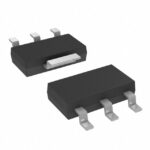 NCP1011ST130T3G
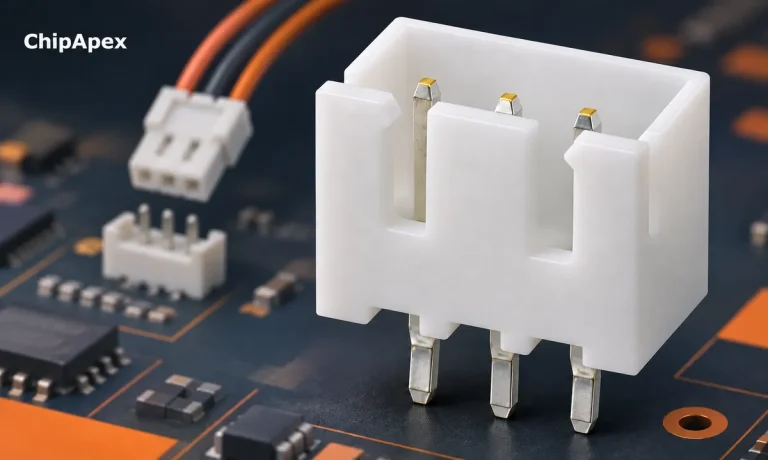
Choose a pin header by pitch, mating geometry, current rating and mounting. Learn why matching pin count and spacing does not guarantee compatibility.
Read More
Choose an AC to DC converter by input range, output demand, isolation, efficiency and thermal derating. Compare architectures and check installation needs.
Read More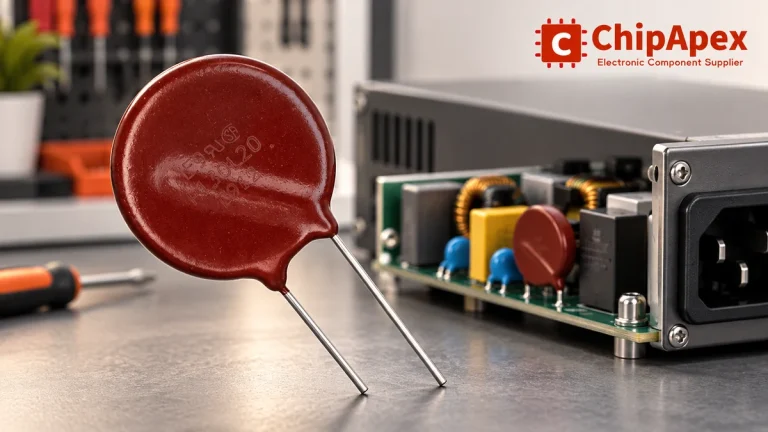
Select MOV varistors by continuous voltage, clamping behavior, surge waveform and repetition. Check thermal disconnection, fuse coordination and replacements.
Read More
NCP1011ST130T3G is listed in the AC DC Converters, Offline Switchers range at ChipApex. The manufacturer field lists onsemi. Its product description is IC OFFLINE…
Read More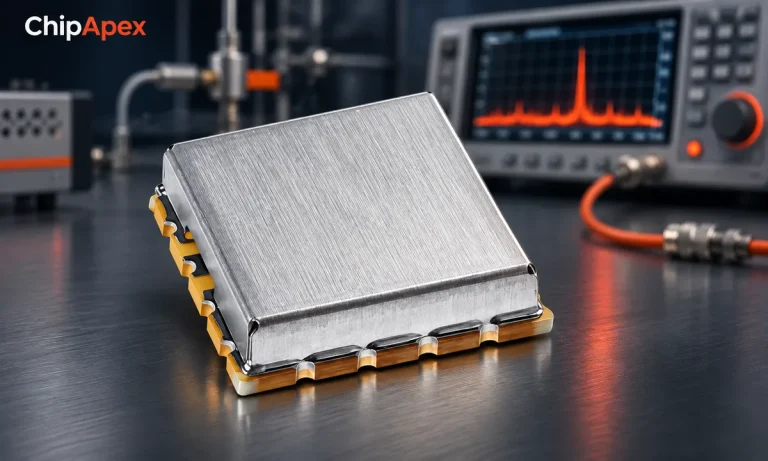
Understand voltage controlled oscillator tuning, phase noise and PLL operation. Check supply noise, output loading and requirements before selection.
Read More
Learn why PTC resistance rises with temperature, how it differs from NTC, and which ratings matter for sensing and protection.
Read More
NCP1011ST130T3G is listed in the AC DC Converters, Offline Switchers range at ChipApex. The manufacturer field lists onsemi. Its product description is IC OFFLINE…
Read More
NCP1011ST130T3G is listed in the AC DC Converters, Offline Switchers range at ChipApex. The manufacturer field lists onsemi. Its product description is IC OFFLINE…
Read More
NCP1011ST130T3G is listed in the AC DC Converters, Offline Switchers range at ChipApex. The manufacturer field lists onsemi. Its product description is IC OFFLINE…
Read More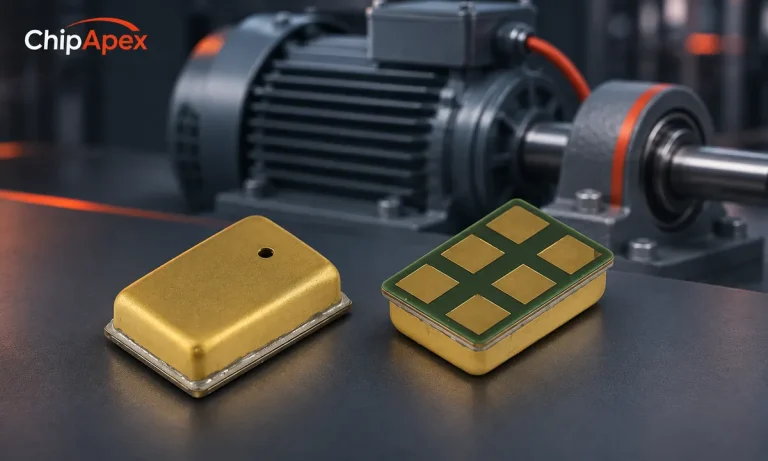
Choose a vibration sensor for machine monitoring. Compare sensing methods, bandwidth, noise and mounting, then define the signal-chain requirements.
Read More
NCP1011ST130T3G is listed in the AC DC Converters, Offline Switchers range at ChipApex. The manufacturer field lists onsemi. Its product description is IC OFFLINE…
Read More
See when an inductor behaves linearly, how DC bias and saturation reduce inductance, and which current and temperature curves to check.
Read More
The activity of extra discounts on wholesale prices is in full swing…
Please fill in your contact information and we will send you the latest wholesale price list.





