 ChipApex | Global Electronic Components Supplier

SEARCH
Search Product
Search Post
— IC芯片 | 连接器 | 传感器 | 被动器件 —
Search productSearch post
— IC芯片 | 连接器 | 传感器 | 被动器件 —
Consult the customer manager about the wholesale price.
consultation hotline:86-132-6715-2157
email:[email protected]
Contact the product manager for consultation. One-stop consultation is available.
Do you want a lower wholesale price? Please send us your inquiry and we will reply immediately.
SN74ALS646ANT is listed in the Buffers, Drivers, Receivers, Transceivers range at ChipApex. The manufacturer field lists Texas Instruments. Its product description is IC TXRX NON-INVERT 5.5V 24DIP. Review the specifications below when checking this part for your BOM.
The SN74ALS646ANT is an octal registered bus transceiver from the Texas Instruments ALS logic family. It features eight non-inverting data paths with TTL-compatible input and output levels. The device operates within a supply voltage range of 4.5 V to 5.5 V. It provides three-state outputs with a low-level output current of 24 mA and a high-level output current of -15 mA. Propagation delay is specified at 30 ns. The component supports surface mount installation in a SOIC-24 package and functions within a temperature range of 0°C to +70°C.
Verify the specific suffix 'A' against official manufacturer documentation, as standard listings typically reference the SN74ALS646ADW variant. Confirm that the SOIC-24 package matches the required footprint for the design. Ensure the commercial temperature range aligns with operational requirements before finalizing procurement.
Select this component when an octal registered transceiver with ALS speed and power characteristics is required. The TTL input compatibility simplifies interfacing with legacy logic families. Verify that the 30 ns propagation delay meets system timing constraints and that the 24 mA drive capability is sufficient for the connected load.
This part belongs to the SN74ALS646A series of octal bus transceivers. It is designed for high-speed applications requiring registered data storage and bidirectional transfer. The ALS technology offers improved speed-power product compared to standard 74S series devices while maintaining compatible pinouts.
The SN74ALS646ADW is a documented equivalent offering identical electrical specifications in a similar SOIC-24 package. Verify pinout compatibility and thermal performance before substitution.
Explore related parts through Logic, Integrated Circuits (ICs), all product categories, ChipApex homepage.
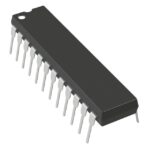 SN74ALS646ANT
SN74ALS646ANT is listed in the Buffers, Drivers, Receivers, Transceivers range at ChipApex. The manufacturer field lists Texas Instruments. Its product description is IC TXRX…
Read More
SN74ALS646ANT is listed in the Buffers, Drivers, Receivers, Transceivers range at ChipApex. The manufacturer field lists Texas Instruments. Its product description is IC TXRX…
Read More
SN74ALS646ANT is listed in the Buffers, Drivers, Receivers, Transceivers range at ChipApex. The manufacturer field lists Texas Instruments. Its product description is IC TXRX…
Read More
Learn how a JFET works and how to compare bias, leakage, noise and pinout. Review practical selection questions for high-impedance analog circuits.
Read More
SN74ALS646ANT is listed in the Buffers, Drivers, Receivers, Transceivers range at ChipApex. The manufacturer field lists Texas Instruments. Its product description is IC TXRX…
Read More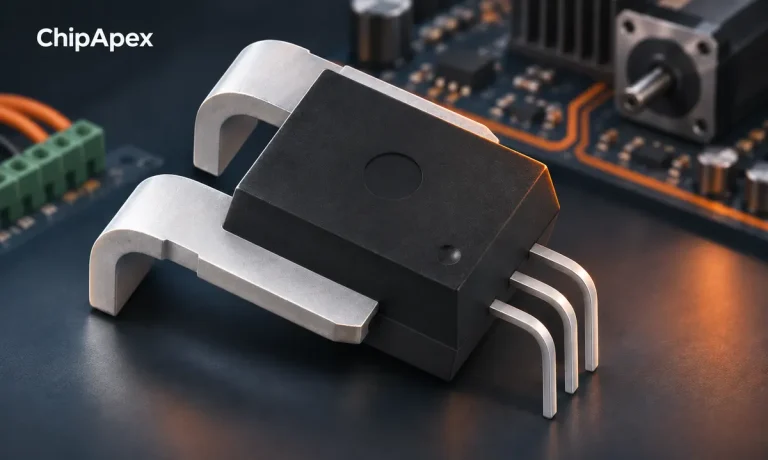
Compare Hall, shunt, current transformer and Rogowski sensing. Check AC/DC capability, accuracy, isolation, heat and response before selecting a sensor.
Read More
Understand how a comparator switches at a voltage threshold, why hysteresis prevents chatter, and which output and input specs matter.
Read More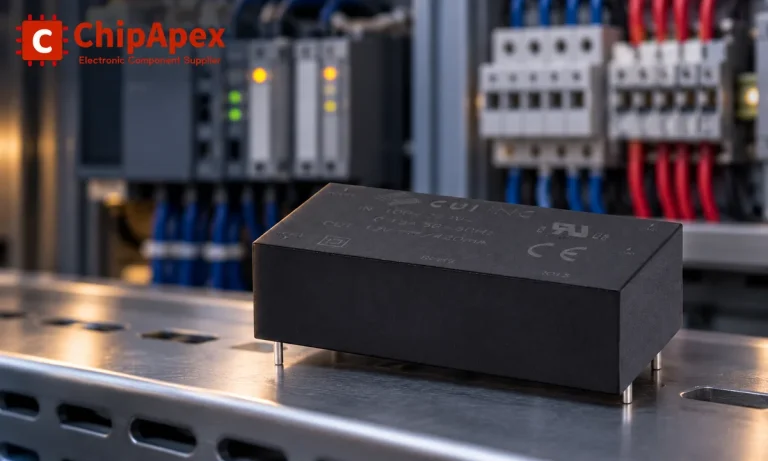
Choose an AC to DC converter by input range, output demand, isolation, efficiency and thermal derating. Compare architectures and check installation needs.
Read More
SN74ALS646ANT is listed in the Buffers, Drivers, Receivers, Transceivers range at ChipApex. The manufacturer field lists Texas Instruments. Its product description is IC TXRX…
Read More
SN74ALS646ANT is listed in the Buffers, Drivers, Receivers, Transceivers range at ChipApex. The manufacturer field lists Texas Instruments. Its product description is IC TXRX…
Read More
SN74ALS646ANT is listed in the Buffers, Drivers, Receivers, Transceivers range at ChipApex. The manufacturer field lists Texas Instruments. Its product description is IC TXRX…
Read More
Learn what an IMU measures, how accelerometers and gyroscopes work together, why orientation estimates drift, and what to compare.
Read More
The activity of extra discounts on wholesale prices is in full swing…
Please fill in your contact information and we will send you the latest wholesale price list.





