 ChipApex | Global Electronic Components Supplier

SEARCH
Search Product
Search Post
— IC芯片 | 连接器 | 传感器 | 被动器件 —
Search productSearch post
— IC芯片 | 连接器 | 传感器 | 被动器件 —
Consult the customer manager about the wholesale price.
consultation hotline:86-132-6715-2157
email:[email protected]
Contact the product manager for consultation. One-stop consultation is available.
Do you want a lower wholesale price? Please send us your inquiry and we will reply immediately.
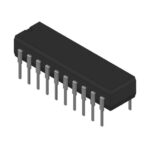
SN74HCT374NS is listed in the Flip Flops range at ChipApex. The manufacturer field lists Texas Instruments. Its product description is IC FF D-TYPE SNGL 8BIT 20SO. Review the specifications below when checking this part for your BOM.
The SN74HCT374NS is an octal D-type edge-triggered flip-flop manufactured by Texas Instruments. It features eight independent D-type flip-flops with positive-edge triggering and three-state outputs. The device operates within a supply voltage range of 2V to 6V, with typical propagation delay of 230ns at 5V. Output drive capability includes -7.8mA high-level and 7.8mA low-level currents. It is housed in a 20-pin SOIC package.
Verify the exact suffix 'NS' against the manufacturer's current ordering information, as standard datasheets often list 'N' (PDIP) or 'DWR' (SOIC-20). Confirm that the specific package variant matches your PCB footprint requirements. Check RoHS compliance status and lead times directly with authorized distributors, as availability varies by region and production batch.
Select this component when an octal register with three-state output is required for bus interfacing. Ensure the system voltage falls within the 2V to 6V operating range. Consider the 230ns propagation delay if timing constraints are critical. Compare with HC series for lower cost or HCT series for TTL compatibility if input thresholds differ from CMOS standards.
This part belongs to the Texas Instruments 74HCT logic family, which combines CMOS speed with TTL-compatible input thresholds. The 374 designation indicates an octal D-type flip-flop. The NS suffix typically denotes a specific surface-mount or through-hole variant depending on the manufacturer's coding scheme, distinguishing it from other packages like DIP or TSSOP.
The device uses positive-edge triggering, meaning data is captured on the rising edge of the clock signal.
Yes, the three-state output enable (OE) input allows all outputs to enter a high-impedance state, disconnecting them from the bus.
Explore related parts through Logic, Integrated Circuits (ICs), all product categories, ChipApex homepage.
 SN74HCT374NS

SN74HCT374NS is listed in the Flip Flops range at ChipApex. The manufacturer field lists Texas Instruments. Its product description is IC FF D-TYPE SNGL…
Read More
Select a bridge rectifier by reverse voltage, capacitor charging current, startup surge and cooling. Work through a stated DC voltage and ripple example.
Read More
SN74HCT374NS is listed in the Flip Flops range at ChipApex. The manufacturer field lists Texas Instruments. Its product description is IC FF D-TYPE SNGL…
Read More
SN74HCT374NS is listed in the Flip Flops range at ChipApex. The manufacturer field lists Texas Instruments. Its product description is IC FF D-TYPE SNGL…
Read More
SN74HCT374NS is listed in the Flip Flops range at ChipApex. The manufacturer field lists Texas Instruments. Its product description is IC FF D-TYPE SNGL…
Read More
Learn how rectifiers convert AC to DC, compare half-wave and bridge circuits, and select voltage, current, recovery and thermal ratings for your design.
Read More
SN74HCT374NS is listed in the Flip Flops range at ChipApex. The manufacturer field lists Texas Instruments. Its product description is IC FF D-TYPE SNGL…
Read More
SN74HCT374NS is listed in the Flip Flops range at ChipApex. The manufacturer field lists Texas Instruments. Its product description is IC FF D-TYPE SNGL…
Read More
Choose a DIP switch by contact type, coded positions, footprint and signal ratings. Check logic polarity, assembly conditions and PCB configuration behavior.
Read More
SN74HCT374NS is listed in the Flip Flops range at ChipApex. The manufacturer field lists Texas Instruments. Its product description is IC FF D-TYPE SNGL…
Read More
SN74HCT374NS is listed in the Flip Flops range at ChipApex. The manufacturer field lists Texas Instruments. Its product description is IC FF D-TYPE SNGL…
Read More
SN74HCT374NS is listed in the Flip Flops range at ChipApex. The manufacturer field lists Texas Instruments. Its product description is IC FF D-TYPE SNGL…
Read More
The activity of extra discounts on wholesale prices is in full swing…
Please fill in your contact information and we will send you the latest wholesale price list.






