 ChipApex | Global Electronic Components Supplier

SEARCH
Search Product
Search Post
— IC芯片 | 连接器 | 传感器 | 被动器件 —
Search productSearch post
— IC芯片 | 连接器 | 传感器 | 被动器件 —
Consult the customer manager about the wholesale price.
consultation hotline:86-132-6715-2157
email:[email protected]
Contact the product manager for consultation. One-stop consultation is available.
Do you want a lower wholesale price? Please send us your inquiry and we will reply immediately.
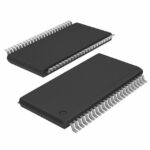
SN74LVC16244ADGVR is listed in the Buffers, Drivers, Receivers, Transceivers range at ChipApex. The manufacturer field lists Texas Instruments. Its product description is IC BUF NON-INVERT 3.6V 48TVSOP. Review the specifications below when checking this part for your BOM.
The SN74LVC16244A is a 16-bit buffer and line driver with 3-state outputs designed for 1.65-V to 3.6-V VCC operation. It features inputs that accept voltages up to 5.5 V, enabling mixed-mode signal operation in 3.3-V/5-V systems. The device supports live insertion via Ioff functionality and provides latch-up protection exceeding 250 mA per JESD 17 standards. It operates within a temperature range of -40°C to 125°C.
Verify the specific package type (TSSOP, TVSOP, or SSOP) matches the design requirements. Confirm RoHS compliance and lead finish specifications against the orderable addendum. Ensure ESD handling protocols are followed during storage and assembly due to MOS gate sensitivity.
Select this component for high-density bus-oriented receivers and transmitters requiring down-voltage translation. Verify input transition rates do not exceed specified limits to prevent excessive current consumption. Ensure unused inputs are tied to VCC or GND to maintain stable operational states.
This device belongs to Texas Instruments' Widebus Family, optimized for performance and density improvements in memory address drivers and clock drivers. It functions as four 4-bit buffers, two 8-bit buffers, or one 16-bit buffer, offering flexible configuration options for various system architectures.
SN74LVC16244ADGGRG4
Yes, the inputs accept voltages up to 5.5 V at any valid VCC, allowing it to function as a translator in mixed 3.3-V/5-V environments.
The maximum operating free-air temperature is 125°C.
Explore related parts through Logic, Integrated Circuits (ICs), all product categories, ChipApex homepage.
 SN74LVC16244ADGVR
SN74LVC16244ADGVR is listed in the Buffers, Drivers, Receivers, Transceivers range at ChipApex. The manufacturer field lists Texas Instruments. Its product description is IC BUF…
Read More
Select a DC-DC converter by input range, topology, isolation and temperature. Compare ripple, efficiency and load limits before choosing a component.
Read More
SN74LVC16244ADGVR is listed in the Buffers, Drivers, Receivers, Transceivers range at ChipApex. The manufacturer field lists Texas Instruments. Its product description is IC BUF…
Read More
Compare thermistors, RTDs, thermocouples and temperature ICs. Learn how range, accuracy, response, interfaces and mounting affect component selection.
Read More
SN74LVC16244ADGVR is listed in the Buffers, Drivers, Receivers, Transceivers range at ChipApex. The manufacturer field lists Texas Instruments. Its product description is IC BUF…
Read More
SN74LVC16244ADGVR is listed in the Buffers, Drivers, Receivers, Transceivers range at ChipApex. The manufacturer field lists Texas Instruments. Its product description is IC BUF…
Read More
SN74LVC16244ADGVR is listed in the Buffers, Drivers, Receivers, Transceivers range at ChipApex. The manufacturer field lists Texas Instruments. Its product description is IC BUF…
Read More
SN74LVC16244ADGVR is listed in the Buffers, Drivers, Receivers, Transceivers range at ChipApex. The manufacturer field lists Texas Instruments. Its product description is IC BUF…
Read More
SN74LVC16244ADGVR is listed in the Buffers, Drivers, Receivers, Transceivers range at ChipApex. The manufacturer field lists Texas Instruments. Its product description is IC BUF…
Read More
SN74LVC16244ADGVR is listed in the Buffers, Drivers, Receivers, Transceivers range at ChipApex. The manufacturer field lists Texas Instruments. Its product description is IC BUF…
Read More
Learn how a JFET works and how to compare bias, leakage, noise and pinout. Review practical selection questions for high-impedance analog circuits.
Read More
SN74LVC16244ADGVR is listed in the Buffers, Drivers, Receivers, Transceivers range at ChipApex. The manufacturer field lists Texas Instruments. Its product description is IC BUF…
Read More
The activity of extra discounts on wholesale prices is in full swing…
Please fill in your contact information and we will send you the latest wholesale price list.





