 ChipApex | Global Electronic Components Supplier

SEARCH
Search Product
Search Post
— IC芯片 | 连接器 | 传感器 | 被动器件 —
Search productSearch post
— IC芯片 | 连接器 | 传感器 | 被动器件 —
Consult the customer manager about the wholesale price.
consultation hotline:86-132-6715-2157
email:[email protected]
Contact the product manager for consultation. One-stop consultation is available.
Do you want a lower wholesale price? Please send us your inquiry and we will reply immediately.
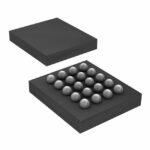
SN74LVC245AZQNR is listed in the Buffers, Drivers, Receivers, Transceivers range at ChipApex. The manufacturer field lists Texas Instruments. Its product description is IC TXRX NON-INVERT 3.6V 20BGA. Review the specifications below when checking this part for your BOM.
The SN74LVC245AZQNR is an automotive-grade octal bus transceiver designed for 1.65-V to 3.6-V VCC operation. It supports asynchronous communication between data buses with a maximum propagation delay of 6.3 ns at 3.3 V. The device features inputs that accept voltages up to 5.5 V, enabling mixed-mode signal operation. It includes Ioff support for partial-power-down mode and back drive protection. Latch-up performance exceeds 250 mA per JESD 17, and ESD protection exceeds JESD 22 specifications.
Verify the 'ZQ' suffix indicates automotive qualification requirements before procurement. Confirm package availability matches the specific BGA Microstar Junior 20 footprint required for the design. Ensure supply chain sources provide valid traceability documentation for automotive grade components.
Select this component when bidirectional data transfer between 8-bit buses is required in automotive environments. It is suitable for systems needing down voltage translation from 5 V to lower logic levels. Verify that the operating temperature range meets the specific application thermal constraints.
This part belongs to the SN74LVC245A family of octal bus transceivers manufactured by Texas Instruments. The ZQ suffix denotes automotive grade qualification. It provides non-inverting transmission controlled by DIR and OE pins within a compact surface-mount package.
SN74LVC245ADBR
The Ioff circuit disables the outputs to prevent damaging current backflow through the device when it is powered down.
Inputs can accept voltages up to 5.5 V regardless of the VCC level, supporting mixed-mode signal operation.
Explore related parts through Logic, Integrated Circuits (ICs), all product categories, ChipApex homepage.
 SN74LVC245AZQNR

SN74LVC245AZQNR is listed in the Buffers, Drivers, Receivers, Transceivers range at ChipApex. The manufacturer field lists Texas Instruments. Its product description is IC TXRX…
Read More
SN74LVC245AZQNR is listed in the Buffers, Drivers, Receivers, Transceivers range at ChipApex. The manufacturer field lists Texas Instruments. Its product description is IC TXRX…
Read More
SN74LVC245AZQNR is listed in the Buffers, Drivers, Receivers, Transceivers range at ChipApex. The manufacturer field lists Texas Instruments. Its product description is IC TXRX…
Read More
SN74LVC245AZQNR is listed in the Buffers, Drivers, Receivers, Transceivers range at ChipApex. The manufacturer field lists Texas Instruments. Its product description is IC TXRX…
Read More
Understand UART protocol framing, baud rate and electrical interfaces. Learn 8N1 timing, TX/RX wiring, buffering and practical troubleshooting steps.
Read More
SN74LVC245AZQNR is listed in the Buffers, Drivers, Receivers, Transceivers range at ChipApex. The manufacturer field lists Texas Instruments. Its product description is IC TXRX…
Read More
Learn why PTC resistance rises with temperature, how it differs from NTC, and which ratings matter for sensing and protection.
Read More
Choose a DIP switch by contact type, coded positions, footprint and signal ratings. Check logic polarity, assembly conditions and PCB configuration behavior.
Read More
SN74LVC245AZQNR is listed in the Buffers, Drivers, Receivers, Transceivers range at ChipApex. The manufacturer field lists Texas Instruments. Its product description is IC TXRX…
Read More
Find out when a bare shock switch needs a pull resistor, when an MCU internal pull-up is enough, and why sensor modules and piezo…
Read More
Understand load cell sensor output, bridge wiring and calibration. Learn how mV/V sensitivity, mechanics and ADC noise affect measurement accuracy.
Read More
SN74LVC245AZQNR is listed in the Buffers, Drivers, Receivers, Transceivers range at ChipApex. The manufacturer field lists Texas Instruments. Its product description is IC TXRX…
Read More
The activity of extra discounts on wholesale prices is in full swing…
Please fill in your contact information and we will send you the latest wholesale price list.





