 ChipApex | Global Electronic Components Supplier

SEARCH
Search Product
Search Post
— IC芯片 | 连接器 | 传感器 | 被动器件 —
Search productSearch post
— IC芯片 | 连接器 | 传感器 | 被动器件 —
Consult the customer manager about the wholesale price.
consultation hotline:86-132-6715-2157
email:[email protected]
Contact the product manager for consultation. One-stop consultation is available.
Do you want a lower wholesale price? Please send us your inquiry and we will reply immediately.
SN74LVC2G241DCTR is listed in the Buffers, Drivers, Receivers, Transceivers range at ChipApex. The manufacturer field lists Texas Instruments. Its product description is IC BUFFER NON-INVERT 5.5V SM8. Review the specifications below when checking this part for your BOM.
The SN74LVC2G241DCTR is a dual buffer and line driver manufactured by Texas Instruments, featuring three-state outputs. It operates within a supply voltage range of 1.65V to 3.6V. The device utilizes low-voltage CMOS technology for high-speed performance with propagation delays typically around 3.6ns at 3.3V. It is housed in an 8-pin SSOP package suitable for surface-mount applications.
Verify the specific suffix 'DCTR' corresponds to the tape-and-reel packaging format required for automated assembly processes. Confirm that the operating temperature range meets the environmental specifications of the target application before finalizing procurement orders.
Select this component when dual-channel buffering with independent three-state control is necessary. Ensure the design accommodates the Schmitt trigger input characteristics for signals with slow rise times. Verify power supply constraints align with the specified low-voltage operational limits.
This part belongs to the SN74LVC2G series of low-voltage logic devices from Texas Instruments. It provides compact solutions for digital signal processing in space-constrained designs. The LVC family is characterized by fast switching speeds and reduced power consumption compared to older logic standards.
Check for direct pin-compatible alternatives such as the SN74LVC2G241DCUR or other manufacturers' equivalents like NXP's 74LVC2G241. Ensure functional equivalence regarding propagation delay and output drive current capabilities.
Explore related parts through Logic, Integrated Circuits (ICs), all product categories, ChipApex homepage.
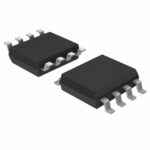 SN74LVC2G241DCTR
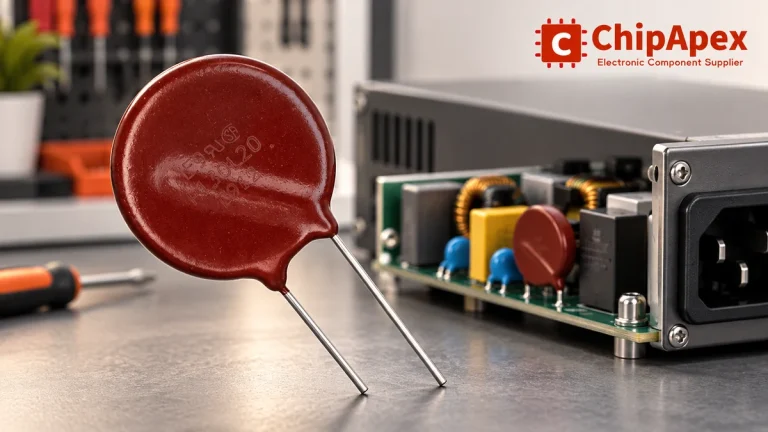
Select MOV varistors by continuous voltage, clamping behavior, surge waveform and repetition. Check thermal disconnection, fuse coordination and replacements.
Read More
SN74LVC2G241DCTR is listed in the Buffers, Drivers, Receivers, Transceivers range at ChipApex. The manufacturer field lists Texas Instruments. Its product description is IC BUFFER…
Read More
SN74LVC2G241DCTR is listed in the Buffers, Drivers, Receivers, Transceivers range at ChipApex. The manufacturer field lists Texas Instruments. Its product description is IC BUFFER…
Read More
SN74LVC2G241DCTR is listed in the Buffers, Drivers, Receivers, Transceivers range at ChipApex. The manufacturer field lists Texas Instruments. Its product description is IC BUFFER…
Read More
SN74LVC2G241DCTR is listed in the Buffers, Drivers, Receivers, Transceivers range at ChipApex. The manufacturer field lists Texas Instruments. Its product description is IC BUFFER…
Read More
SN74LVC2G241DCTR is listed in the Buffers, Drivers, Receivers, Transceivers range at ChipApex. The manufacturer field lists Texas Instruments. Its product description is IC BUFFER…
Read More
SN74LVC2G241DCTR is listed in the Buffers, Drivers, Receivers, Transceivers range at ChipApex. The manufacturer field lists Texas Instruments. Its product description is IC BUFFER…
Read More
SN74LVC2G241DCTR is listed in the Buffers, Drivers, Receivers, Transceivers range at ChipApex. The manufacturer field lists Texas Instruments. Its product description is IC BUFFER…
Read More
SN74LVC2G241DCTR is listed in the Buffers, Drivers, Receivers, Transceivers range at ChipApex. The manufacturer field lists Texas Instruments. Its product description is IC BUFFER…
Read More
Understand how oscillators generate timing signals, how they differ from crystals, and which frequency, output and stability specs matter when choosing one.
Read More
SN74LVC2G241DCTR is listed in the Buffers, Drivers, Receivers, Transceivers range at ChipApex. The manufacturer field lists Texas Instruments. Its product description is IC BUFFER…
Read More
See when an inductor behaves linearly, how DC bias and saturation reduce inductance, and which current and temperature curves to check.
Read More
The activity of extra discounts on wholesale prices is in full swing…
Please fill in your contact information and we will send you the latest wholesale price list.





