 ChipApex | Global Electronic Components Supplier

SEARCH
Search Product
Search Post
— IC芯片 | 连接器 | 传感器 | 被动器件 —
Search productSearch post
— IC芯片 | 连接器 | 传感器 | 被动器件 —
Consult the customer manager about the wholesale price.
consultation hotline:86-132-6715-2157
email:[email protected]
Contact the product manager for consultation. One-stop consultation is available.
Do you want a lower wholesale price? Please send us your inquiry and we will reply immediately.
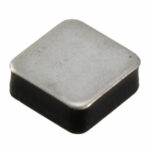
TCF250-145 is listed in the Ptc Resettable Fuses range at ChipApex. The manufacturer field lists Littelfuse Inc.. Its product description is PTC RESET FUSE 60V 145MA SMD. Review the specifications below when checking this part for your BOM.
The Littelfuse TCF250-145 is a surface-mount PolySwitch resettable fuse designed for overcurrent protection in low-voltage circuits. It features a hold current of 145 mA and a trip current of 290 mA, with a maximum voltage rating of 60 VDC. The device exhibits an initial resistance range of 3 Ω to 6 Ω at 20°C and supports a maximum fault current of 3 A. It operates within a temperature range of -40°C to +85°C and dissipates up to 1 W of power. The component utilizes a non-standard SMD package with dimensions of 5.6 mm length and 2.5 mm height.
Verify the specific suffix (e.g., -RB-B-0.5) against official Littelfuse documentation to confirm exact packaging and tape-and-reel specifications. Ensure the selected variant matches the required surface-mount footprint and lead-free compliance standards for the target assembly process. Cross-reference the datasheet for precise dimensional tolerances before PCB layout finalization.
Select this component when a compact surface-mount solution is required for circuits operating below 60 VDC. The 145 mA hold current suits low-power signal lines or peripheral interfaces. Consider the 3 Ω to 6 Ω resistance range for voltage drop calculations. Verify that the 3 A maximum fault current exceeds potential surge levels in the application environment.
Part of the TCF250 series, which includes telecom and line-rated resettable fuses. This series emphasizes fast tripping times and agency certifications including UL, CSA, and TÜV. The TCF250-145 specifically targets applications requiring reliable polymeric PTC protection in space-constrained designs.
Direct substitutes include other Littelfuse TCF250 series variants with matching 145 mA hold currents. Verify equivalent voltage ratings and physical dimensions for direct pin-compatible replacement. Consult manufacturer cross-reference guides for confirmed alternative part numbers.
Explore related parts through Circuit Protection, all product categories, ChipApex homepage.
 TCF250-145

TCF250-145 is listed in the Ptc Resettable Fuses range at ChipApex. The manufacturer field lists Littelfuse Inc.. Its product description is PTC RESET FUSE…
Read More
TCF250-145 is listed in the Ptc Resettable Fuses range at ChipApex. The manufacturer field lists Littelfuse Inc.. Its product description is PTC RESET FUSE…
Read More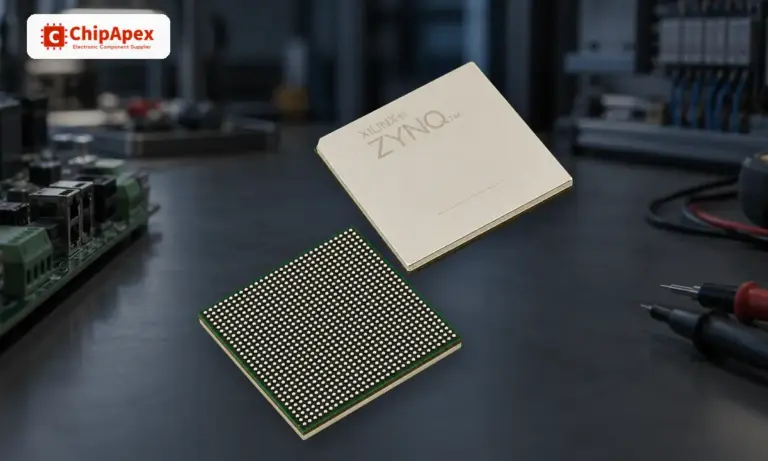
Learn what an integrated circuit is, how ICs work, the main types and the specs to check before choosing a part for your design…
Read More
TCF250-145 is listed in the Ptc Resettable Fuses range at ChipApex. The manufacturer field lists Littelfuse Inc.. Its product description is PTC RESET FUSE…
Read More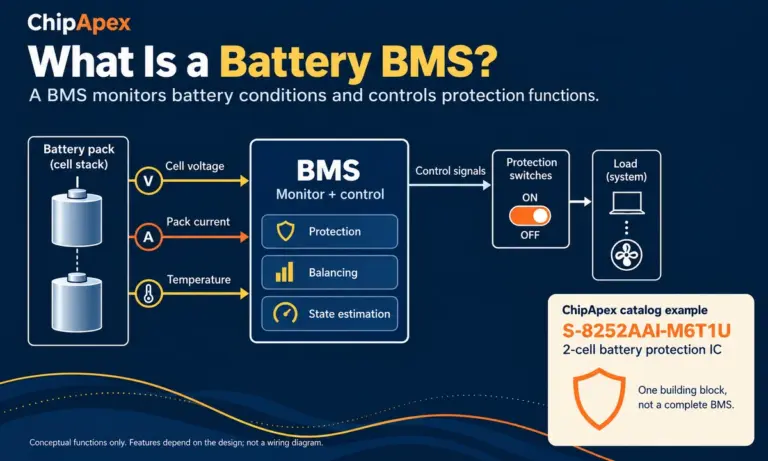
Learn what a battery BMS does, how protection differs from charging, and which pack specifications to check when sourcing BMS components through ChipApex.
Read More
Compare RC, crystal and MEMS oscillator circuits. Check ppm, jitter, load capacitance, startup margin and output compatibility before choosing a clock source.
Read More
TCF250-145 is listed in the Ptc Resettable Fuses range at ChipApex. The manufacturer field lists Littelfuse Inc.. Its product description is PTC RESET FUSE…
Read More
TCF250-145 is listed in the Ptc Resettable Fuses range at ChipApex. The manufacturer field lists Littelfuse Inc.. Its product description is PTC RESET FUSE…
Read More
TCF250-145 is listed in the Ptc Resettable Fuses range at ChipApex. The manufacturer field lists Littelfuse Inc.. Its product description is PTC RESET FUSE…
Read More
TCF250-145 is listed in the Ptc Resettable Fuses range at ChipApex. The manufacturer field lists Littelfuse Inc.. Its product description is PTC RESET FUSE…
Read More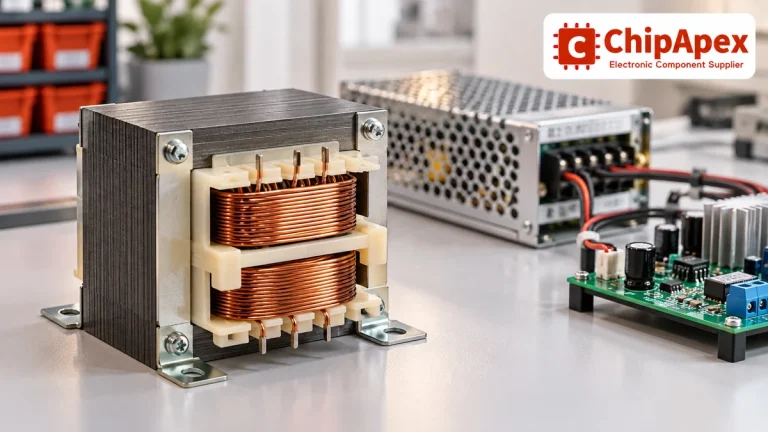
Select power transformers by input frequency, secondary VA, rectifier load, isolation, regulation and inrush. Build a clearer specification for your next RFQ.
Read More
See when an inductor behaves linearly, how DC bias and saturation reduce inductance, and which current and temperature curves to check.
Read More
The activity of extra discounts on wholesale prices is in full swing…
Please fill in your contact information and we will send you the latest wholesale price list.





