 ChipApex | Global Electronic Components Supplier

SEARCH
Search Product
Search Post
— IC芯片 | 连接器 | 传感器 | 被动器件 —
Search productSearch post
— IC芯片 | 连接器 | 传感器 | 被动器件 —
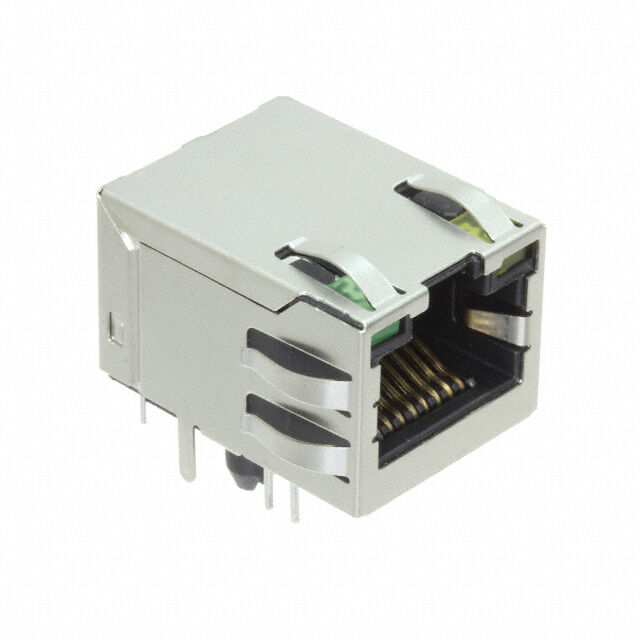
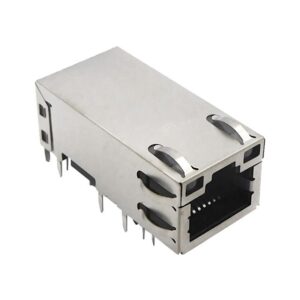
The RJ45 connector—short for Registered Jack 45—is the most widely used interface for Ethernet networking, found in devices ranging from home routers to industrial switches. It uses an 8P8C (8 Position, 8 Contact) configuration standardized by ANSI/TIA-1096-A, with typical pinouts following T-568A or T-568B wiring schemes. While similar in appearance to the smaller RJ11 telephone connector, RJ45 supports more conductors and higher data rates, making it the standard for LAN transmission across Cat5e, Cat6, and Cat6a cabling. These jacks support high-speed Ethernet protocols defined by IEEE 802.3, including 10/100/1000Base-T and multi-gigabit applications. When integrated with magnetics—meaning the inclusion of built-in transformers and common-mode chokes—RJ45 jacks provide enhanced signal conditioning, isolation, and EMI (electromagnetic interference) suppression, which are essential for reliable, standards-compliant Ethernet communication. Choosing an RJ45 jack with integrated magnetics offers several key advantages over non-magnetic versions. First and foremost, they eliminate the need for external magnetics on the PCB, saving valuable board space and simplifying layout—especially important in compact or high-density designs. These magnetics provide galvanic isolation (typically 1500 Vrms or higher) between the device and the network, protecting sensitive circuits from voltage transients and ground loops. They also improve signal integrity, especially at higher transmission speeds or over longer cable runs, by filtering noise and compensating for impedance mismatches. In applications supporting PoE (Power over Ethernet), jacks with integrated magnetics ensure compatibility with IEEE 802.3af, at, or bt standards, delivering power safely alongside data.
 857281008View Product
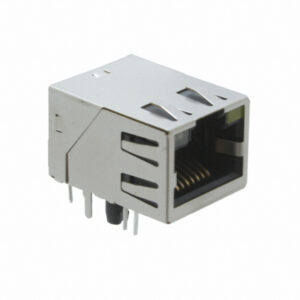 A64-113-231N411View Product
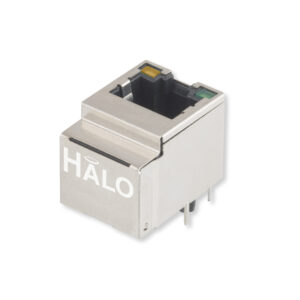 HFJV1-1G41-L12RLView Product
 ARV11-4246View Product
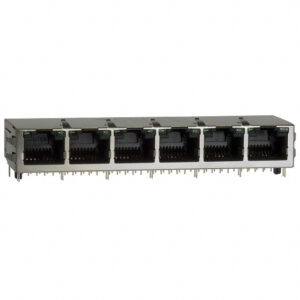 JG0-0027NLView Product
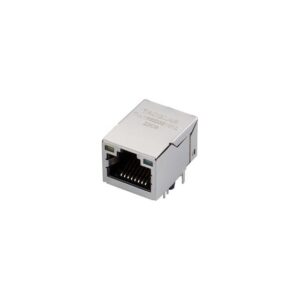 TMJ166323B10NLView Product
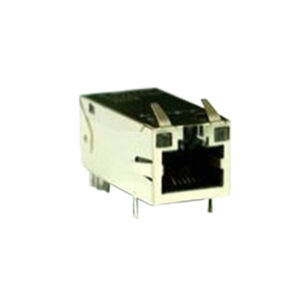 RJMG201220030NRView Product
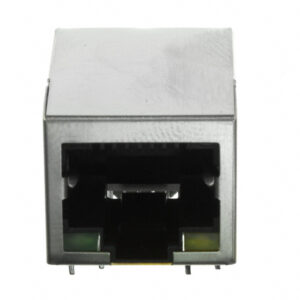 J0026D01BNLView ProductARJM11C7-104-AD-CW4View Product6610005-4View Product
 G27-122T-066BView ProductARJM11D7-008-AB-CW2View Product

As 2025 draws to a close, the global semiconductor industry stands at a crossroads. Intertwined with escalating geopolitical tensions, supply chain disruptions, and groundbreaking…
Read More
Learn how rectifiers convert AC to DC, compare half-wave and bridge circuits, and select voltage, current, recovery and thermal ratings for your design.
Read More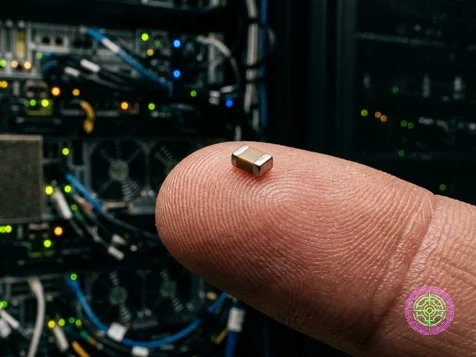
The multilayer ceramic capacitor (MLCC) market has fallen into a severe structural supply crunch in the third quarter of 2026, driven by explosive demand…
Read More
September 16, 2026 – Global — Leading semiconductor manufacturer ON Semiconductor (onsemi, NASDAQ: ON) has officially issued a formal price adjustment letter to global…
Read More
The global memory market is entering an unprecedented supply-constrained phase as soaring demand from artificial intelligence (AI) infrastructure collides with strategic capacity reallocations by…
Read More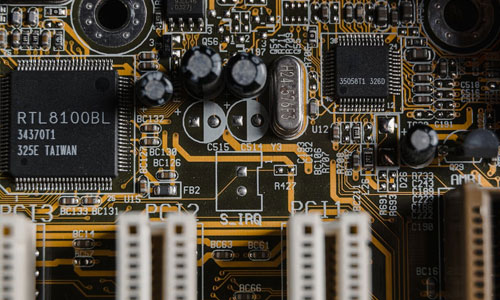
The rapid advancement of artificial intelligence (AI) is transforming industries across the globe, and the world of electronic components is no exception. From smarter…
Read More
If you’ve spent any time staring at a schematic, you’ve seen the triangle. Two inputs, one output, and a gain symbol that looks deceptively…
Read More
Tempe, Arizona‑based semiconductor giant Microchip Technology has formally rolled out selective product price increases across its MCU, power‑management IC, memory controller and analog component…
Read More
In embedded design, the tug-of-war between cost and performance is constant. On one side, you have Microcontrollers (MCUs)—cheap, simple, and efficient. On the other,…
Read More
Learn what an integrated circuit is, how ICs work, the main types and the specs to check before choosing a part for your design…
Read More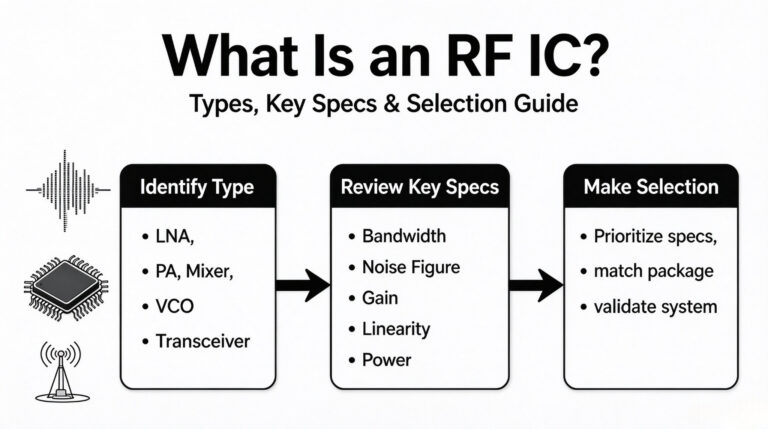
An RF IC, or radio-frequency integrated circuit, is a chip that processes wireless signals between the antenna and the baseband processor. Instead of building…
Read More
Selecting the right microcontroller (MCU) isn’t just about specs—it’s about balancing performance, power, cost, and supply chain reliability. As an engineer, you’ve probably faced…
Read More
The activity of extra discounts on wholesale prices is in full swing…
Please fill in your contact information and we will send you the latest wholesale price list.

