 ChipApex | Global Electronic Components Supplier

SEARCH
Search Product
Search Post
— IC芯片 | 连接器 | 传感器 | 被动器件 —
Search productSearch post
— IC芯片 | 连接器 | 传感器 | 被动器件 —
Consult the customer manager about the wholesale price.
consultation hotline:86-132-6715-2157
email:[email protected]
Contact the product manager for consultation. One-stop consultation is available.
Do you want a lower wholesale price? Please send us your inquiry and we will reply immediately.
The Phoenix Contact 1400882 is a COMBICON S series PCB header designed for surface mount technology integration. It features an 8-position configuration with a 5.08 mm pitch and a single row of contacts. The component utilizes a screwable flange mechanism to provide superior mechanical stability during operation. Constructed from polyamide insulation material, it meets UL 94 V-0 flame retardancy standards and complies with EU RoHS directives. The header supports wave soldering processes and includes tin-plated contacts for reliable electrical connection.
Verify the specific part number against official Phoenix Contact documentation to confirm compatibility with mating connectors such as the MSTB or MSTBT series. Ensure that the selected variant matches the required pitch and position count for your PCB layout. Cross-reference technical datasheets for thermal and electrical ratings before finalizing procurement decisions.
Select this component when surface mount integration is required alongside high mechanical stability. The screwable flange feature distinguishes it from standard pin strips, offering enhanced retention for mating connectors. Verify that the 5.08 mm pitch aligns with your board design constraints and that the housing material meets your environmental compliance requirements.
This component belongs to the COMBICON Connectors S product line by Phoenix Contact. It serves as a PCB header within a broader ecosystem of modular connection solutions. The series is characterized by its versatility in supporting multiple connection technologies and its suitability for industrial environments requiring durable and standardized interconnects.
Mating parts include the MSTB 2,5/ 8-STF-5,08 (1778043) and MSTBT 2,5/ 8-STF-5,08 (1804661). These are compatible PCB connectors designed to mate with this header. Verify mechanical fit and electrical specifications before substituting.
 1400882

Understand how a comparator switches at a voltage threshold, why hysteresis prevents chatter, and which output and input specs matter.
Read More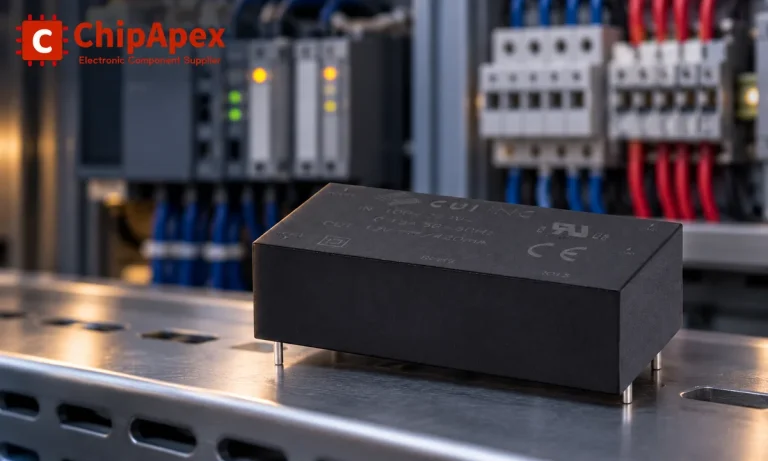
Choose an AC to DC converter by input range, output demand, isolation, efficiency and thermal derating. Compare architectures and check installation needs.
Read More
In an era dominated by AI accelerators with terabytes of HBM memory and consumer devices racing toward LPDDR5X bandwidth, it’s easy to wonder: why…
Read More
WILMINGTON, Mass. – July 3, 2026 – Analog Devices, Inc. (ADI), the global leading supplier of high-performance analog, mixed-signal and signal processing semiconductors, has…
Read More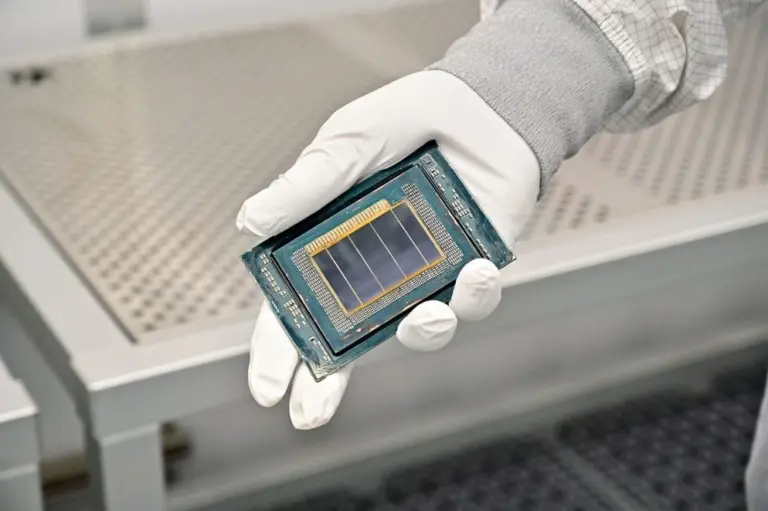
Recently, global semiconductor manufacturers have been constantly taking actions and presenting numerous new developments in aspects such as process technology and product research and…
Read More
A perfect storm of surging demand and supply chain disruptions is roiling the global electronic components market, with advanced semiconductors and critical materials now…
Read More
As 2025 draws to a close, the global semiconductor industry stands at a crossroads. Intertwined with escalating geopolitical tensions, supply chain disruptions, and groundbreaking…
Read More
If you’ve spent any time staring at a schematic, you’ve seen the triangle. Two inputs, one output, and a gain symbol that looks deceptively…
Read More
Recently, the global electronic components market has been constantly evolving, and different regions and enterprises have witnessed new moves in aspects such as technological…
Read More
Choose tactile switches by operating force, travel, actuator height, footprint and lifetime. Check debounce, sealing and the assembled button mechanism.
Read More
Compare RC, crystal and MEMS oscillator circuits. Check ppm, jitter, load capacitance, startup margin and output compatibility before choosing a clock source.
Read More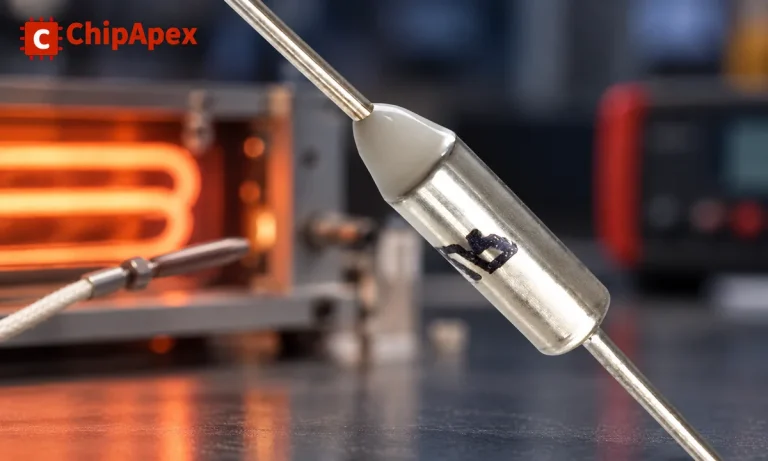
Understand thermal fuse operation, Tf, Th and Tm, electrical ratings and mounting. Check temperature limits and replacement requirements for your design.
Read More
The activity of extra discounts on wholesale prices is in full swing…
Please fill in your contact information and we will send you the latest wholesale price list.




