 ChipApex | Global Electronic Components Supplier

SEARCH
Search Product
Search Post
— IC芯片 | 连接器 | 传感器 | 被动器件 —
Search productSearch post
— IC芯片 | 连接器 | 传感器 | 被动器件 —
Consult the customer manager about the wholesale price.
consultation hotline:86-132-6715-2157
email:[email protected]
Contact the product manager for consultation. One-stop consultation is available.
Do you want a lower wholesale price? Please send us your inquiry and we will reply immediately.
18QHTF21-22.0548-OE is listed in the Oscillators range at ChipApex. The manufacturer field lists Mercury Electronics Ind. Co. Ltd. Its product description is 22.0548 MHz XO 1.8V 2.0X1.6MM OE. Review the specifications below when checking this part for your BOM.
The 18QHTF21-22.0548-OE is a standard LVCMOS crystal oscillator manufactured by Mercury Electronics Ind. Co. Ltd. It operates at a frequency of 22.0548 MHz with a supply voltage of 1.8V. The device features ±50ppm frequency stability and an operating temperature range of -40°C to 85°C. Maximum supply current is 22mA. It utilizes a 4-SMD, no lead mounting type.
Verify the specific frequency tolerance and load capacitance requirements against your circuit design before procurement. Confirm that the 1.8V supply voltage aligns with your system's power rails. Ensure the 4-SMD footprint matches your PCB layout constraints. Check for any specific enable pin logic level requirements if active control is utilized in your application design.
Select this component when a stable 22.0548 MHz clock source is required for LVCMOS interfaces. Consider the ±50ppm stability for applications sensitive to timing jitter. The wide temperature range supports harsh environments. Evaluate the 22mA current draw against total system power budgets. The compact SMD form factor aids in high-density board designs.
This oscillator belongs to Mercury Electronics' standard XO series, designed for general-purpose timing applications. The manufacturer specializes in quartz frequency control products with extensive industry experience. This specific model represents a common audio-rate frequency option suitable for various digital signal processing tasks.
Direct substitutes include other 22.0548 MHz LVCMOS oscillators with identical 1.8V supply and 4-SMD packages. Verify pinout compatibility and electrical specifications such as current consumption and stability before substitution.
Explore related parts through Crystals, Oscillators, Resonators, all product categories, ChipApex homepage.
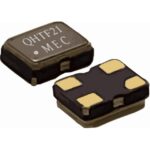 18QHTF21-22.0548-OE
18QHTF21-22.0548-OE is listed in the Oscillators range at ChipApex. The manufacturer field lists Mercury Electronics Ind. Co. Ltd. Its product description is 22.0548 MHz…
Read More
18QHTF21-22.0548-OE is listed in the Oscillators range at ChipApex. The manufacturer field lists Mercury Electronics Ind. Co. Ltd. Its product description is 22.0548 MHz…
Read More
18QHTF21-22.0548-OE is listed in the Oscillators range at ChipApex. The manufacturer field lists Mercury Electronics Ind. Co. Ltd. Its product description is 22.0548 MHz…
Read More
Understand how a comparator switches at a voltage threshold, why hysteresis prevents chatter, and which output and input specs matter.
Read More
18QHTF21-22.0548-OE is listed in the Oscillators range at ChipApex. The manufacturer field lists Mercury Electronics Ind. Co. Ltd. Its product description is 22.0548 MHz…
Read More
18QHTF21-22.0548-OE is listed in the Oscillators range at ChipApex. The manufacturer field lists Mercury Electronics Ind. Co. Ltd. Its product description is 22.0548 MHz…
Read More
18QHTF21-22.0548-OE is listed in the Oscillators range at ChipApex. The manufacturer field lists Mercury Electronics Ind. Co. Ltd. Its product description is 22.0548 MHz…
Read More
18QHTF21-22.0548-OE is listed in the Oscillators range at ChipApex. The manufacturer field lists Mercury Electronics Ind. Co. Ltd. Its product description is 22.0548 MHz…
Read More
18QHTF21-22.0548-OE is listed in the Oscillators range at ChipApex. The manufacturer field lists Mercury Electronics Ind. Co. Ltd. Its product description is 22.0548 MHz…
Read More
18QHTF21-22.0548-OE is listed in the Oscillators range at ChipApex. The manufacturer field lists Mercury Electronics Ind. Co. Ltd. Its product description is 22.0548 MHz…
Read More18QHTF21-22.0548-OE is listed in the Oscillators range at ChipApex. The manufacturer field lists Mercury Electronics Ind. Co. Ltd. Its product description is 22.0548 MHz…
Read More
Learn what an IMU measures, how accelerometers and gyroscopes work together, why orientation estimates drift, and what to compare.
Read More
The activity of extra discounts on wholesale prices is in full swing…
Please fill in your contact information and we will send you the latest wholesale price list.





