 ChipApex | Global Electronic Components Supplier

SEARCH
Search Product
Search Post
— IC芯片 | 连接器 | 传感器 | 被动器件 —
Search productSearch post
— IC芯片 | 连接器 | 传感器 | 被动器件 —
Consult the customer manager about the wholesale price.
consultation hotline:86-132-6715-2157
email:[email protected]
Contact the product manager for consultation. One-stop consultation is available.
Do you want a lower wholesale price? Please send us your inquiry and we will reply immediately.
1N1614 is listed in the Single Diodes range at ChipApex. The manufacturer field lists Microchip Technology. Its product description is DIODE STANDARD 200V 15A DO203AA. Review the specifications below when checking this part for your BOM.
The Microchip Technology 1N1614 is a standard recovery rectifier diode designed for high-current applications. It features a maximum DC reverse voltage (Vr) of 200 V and an average forward rectified current (Io) of 15 A. The device exhibits a maximum forward voltage (Vf) of 1.5 V at 15 A and a reverse leakage current of 50 µA at 200 V. Housed in the DO-203AA (DO-4) axial leaded package, it supports terminal mounting and operates within a junction temperature range of -65°C to 175°C.
Verify component authenticity through authorized Microchip distributors or direct channels. Confirm that the specific order matches the 1N1614 designation, as variants such as 1N1614R may exist with different packaging or processing attributes. Ensure compliance with project requirements regarding RoHS status, as this component is noted as non-compliant with RoHS regulations in official documentation.
Select the 1N1614 when a 15 A current capacity and 200 V blocking voltage are required in a rugged axial package. The DO-203AA form factor is appropriate for chassis or panel mounting where space allows for larger footprints. Consider the 175°C junction temperature limit for high-temperature environments, ensuring adequate heat dissipation is maintained during operation.
The 1N1614 belongs to the legacy 1N series of silicon rectifiers manufactured by Microchip Technology. This series is characterized by standard recovery times and high surge current capabilities. The component serves as a fundamental building block in power electronics, providing reliable unidirectional current flow for AC-to-DC conversion tasks in industrial and commercial equipment.
Publicly confirmed substitute part numbers are not available in the provided source material.
Explore related parts through Rectifiers, Diodes, Discrete Semiconductor Products, all product categories.
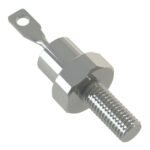 1N1614

Learn how a diode conducts, how to identify anode and cathode, and when to choose rectifier, TVS, Zener or photodiode types for a circuit.
Read More
Select a bridge rectifier by reverse voltage, capacitor charging current, startup surge and cooling. Work through a stated DC voltage and ripple example.
Read More
1N1614 is listed in the Single Diodes range at ChipApex. The manufacturer field lists Microchip Technology. Its product description is DIODE STANDARD 200V 15A…
Read More
1N1614 is listed in the Single Diodes range at ChipApex. The manufacturer field lists Microchip Technology. Its product description is DIODE STANDARD 200V 15A…
Read More
1N1614 is listed in the Single Diodes range at ChipApex. The manufacturer field lists Microchip Technology. Its product description is DIODE STANDARD 200V 15A…
Read More
1N1614 is listed in the Single Diodes range at ChipApex. The manufacturer field lists Microchip Technology. Its product description is DIODE STANDARD 200V 15A…
Read More
1N1614 is listed in the Single Diodes range at ChipApex. The manufacturer field lists Microchip Technology. Its product description is DIODE STANDARD 200V 15A…
Read More
1N1614 is listed in the Single Diodes range at ChipApex. The manufacturer field lists Microchip Technology. Its product description is DIODE STANDARD 200V 15A…
Read More
1N1614 is listed in the Single Diodes range at ChipApex. The manufacturer field lists Microchip Technology. Its product description is DIODE STANDARD 200V 15A…
Read More
1N1614 is listed in the Single Diodes range at ChipApex. The manufacturer field lists Microchip Technology. Its product description is DIODE STANDARD 200V 15A…
Read More
1N1614 is listed in the Single Diodes range at ChipApex. The manufacturer field lists Microchip Technology. Its product description is DIODE STANDARD 200V 15A…
Read More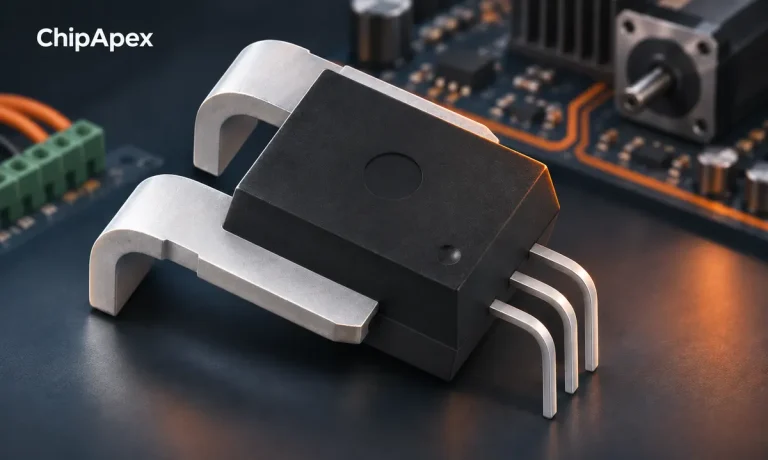
Compare Hall, shunt, current transformer and Rogowski sensing. Check AC/DC capability, accuracy, isolation, heat and response before selecting a sensor.
Read More
The activity of extra discounts on wholesale prices is in full swing…
Please fill in your contact information and we will send you the latest wholesale price list.





