 ChipApex | Global Electronic Components Supplier

SEARCH
Search Product
Search Post
— IC芯片 | 连接器 | 传感器 | 被动器件 —
Search productSearch post
— IC芯片 | 连接器 | 传感器 | 被动器件 —
Consult the customer manager about the wholesale price.
consultation hotline:86-132-6715-2157
email:[email protected]
Contact the product manager for consultation. One-stop consultation is available.
Do you want a lower wholesale price? Please send us your inquiry and we will reply immediately.
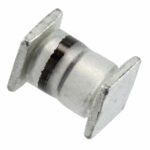
1N4966US is listed in the Single Zener Diodes range at ChipApex. The manufacturer field lists Microchip Technology. Its product description is DIODE ZENER 22V 5W D5B. Review the specifications below when checking this part for your BOM.
The Microchip Technology 1N4966US is a surface mount Zener voltage regulator with a nominal breakdown voltage of 22 V. It operates at a test current of 50 mA and features a maximum dynamic impedance of 5.0 Ohms at this point, rising to 1.8 Ohms at a knee current of 1 mA. The device dissipates up to 5 Watts at an ambient temperature of 140°C and withstands surge currents of 7.0 Amps for 8.3 ms square waves. It exhibits a voltage temperature coefficient of +0.085 %/°C and maintains a maximum reverse leakage current of 2 µA.
Verify the specific revision level against the latest Microsemi datasheet SD44A before procurement. Confirm that the ordering suffix matches the required tolerance class, as standard parts lack additional letters. Ensure compliance with RoHS exemptions if applicable, as indicated in manufacturer documentation. Validate package marking absence and polarity band orientation during incoming inspection.
Select this component when high thermal stability and hermetic sealing are mandatory. The 5W rating supports significant power dissipation in compact surface mount footprints. Consider the positive temperature coefficient for applications where voltage rise with heat is acceptable or manageable within circuit design parameters.
This part belongs to the 1N4954US through 1N4996US series of 5-watt Zener regulators. These devices share identical mechanical dimensions and mounting characteristics. They utilize the E package, also known as D-5B, which facilitates automated surface mount assembly while maintaining military-grade reliability standards.
Direct replacements include other 1N49xxUS series variants from Microchip Technology provided the voltage rating matches exactly. Equivalent axial-leaded versions exist by removing the US suffix, though mechanical mounting differs.
Explore related parts through Zener, Diodes, Discrete Semiconductor Products, all product categories.
 1N4966US

Compare RC, crystal and MEMS oscillator circuits. Check ppm, jitter, load capacitance, startup margin and output compatibility before choosing a clock source.
Read More
1N4966US is listed in the Single Zener Diodes range at ChipApex. The manufacturer field lists Microchip Technology. Its product description is DIODE ZENER 22V…
Read More
1N4966US is listed in the Single Zener Diodes range at ChipApex. The manufacturer field lists Microchip Technology. Its product description is DIODE ZENER 22V…
Read More
1N4966US is listed in the Single Zener Diodes range at ChipApex. The manufacturer field lists Microchip Technology. Its product description is DIODE ZENER 22V…
Read More
1N4966US is listed in the Single Zener Diodes range at ChipApex. The manufacturer field lists Microchip Technology. Its product description is DIODE ZENER 22V…
Read More
1N4966US is listed in the Single Zener Diodes range at ChipApex. The manufacturer field lists Microchip Technology. Its product description is DIODE ZENER 22V…
Read More
1N4966US is listed in the Single Zener Diodes range at ChipApex. The manufacturer field lists Microchip Technology. Its product description is DIODE ZENER 22V…
Read More
1N4966US is listed in the Single Zener Diodes range at ChipApex. The manufacturer field lists Microchip Technology. Its product description is DIODE ZENER 22V…
Read More
Understand how oscillators generate timing signals, how they differ from crystals, and which frequency, output and stability specs matter when choosing one.
Read More
Understand tactile switches, PCB and keyboard differences, four-pin wiring, debounce, force, travel and replacement checks for reliable control inputs.
Read More
1N4966US is listed in the Single Zener Diodes range at ChipApex. The manufacturer field lists Microchip Technology. Its product description is DIODE ZENER 22V…
Read More
Learn why PTC resistance rises with temperature, how it differs from NTC, and which ratings matter for sensing and protection.
Read More
The activity of extra discounts on wholesale prices is in full swing…
Please fill in your contact information and we will send you the latest wholesale price list.





