 ChipApex | Global Electronic Components Supplier

SEARCH
Search Product
Search Post
— IC芯片 | 连接器 | 传感器 | 被动器件 —
Search productSearch post
— IC芯片 | 连接器 | 传感器 | 被动器件 —
Consult the customer manager about the wholesale price.
consultation hotline:86-132-6715-2157
email:[email protected]
Contact the product manager for consultation. One-stop consultation is available.
Do you want a lower wholesale price? Please send us your inquiry and we will reply immediately.
The nVent Schroff 21130390 is a stationary subrack component designed for 19-inch electronics enclosures. It features a height of 1800 mm and a depth of 900 mm, providing substantial vertical space for modular equipment integration. The unit includes two horizontal frames (7021 series) to support card mounting. Constructed for high mechanical stability, this subrack supports a load capacity of up to 70 kg, ensuring secure installation of heavy electronic modules within standard rack environments.
Verify the specific model designation against official nVent Schroff documentation to ensure compatibility with existing rack infrastructure. Confirm that the 1800 mm height and 900 mm depth dimensions align with the intended enclosure space. Check for any required accessories or mounting hardware not included in the base subrack description to ensure complete system integration.
Select this model when a fixed, high-capacity subrack is required rather than a telescopic shelf. Ensure the application environment accommodates the 1800 mm height constraint. Verify that the 70 kg load rating meets the weight requirements of the planned electronic modules. Consider the perforated design benefits for assembly flexibility during the selection process.
This part belongs to the nVent Schroff 21130 series, which specializes in 19-inch subracks and chassis solutions. The series offers various depths and heights to accommodate different module densities. As a stationary unit, it provides a stable foundation for permanent installations compared to sliding or telescopic alternatives in the same product family.
Consult official nVent Schroff cross-reference lists for direct substitutes. Ensure replacement units maintain identical 19-inch width standards and compatible frame types. Verify that alternative models match the required 70 kg load capacity and dimensional constraints before implementation.
 21130390

May 4, 2026 — The global power semiconductor market is grappling with a worsening supply crunch, as lead times for key components have extended…
Read More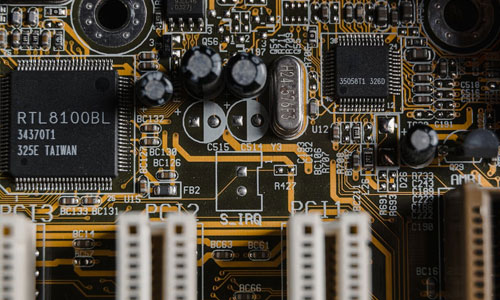
The rapid advancement of artificial intelligence (AI) is transforming industries across the globe, and the world of electronic components is no exception. From smarter…
Read More
Hsinchu, Taiwan – April 18, 2026 – United Microelectronics Corporation (UMC, NYSE: UMC), a leading global semiconductor foundry specializing in mature process technologies, has…
Read More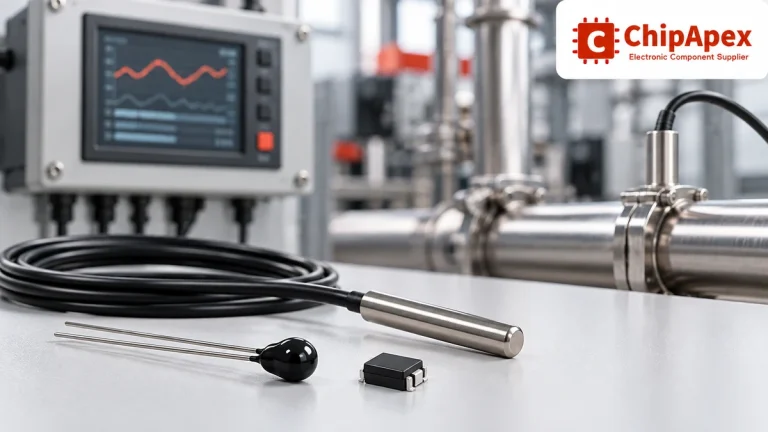
Compare thermistors, RTDs, thermocouples and temperature ICs. Learn how range, accuracy, response, interfaces and mounting affect component selection.
Read More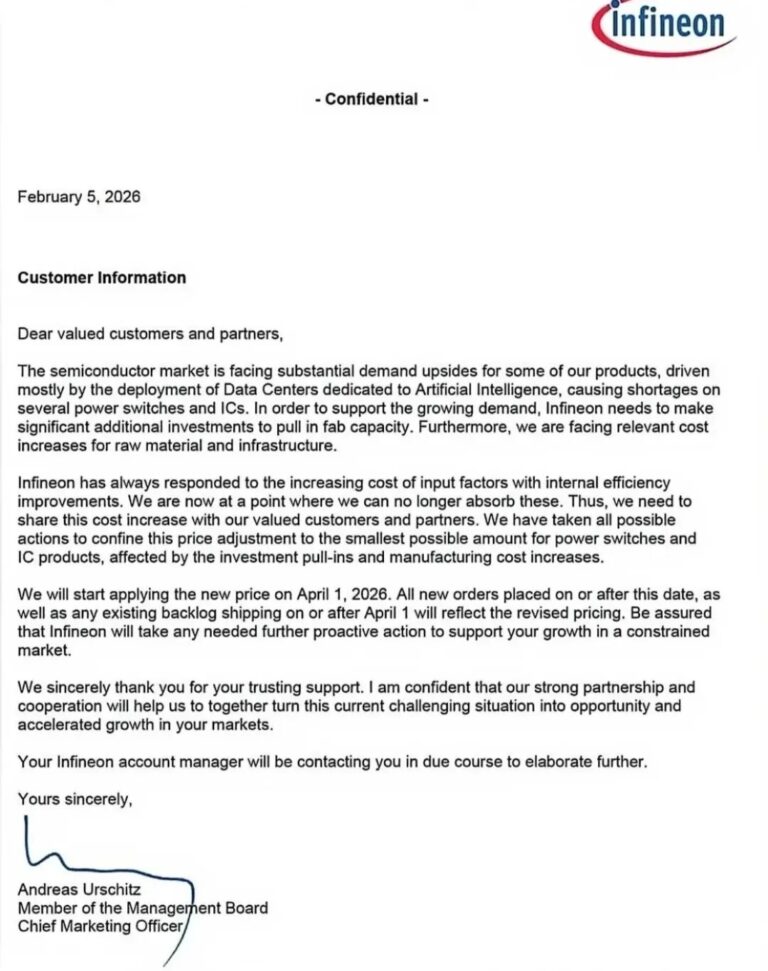
Munich, Germany – February 8, 2026 — Infineon Technologies, the German semiconductor giant, officially issued a price increase notice on February 5, announcing that…
Read More
In the vast landscape of memory technology, EEPROM (Electrically Erasable Programmable Read-Only Memory) often plays the unsung hero. While NAND Flash grabs headlines for…
Read More
Select a bridge rectifier by reverse voltage, capacitor charging current, startup surge and cooling. Work through a stated DC voltage and ripple example.
Read More
In the world of embedded electronics, getting a device to “think” is only half the battle. The other half is getting it to communicate…
Read More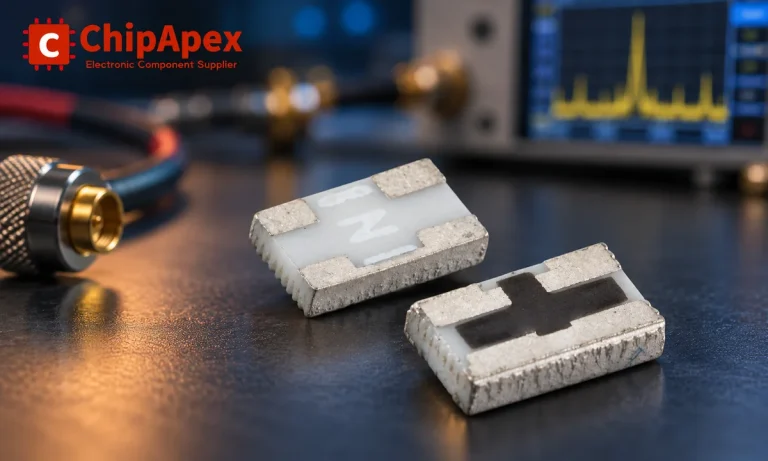
Understand RF attenuator dB values, fixed and programmable types, impedance, power limits and noise tradeoffs before choosing parts for an RF signal path.
Read More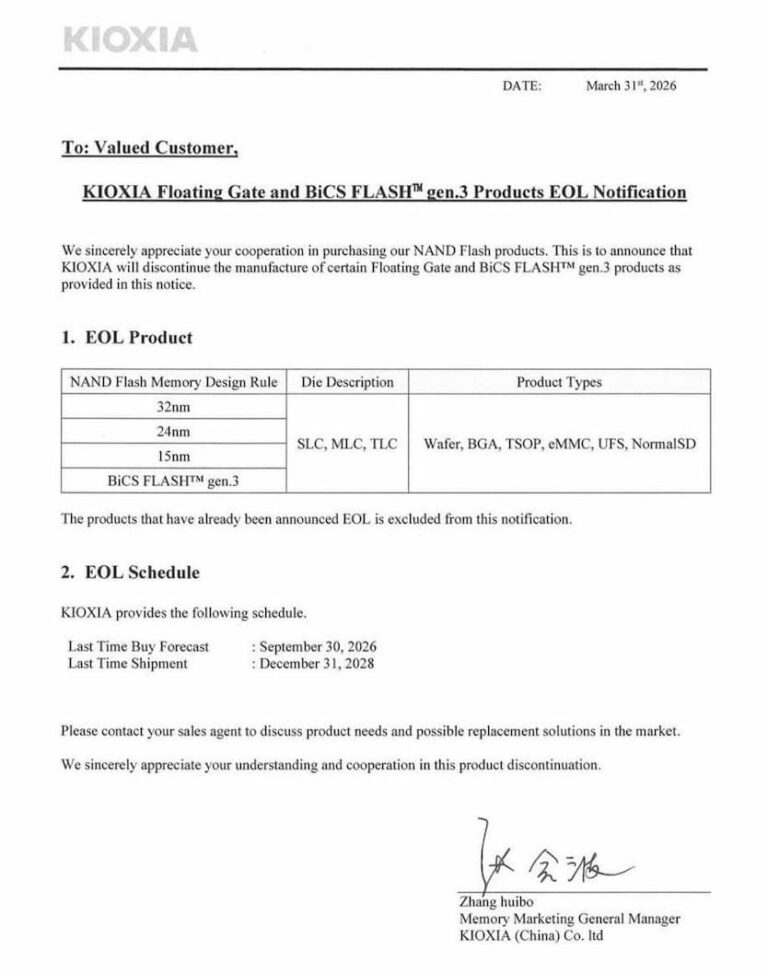
TOKYO, April 1, 2026 – Kioxia Corporation (formerly Toshiba Memory Corporation), a global leader in flash memory and storage solutions, has officially issued a…
Read More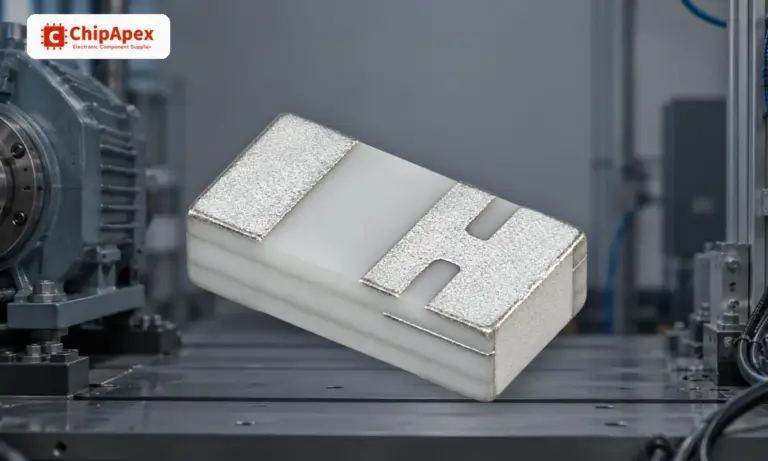
Find out when a bare shock switch needs a pull resistor, when an MCU internal pull-up is enough, and why sensor modules and piezo…
Read More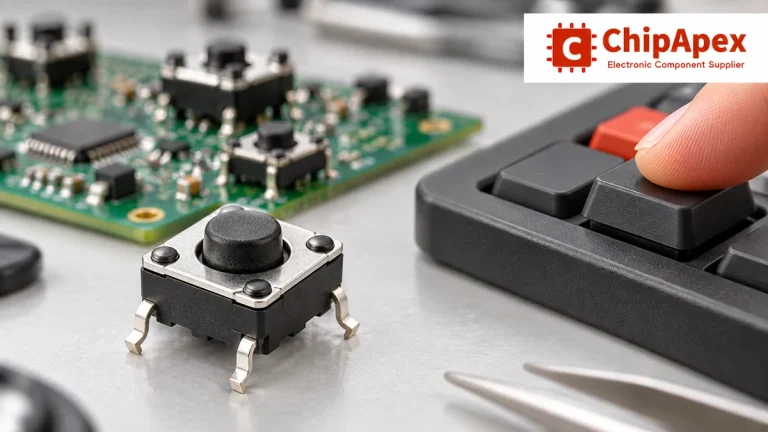
Understand tactile switches, PCB and keyboard differences, four-pin wiring, debounce, force, travel and replacement checks for reliable control inputs.
Read More
The activity of extra discounts on wholesale prices is in full swing…
Please fill in your contact information and we will send you the latest wholesale price list.




