 ChipApex | Global Electronic Components Supplier

SEARCH
Search Product
Search Post
— IC芯片 | 连接器 | 传感器 | 被动器件 —
Search productSearch post
— IC芯片 | 连接器 | 传感器 | 被动器件 —
Consult the customer manager about the wholesale price.
consultation hotline:86-132-6715-2157
email:[email protected]
Contact the product manager for consultation. One-stop consultation is available.
Do you want a lower wholesale price? Please send us your inquiry and we will reply immediately.
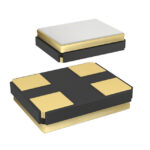
402F19211CKR is listed in the Crystals range at ChipApex. The manufacturer field lists CTS-Frequency Controls. Its product description is CRYSTAL 19.2000MHZ 8PF SMD. Review the specifications below when checking this part for your BOM.
The CTS-Frequency Controls 402F19211CKR is a surface-mount MHz crystal operating at a fundamental frequency of 19.2 MHz. It features a frequency stability and tolerance of ±10ppm, with a load capacitance of 8pF and an equivalent series resistance (ESR) of 120 Ohms. The component utilizes a 4-SMD, No Lead package with dimensions of 2.00mm x 1.60mm and a maximum height of 0.55mm. It supports base harmonic operation within a temperature range of -20°C to 70°C and complies with RoHS3 standards.
Verify the specific suffix 'CKR' against the manufacturer's current product status, as availability may vary by region or distributor. Confirm that the 8pF load capacitance matches the target circuit design requirements. Ensure the 4-SMD footprint aligns with the PCB layout specifications. Check for any obsolescence notices from CTS-Frequency Controls before finalizing procurement plans.
Select this component when a 19.2 MHz fundamental frequency with ±10ppm stability is required. The 8pF load capacitance must match the oscillator circuit's external capacitors. Consider the 120 Ohm ESR value for oscillator startup reliability. The 4-SMD package size is appropriate for space-constrained designs requiring surface-mount technology.
This part belongs to the 402 Series of crystals from CTS-Frequency Controls. The series offers various frequencies and packages. The 402F19211CKR specifically denotes the 19.2 MHz variant with 8pF load capacitance in a standard SMD package. It is distinct from variants with different load capacitances or tolerances within the same frequency family.
Equivalent parts include 402F19211CAR and 402F19211CDT from CTS-Frequency Controls, though load capacitance differs. Cross-manufacturer substitutes require verification of frequency, load capacitance, and ESR parameters.
Explore related parts through Crystals, Oscillators, Resonators, all product categories, ChipApex homepage.
 402F19211CKR

402F19211CKR is listed in the Crystals range at ChipApex. The manufacturer field lists CTS-Frequency Controls. Its product description is CRYSTAL 19.2000MHZ 8PF SMD. Review…
Read More
Choose logic inverter ICs by thresholds, supply, output drive and delay. Compare standard and Schmitt-trigger inputs, power sequencing and replacement checks.
Read More
402F19211CKR is listed in the Crystals range at ChipApex. The manufacturer field lists CTS-Frequency Controls. Its product description is CRYSTAL 19.2000MHZ 8PF SMD. Review…
Read More
Understand tactile switches, PCB and keyboard differences, four-pin wiring, debounce, force, travel and replacement checks for reliable control inputs.
Read More
402F19211CKR is listed in the Crystals range at ChipApex. The manufacturer field lists CTS-Frequency Controls. Its product description is CRYSTAL 19.2000MHZ 8PF SMD. Review…
Read More
Learn how a JFET works and how to compare bias, leakage, noise and pinout. Review practical selection questions for high-impedance analog circuits.
Read More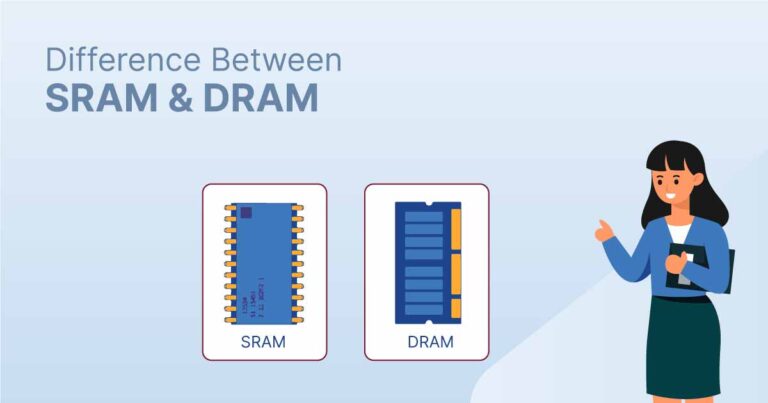
402F19211CKR is listed in the Crystals range at ChipApex. The manufacturer field lists CTS-Frequency Controls. Its product description is CRYSTAL 19.2000MHZ 8PF SMD. Review…
Read More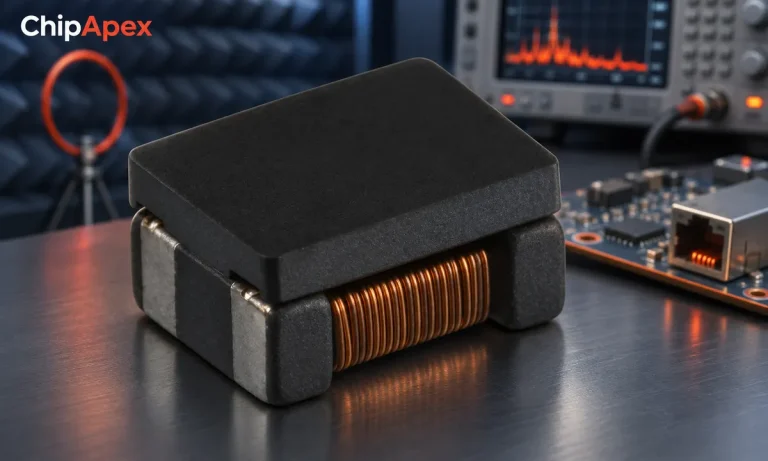
Select a common mode choke using noise frequency, current, insulation and signal integrity. Understand impedance curves, layout and filter limitations.
Read More
Choose a DIP switch by contact type, coded positions, footprint and signal ratings. Check logic polarity, assembly conditions and PCB configuration behavior.
Read More
402F19211CKR is listed in the Crystals range at ChipApex. The manufacturer field lists CTS-Frequency Controls. Its product description is CRYSTAL 19.2000MHZ 8PF SMD. Review…
Read More
402F19211CKR is listed in the Crystals range at ChipApex. The manufacturer field lists CTS-Frequency Controls. Its product description is CRYSTAL 19.2000MHZ 8PF SMD. Review…
Read More
Learn why PTC resistance rises with temperature, how it differs from NTC, and which ratings matter for sensing and protection.
Read More
The activity of extra discounts on wholesale prices is in full swing…
Please fill in your contact information and we will send you the latest wholesale price list.





