 ChipApex | Global Electronic Components Supplier

SEARCH
Search Product
Search Post
— IC芯片 | 连接器 | 传感器 | 被动器件 —
Search productSearch post
— IC芯片 | 连接器 | 传感器 | 被动器件 —
Consult the customer manager about the wholesale price.
consultation hotline:86-132-6715-2157
email:[email protected]
Contact the product manager for consultation. One-stop consultation is available.
Do you want a lower wholesale price? Please send us your inquiry and we will reply immediately.
The Greenlee Communications model 7075 is a specialized hand tool designed for the installation and termination of coaxial connectors on RG-6, RG-11, and similar hardline or semi-rigid coaxial cables. This specific tool functions as a compression crimper, ensuring consistent mechanical pressure to secure F-type or BNC-style connectors without requiring excessive manual force. It features a ratcheting mechanism that prevents incomplete crimps by releasing only when the full compression cycle is achieved, thereby maintaining signal integrity and preventing loose connections in professional AV and telecommunications installations.
Verify the exact connector type compatibility (F-type vs BNC) required for your specific project before purchase. Ensure the tool matches the cable jacket diameter specifications listed in the official Greenlee documentation. Confirm whether the unit includes interchangeable dies if multiple connector sizes are needed. Check for genuine Greenlee branding to avoid counterfeit tools that may lack the precise ratcheting calibration essential for reliable signal transmission.
Select this tool based on its dedicated function for coaxial compression rather than general-purpose crimping. Consider the frequency of use; for high-volume field work, the ergonomic benefits and ratcheting reliability are critical. Compare against other Greenlee models to determine if additional die sets are necessary for mixed cable types. Prioritize tools with certified compression standards to meet industry requirements for low insertion loss and high return loss performance.
Greenlee Communications specializes in tools for electrical, fiber optic, and data communications networks. The 7075 model falls within their line of coaxial termination tools, distinct from their wire strippers or punch-down instruments. It is part of a broader ecosystem of professional-grade hardware used by technicians for structured cabling and broadcast infrastructure maintenance.
 7075

Find out when a bare shock switch needs a pull resistor, when an MCU internal pull-up is enough, and why sensor modules and piezo…
Read More
ChipApex – May 8, 2026 Texas Instruments (TI), the global leader in analog and embedded semiconductors, has officially notified customers of an upcoming company-wide…
Read More
Learn how a diode conducts, how to identify anode and cathode, and when to choose rectifier, TVS, Zener or photodiode types for a circuit.
Read More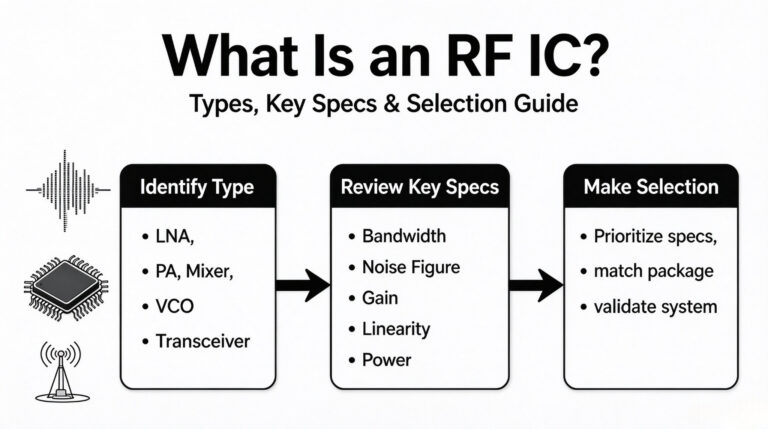
An RF IC, or radio-frequency integrated circuit, is a chip that processes wireless signals between the antenna and the baseband processor. Instead of building…
Read More
Embedded Integrated Circuit Modules: The Backbone of Modern Technology Embedded Integrated Circuit Modules (EICMs) have become an indispensable part of modern technology. Serving as…
Read More
The rapid advancement of artificial intelligence (AI) is transforming industries across the globe, and the world of electronic components is no exception. From smarter…
Read More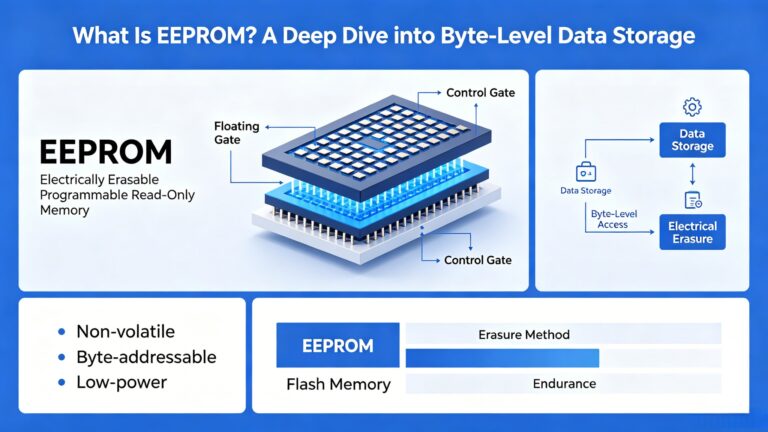
In the vast landscape of memory technology, EEPROM (Electrically Erasable Programmable Read-Only Memory) often plays the unsung hero. While NAND Flash grabs headlines for…
Read More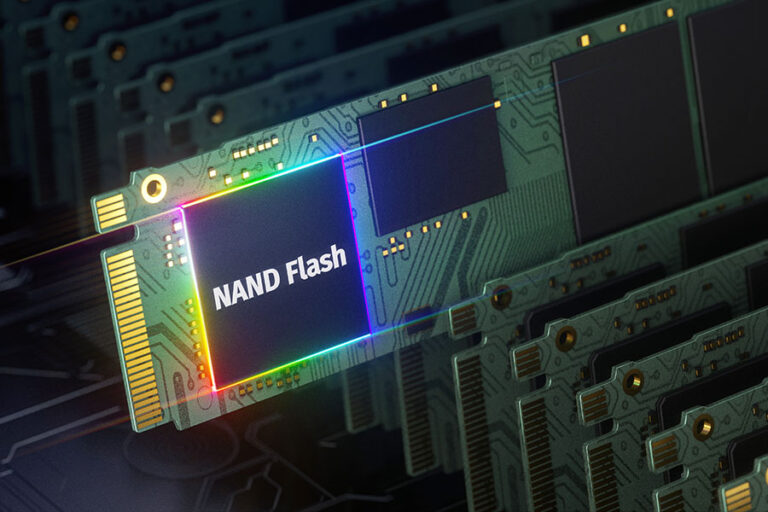
What Is NAND Flash? A Practical Guide for Engineers & Procurement Teams In today’s data-driven world—from smartphones and SSDs to industrial IoT devices—NAND flash…
Read More
As the backbone of modern technology, electronic components are undergoing revolutionary changes, driven by advancements in materials science, miniaturization, and smart manufacturing. From ultra-efficient…
Read More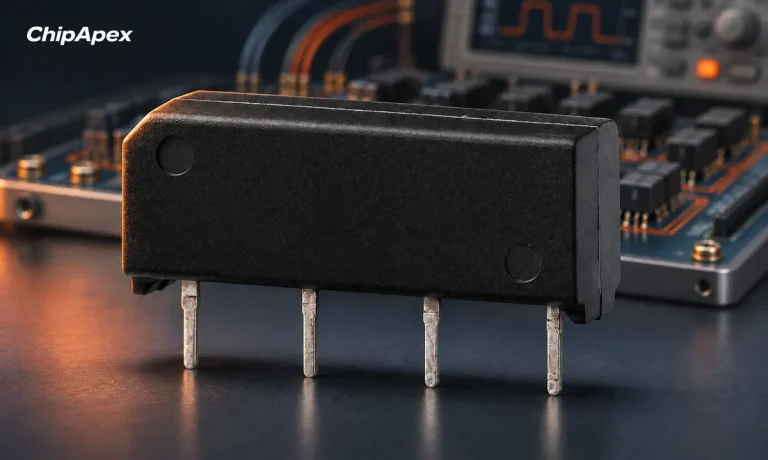
Choose a reed relay for signal switching. Understand hot and cold switching, leakage, contact resistance, isolation and measurement settling requirements.
Read More
See when an inductor behaves linearly, how DC bias and saturation reduce inductance, and which current and temperature curves to check.
Read More
Compare RC, crystal and MEMS oscillator circuits. Check ppm, jitter, load capacitance, startup margin and output compatibility before choosing a clock source.
Read More
The activity of extra discounts on wholesale prices is in full swing…
Please fill in your contact information and we will send you the latest wholesale price list.




