 ChipApex | Global Electronic Components Supplier

SEARCH
Search Product
Search Post
— IC芯片 | 连接器 | 传感器 | 被动器件 —
Search productSearch post
— IC芯片 | 连接器 | 传感器 | 被动器件 —
Consult the customer manager about the wholesale price.
consultation hotline:86-132-6715-2157
email:[email protected]
Contact the product manager for consultation. One-stop consultation is available.
Do you want a lower wholesale price? Please send us your inquiry and we will reply immediately.
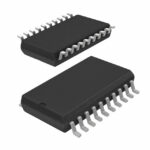
74LCXZ245WM is listed in the Buffers, Drivers, Receivers, Transceivers range at ChipApex. The manufacturer field lists onsemi. Its product description is IC TXRX NON-INVERT 3.6V 20SOIC. Review the specifications below when checking this part for your BOM.
The 74LCXZ245WM is an octal bidirectional transceiver featuring 3-STATE outputs, designed for low-voltage applications with 5V tolerant inputs and outputs. It operates within a supply voltage range of 2.3V to 3.6V. The device utilizes advanced CMOS technology to achieve high-speed operation while maintaining low power dissipation. Key electrical parameters include a maximum propagation delay of 7.0 ns at 3.3V and output drive capabilities of up to 24 mA. It supports live insertion/withdrawal and includes patented noise reduction circuitry.
Verify the specific package variant required, as the 'WM' suffix denotes the 20-Lead Small Outline Integrated Circuit (SOIC). Confirm that the design accommodates the recommended operating conditions, specifically the 2.3V to 3.6V supply voltage range. Ensure OE is tied to VCC through a pull-up resistor if high-impedance state during power transitions is critical for the application.
Select this component when 5V tolerance is required for both input and output sides in a low-voltage system. It is suitable for designs needing high-speed bidirectional transfer with minimal skew. Consider the SOIC-20 package constraints regarding board space and thermal management. Verify that the 24 mA drive current meets the load requirements of the destination bus lines.
This device belongs to the LCX family of low-voltage CMOS logic products. It functions as an octal bus transceiver, providing eight non-inverting buffers. The Z designation indicates enhanced 5V tolerance characteristics compared to standard LCX variants. It is manufactured using advanced CMOS processes optimized for speed and power efficiency.
Direct substitutes may include other 8-bit bidirectional transceivers with 5V tolerance from the same manufacturer or competitors. Verify pin compatibility and electrical specifications such as propagation delay and output drive current before substitution.
When VCC is between 0V and 1.5V, the device enters a high-impedance state to prevent intermittent low-impedance loading or glitching. To ensure this state, the OE input should be tied to VCC through a pull-up resistor.
The maximum propagation delay (tPD) is 7.0 ns when VCC is 3.3V and the load capacitance is 50 pF.
Explore related parts through Logic, Integrated Circuits (ICs), all product categories, ChipApex homepage.
 74LCXZ245WM

74LCXZ245WM is listed in the Buffers, Drivers, Receivers, Transceivers range at ChipApex. The manufacturer field lists onsemi. Its product description is IC TXRX NON-INVERT…
Read More
74LCXZ245WM is listed in the Buffers, Drivers, Receivers, Transceivers range at ChipApex. The manufacturer field lists onsemi. Its product description is IC TXRX NON-INVERT…
Read More
74LCXZ245WM is listed in the Buffers, Drivers, Receivers, Transceivers range at ChipApex. The manufacturer field lists onsemi. Its product description is IC TXRX NON-INVERT…
Read More
Learn how rectifiers convert AC to DC, compare half-wave and bridge circuits, and select voltage, current, recovery and thermal ratings for your design.
Read More
74LCXZ245WM is listed in the Buffers, Drivers, Receivers, Transceivers range at ChipApex. The manufacturer field lists onsemi. Its product description is IC TXRX NON-INVERT…
Read More
74LCXZ245WM is listed in the Buffers, Drivers, Receivers, Transceivers range at ChipApex. The manufacturer field lists onsemi. Its product description is IC TXRX NON-INVERT…
Read More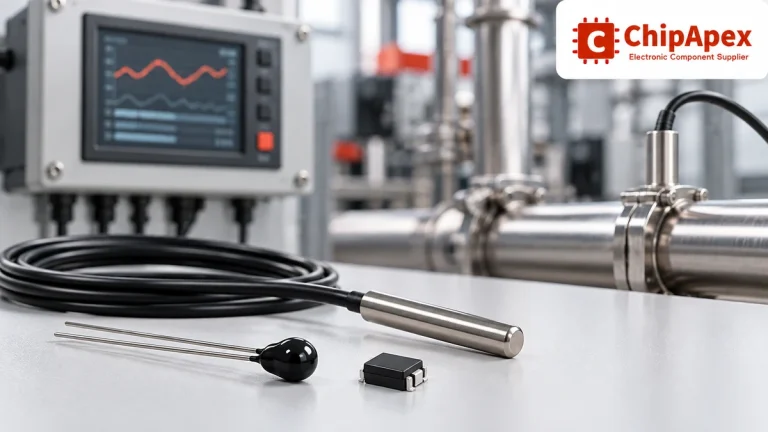
Compare thermistors, RTDs, thermocouples and temperature ICs. Learn how range, accuracy, response, interfaces and mounting affect component selection.
Read More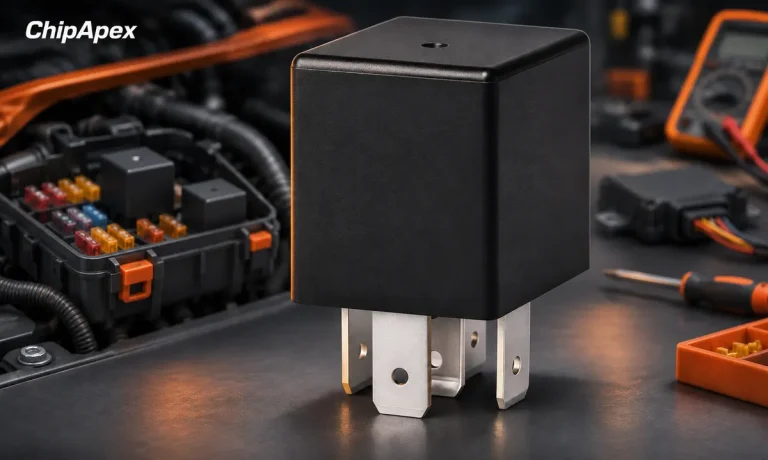
Understand automotive relay terminals, coil suppression and load ratings. Check inrush, socket compatibility and temperature before selecting a replacement.
Read More
Select a bridge rectifier by reverse voltage, capacitor charging current, startup surge and cooling. Work through a stated DC voltage and ripple example.
Read More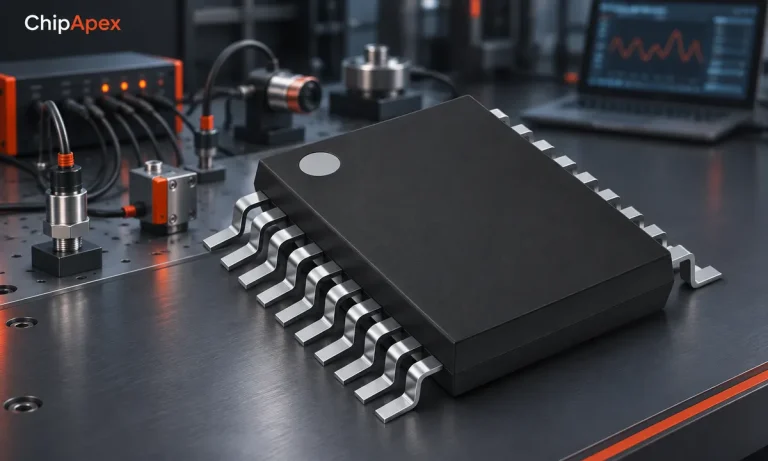
Learn what data acquisition means, from sensors and conditioning to sampling and storage. Review channel timing, wiring, calibration and data quality.
Read More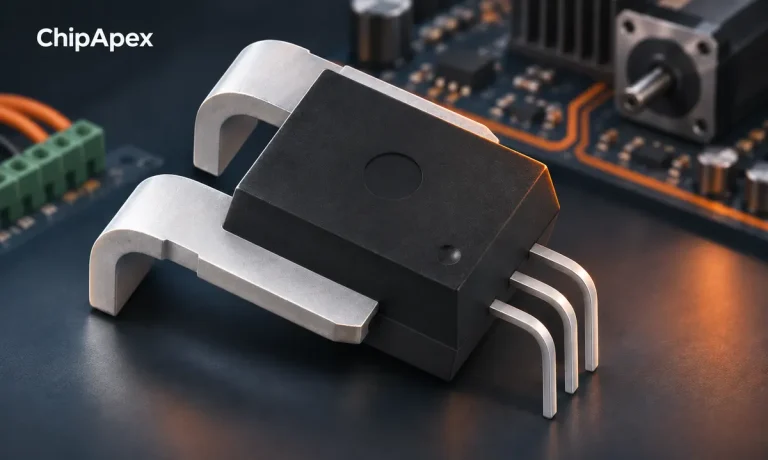
Compare Hall, shunt, current transformer and Rogowski sensing. Check AC/DC capability, accuracy, isolation, heat and response before selecting a sensor.
Read More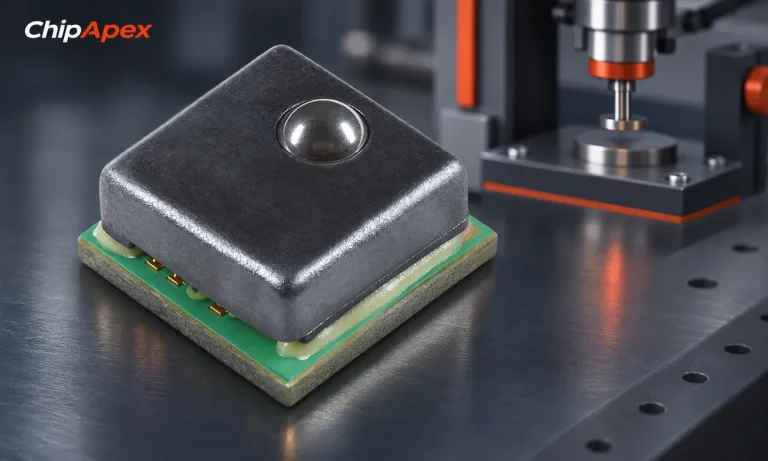
Understand load cell sensor output, bridge wiring and calibration. Learn how mV/V sensitivity, mechanics and ADC noise affect measurement accuracy.
Read More
The activity of extra discounts on wholesale prices is in full swing…
Please fill in your contact information and we will send you the latest wholesale price list.





