ChipApex | Global Electronic Components Supplier

SEARCH
Search Product
Search Post
— IC芯片 | 连接器 | 传感器 | 被动器件 —
Search productSearch post
— IC芯片 | 连接器 | 传感器 | 被动器件 —
Consult the customer manager about the wholesale price.
consultation hotline:86-132-6715-2157
email:[email protected]
Contact the product manager for consultation. One-stop consultation is available.
Do you want a lower wholesale price? Please send us your inquiry and we will reply immediately.
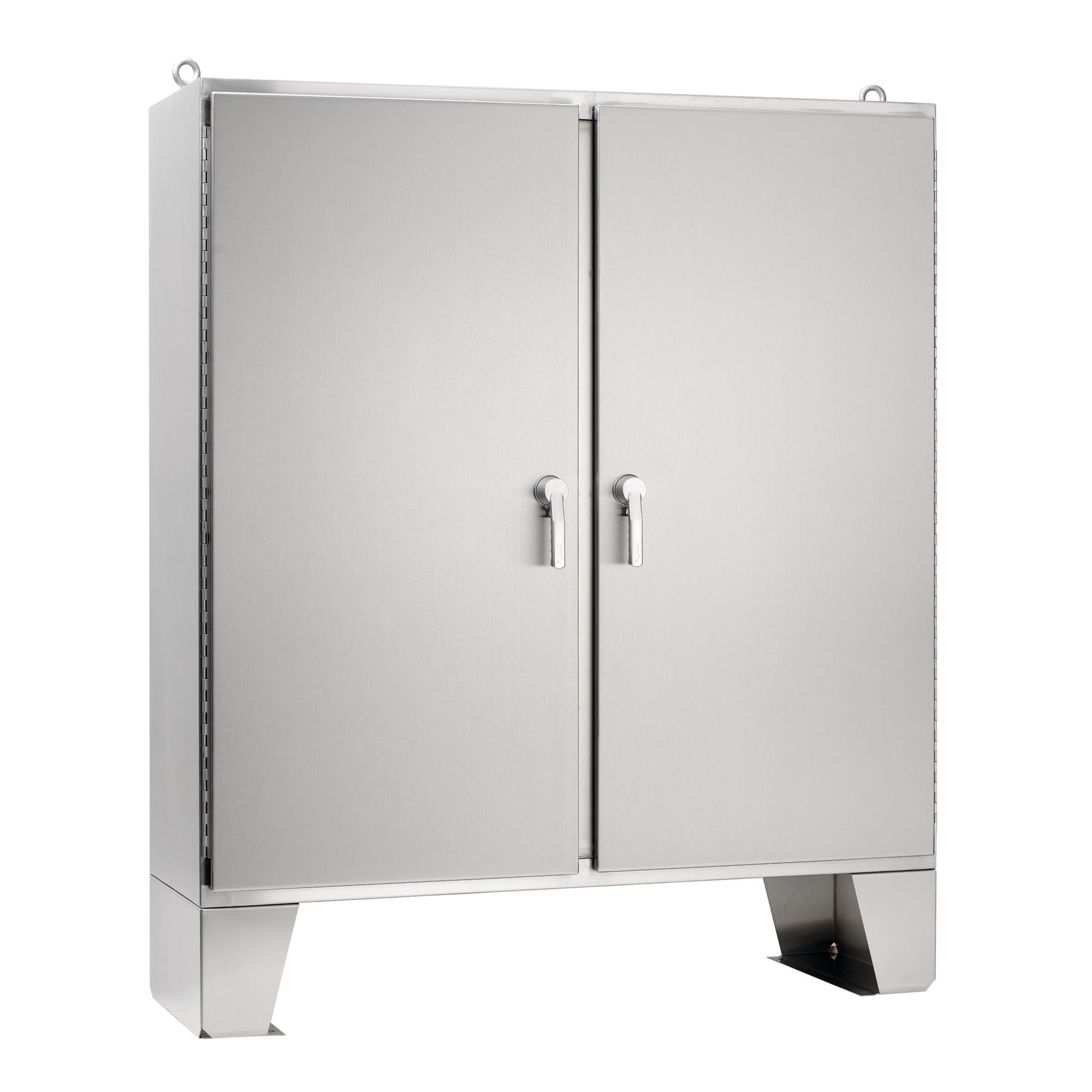
The Hoffman Enclosures A74H6012SS6LP3PT is a freestanding, two-door floor-mount enclosure constructed from Type 316 stainless steel. It features a #4 smooth brushed finish and measures 74.06 inches in height, 60.06 inches in width, and 12.06 inches in depth. The unit is rated NEMA Type 4X and includes continuous hinged doors secured with three-point latches. It complies with UL 508A and CUL standards, providing robust protection for industrial equipment in corrosive environments.
Verify the specific material grade (Type 316 vs 316L) against project specifications, as sources vary slightly. Confirm that the continuous hinge design aligns with spatial requirements for door swing clearance. Ensure the floor-mount configuration meets structural load expectations. Cross-reference UL 508A compliance documentation if required for regulatory audits. Validate dimensional tolerances against existing infrastructure layouts prior to installation.
Select this model when standard stainless steel grades are insufficient due to aggressive chemical exposure. The Type 316 construction offers enhanced durability compared to Type 304 alternatives. Consider the floor-mount footprint and door swing radius during facility planning. This unit is suitable for applications demanding high ingress protection without internal cooling systems. Evaluate the need for additional accessories such as data pockets or mounting rails based on specific equipment requirements.
This enclosure belongs to the nVent HOFFMAN line of industrial metal enclosures. It is part of a series designed for heavy-duty applications where environmental sealing and material integrity are critical. The product line emphasizes compliance with major safety standards and offers various sizes and configurations to accommodate diverse industrial control needs.
No direct public substitute part numbers are confirmed. Alternative models may require verification of dimensional compatibility and material grade equivalence.
 A74H6012SS6LP3PT

Understand tactile switches, PCB and keyboard differences, four-pin wiring, debounce, force, travel and replacement checks for reliable control inputs.
Read More
See when an inductor behaves linearly, how DC bias and saturation reduce inductance, and which current and temperature curves to check.
Read More
Understand how oscillators generate timing signals, how they differ from crystals, and which frequency, output and stability specs matter when choosing one.
Read More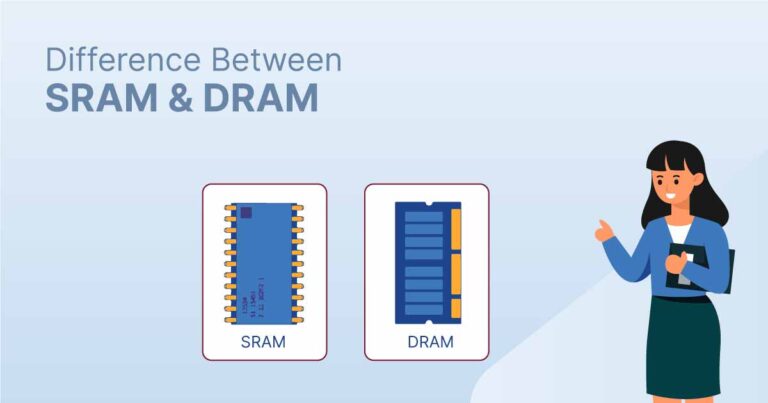
In an era dominated by AI accelerators with terabytes of HBM memory and consumer devices racing toward LPDDR5X bandwidth, it’s easy to wonder: why…
Read More
Learn how a diode conducts, how to identify anode and cathode, and when to choose rectifier, TVS, Zener or photodiode types for a circuit.
Read More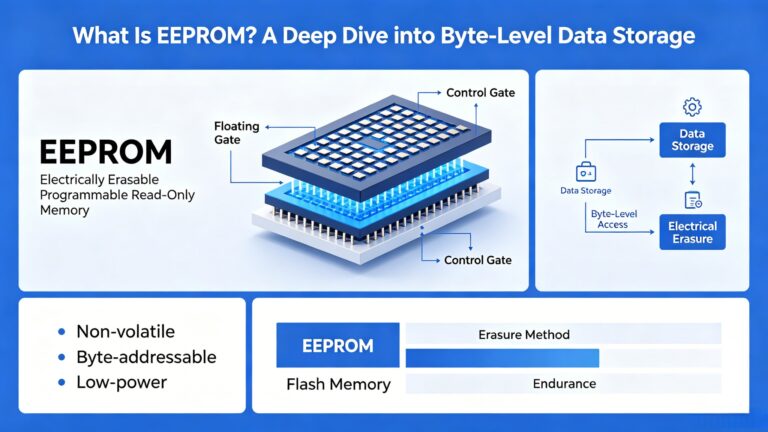
In the vast landscape of memory technology, EEPROM (Electrically Erasable Programmable Read-Only Memory) often plays the unsung hero. While NAND Flash grabs headlines for…
Read More
As 2025 draws to a close, the global semiconductor industry stands at a crossroads. Intertwined with escalating geopolitical tensions, supply chain disruptions, and groundbreaking…
Read More
CHICAGO, USA – May 27, 2026 – Global leading interconnect manufacturer Molex officially issued a global distributor price adjustment notice on May 27, confirming…
Read More
Learn how a pressure transducer converts pressure into voltage, current, or digital output, and compare pressure references and key selection specs.
Read More
Wilmington, Mass. & Milpitas, Calif. – May 19, 2026 – Analog Devices, Inc. (NASDAQ: ADI), a global leader in high-performance analog and mixed-signal semiconductors,…
Read More
As the backbone of modern technology, electronic components are undergoing revolutionary changes, driven by advancements in materials science, miniaturization, and smart manufacturing. From ultra-efficient…
Read More
In the world of electronics, memory components play a critical role in system performance—and DRAM (Dynamic Random-Access Memory) is one of the most widely…
Read More
The activity of extra discounts on wholesale prices is in full swing…
Please fill in your contact information and we will send you the latest wholesale price list.