 ChipApex | Global Electronic Components Supplier

SEARCH
Search Product
Search Post
— IC芯片 | 连接器 | 传感器 | 被动器件 —
Search productSearch post
— IC芯片 | 连接器 | 传感器 | 被动器件 —
Consult the customer manager about the wholesale price.
consultation hotline:86-132-6715-2157
email:[email protected]
Contact the product manager for consultation. One-stop consultation is available.
Do you want a lower wholesale price? Please send us your inquiry and we will reply immediately.
BQ7791508PW is listed in the Battery Management range at ChipApex. The manufacturer field lists Texas Instruments. Its product description is IC BATT PROT LI-ION 3-5C 24TSSOP. Review the specifications below when checking this part for your BOM.
The BQ7791508PW is a battery protection IC from Texas Instruments designed for 3-series to 5-series lithium-ion stacks. It operates within a supply voltage range of 3 V to 25 V and supports an output voltage of 16 V. The device features ultra-low quiescent current, with a typical operating supply current of 48 uA. It is housed in a TSSOP-24 package suitable for surface mount installation. The component functions as a primary protector with autonomous cell balancing capabilities and includes a HIBERNATE mode for extended standby life.
Verify the specific suffix 'PW' corresponds to the TSSOP-24 tube packaging configuration when ordering. Confirm that the application design aligns with the 3-to-5-series stackable architecture supported by this part number. Ensure compatibility with the required 16 V output specification for the target system.
Select this component for applications requiring integrated protection and balancing in a single primary protector IC. The choice is driven by the need for ultra-low power consumption and support for multiple series cells without external balancing circuitry. Consider the TSSOP-24 package constraints and the specific voltage requirements of the battery stack.
This part belongs to the BQ77915 family of battery management ICs. It serves as a specialized solution for protecting lithium-ion stacks while managing cell balance autonomously. The device integrates safety features necessary for portable electronics and industrial applications where space and power efficiency are critical design parameters.
Check for other variants within the BQ77915 family that may offer different pinouts or packaging options. Verify if alternative TI battery protectors provide similar stackable features but with different quiescent current specifications or balancing methods.
Explore related parts through Power Management (PMIC), Integrated Circuits (ICs), all product categories, ChipApex homepage.
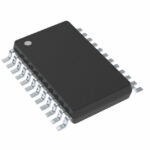 BQ7791508PW
BQ7791508PW is listed in the Battery Management range at ChipApex. The manufacturer field lists Texas Instruments. Its product description is IC BATT PROT LI-ION…
Read More
See when an inductor behaves linearly, how DC bias and saturation reduce inductance, and which current and temperature curves to check.
Read More
BQ7791508PW is listed in the Battery Management range at ChipApex. The manufacturer field lists Texas Instruments. Its product description is IC BATT PROT LI-ION…
Read More
Choose an AC to DC converter by input range, output demand, isolation, efficiency and thermal derating. Compare architectures and check installation needs.
Read More
BQ7791508PW is listed in the Battery Management range at ChipApex. The manufacturer field lists Texas Instruments. Its product description is IC BATT PROT LI-ION…
Read More
BQ7791508PW is listed in the Battery Management range at ChipApex. The manufacturer field lists Texas Instruments. Its product description is IC BATT PROT LI-ION…
Read More
BQ7791508PW is listed in the Battery Management range at ChipApex. The manufacturer field lists Texas Instruments. Its product description is IC BATT PROT LI-ION…
Read More
BQ7791508PW is listed in the Battery Management range at ChipApex. The manufacturer field lists Texas Instruments. Its product description is IC BATT PROT LI-ION…
Read More
BQ7791508PW is listed in the Battery Management range at ChipApex. The manufacturer field lists Texas Instruments. Its product description is IC BATT PROT LI-ION…
Read More
BQ7791508PW is listed in the Battery Management range at ChipApex. The manufacturer field lists Texas Instruments. Its product description is IC BATT PROT LI-ION…
Read More
BQ7791508PW is listed in the Battery Management range at ChipApex. The manufacturer field lists Texas Instruments. Its product description is IC BATT PROT LI-ION…
Read More
Learn why PTC resistance rises with temperature, how it differs from NTC, and which ratings matter for sensing and protection.
Read More
The activity of extra discounts on wholesale prices is in full swing…
Please fill in your contact information and we will send you the latest wholesale price list.





