ChipApex | Global Electronic Components Supplier

SEARCH
Search Product
Search Post
— IC芯片 | 连接器 | 传感器 | 被动器件 —
Search productSearch post
— IC芯片 | 连接器 | 传感器 | 被动器件 —
Consult the customer manager about the wholesale price.
consultation hotline:86-132-6715-2157
email:[email protected]
Contact the product manager for consultation. One-stop consultation is available.
Do you want a lower wholesale price? Please send us your inquiry and we will reply immediately.
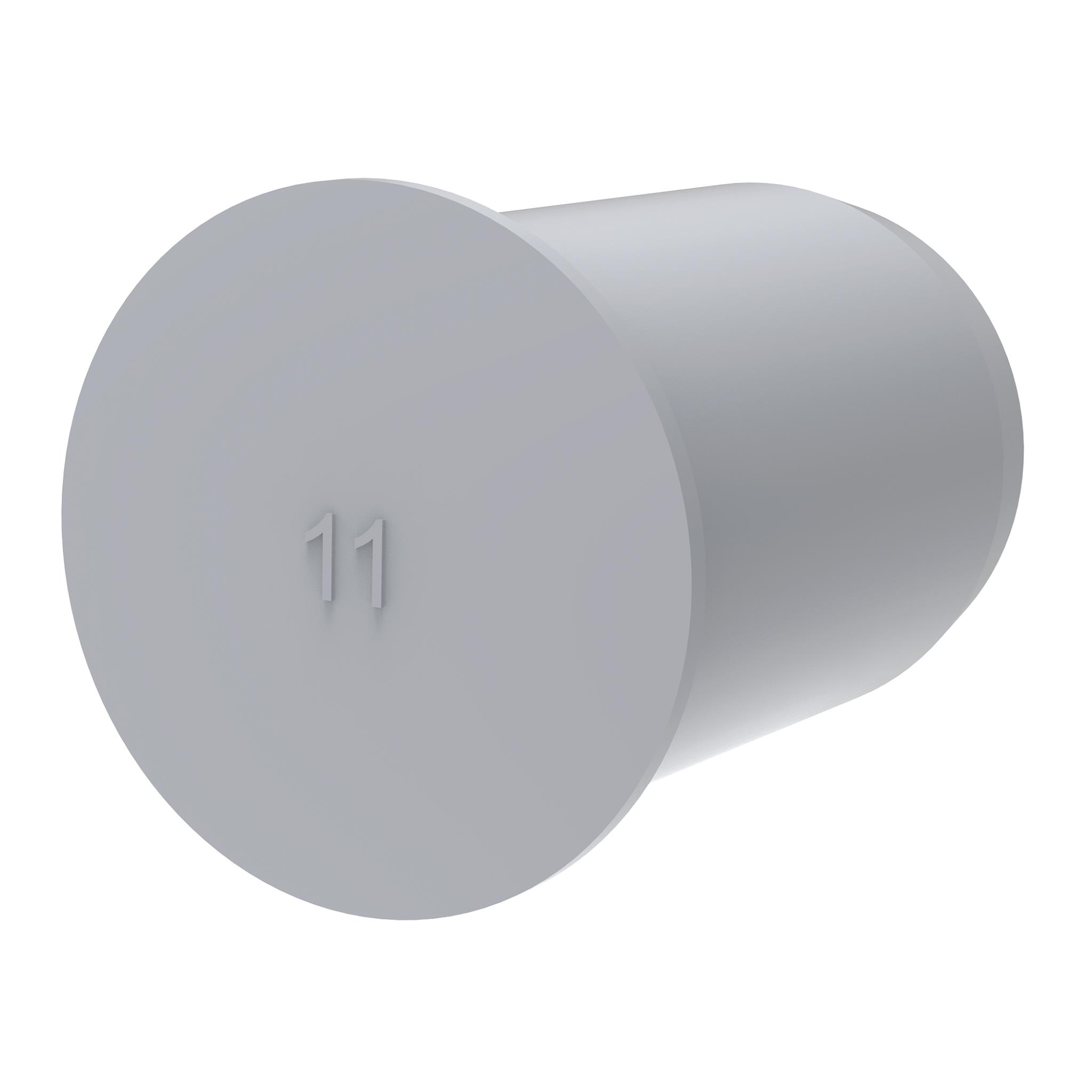
The nVent Hoffman CEAS14 is a sealing plug designed for use with CEP cable entries. It serves as a gland plate to close pierced or unused holes in enclosure panels. The component is constructed from polyamide material and features specific dimensions of 14 mm height, 14 mm width, and 18 mm depth. Its primary function is to provide environmental protection by preventing the ingress of spray water into the enclosure through unutilized entry points.
Verify that the part number matches the official nVent Hoffman designation CEAS14. Confirm compatibility with the specific CEP cable entry model in use. Ensure the polyamide material specification meets the required environmental conditions. Check dimensional requirements against the enclosure panel thickness and hole diameter. Validate that the sealing function addresses the specific IP rating needs for spray protection.
Select this component when sealing unused openings in CEP cable entries is required. Choose based on the need for spray ingress prevention in mild steel or stainless steel enclosures. Consider the polyamide construction for chemical resistance and durability. Ensure the 14mm x 14mm footprint aligns with the available knockout sizes. Verify application suitability for non-illuminated, screw-type termination environments.
This component belongs to the Hoffman Enclosures accessory line, specifically designed for IEC-rated enclosures. It complements the CEP cable entry system by providing a secure seal for unused ports. The product supports versatile solutions in electrical and data-telecom applications where door fittings are absent or additional sealing is necessary.
No public confirmed substitute part numbers are available for the CEAS14. Users must verify exact dimensional and material compatibility if considering alternative sealing plugs from other manufacturers. Direct replacement requires matching the polyamide composition and gland plate type.
 CEAS14

Select MOV varistors by continuous voltage, clamping behavior, surge waveform and repetition. Check thermal disconnection, fuse coordination and replacements.
Read More
In the vast landscape of memory technology, EEPROM (Electrically Erasable Programmable Read-Only Memory) often plays the unsung hero. While NAND Flash grabs headlines for…
Read More
Choose logic inverter ICs by thresholds, supply, output drive and delay. Compare standard and Schmitt-trigger inputs, power sequencing and replacement checks.
Read More
A perfect storm of surging demand and supply chain disruptions is roiling the global electronic components market, with advanced semiconductors and critical materials now…
Read More
Tokyo / Munich / Tessenderlo, December 24, 2025As the global semiconductor industry enters the first year of the 2nm process era, international electronic component…
Read More
Understand how a comparator switches at a voltage threshold, why hysteresis prevents chatter, and which output and input specs matter.
Read More
Understand voltage controlled oscillator tuning, phase noise and PLL operation. Check supply noise, output loading and requirements before selection.
Read More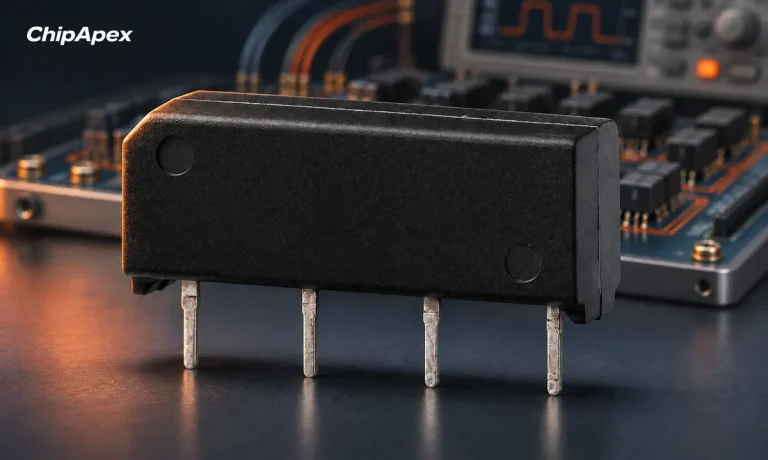
Choose a reed relay for signal switching. Understand hot and cold switching, leakage, contact resistance, isolation and measurement settling requirements.
Read More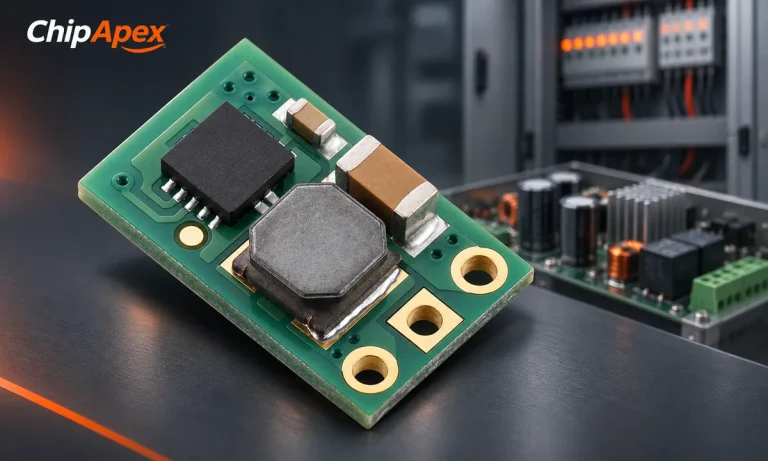
Select a DC-DC converter by input range, topology, isolation and temperature. Compare ripple, efficiency and load limits before choosing a component.
Read More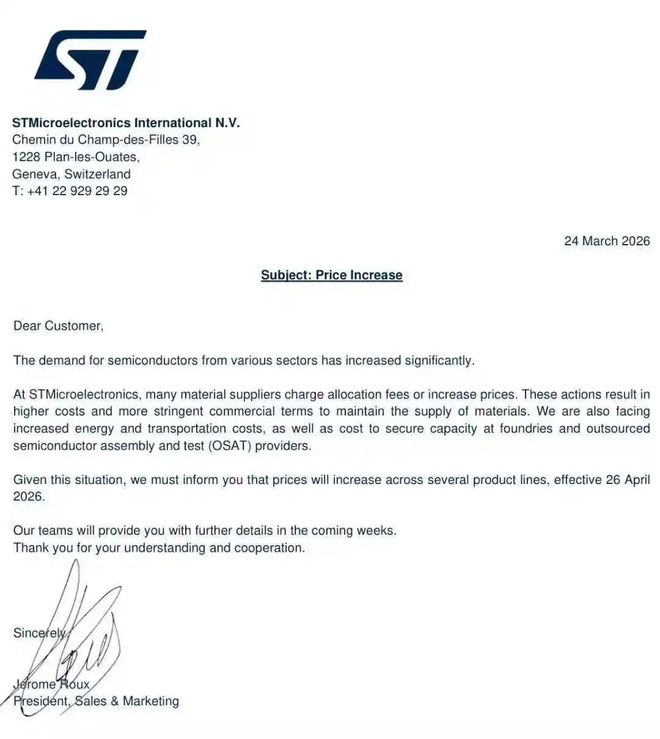
Geneva, Switzerland – March 25, 2026 – STMicroelectronics N.V. (NYSE: STM), a global semiconductor leader serving customers across the electronics applications spectrum, has announced…
Read More
[Shenzhen/Shanghai/Beijing, January 2025] — As global digital transformation accelerates, the electronic components industry has reached a critical inflection point in 2025. Emerging fields such…
Read More
Learn how rectifiers convert AC to DC, compare half-wave and bridge circuits, and select voltage, current, recovery and thermal ratings for your design.
Read More
The activity of extra discounts on wholesale prices is in full swing…
Please fill in your contact information and we will send you the latest wholesale price list.