ChipApex | Global Electronic Components Supplier

SEARCH
Search Product
Search Post
— IC芯片 | 连接器 | 传感器 | 被动器件 —
Search productSearch post
— IC芯片 | 连接器 | 传感器 | 被动器件 —
Consult the customer manager about the wholesale price.
consultation hotline:86-132-6715-2157
email:[email protected]
Contact the product manager for consultation. One-stop consultation is available.
Do you want a lower wholesale price? Please send us your inquiry and we will reply immediately.
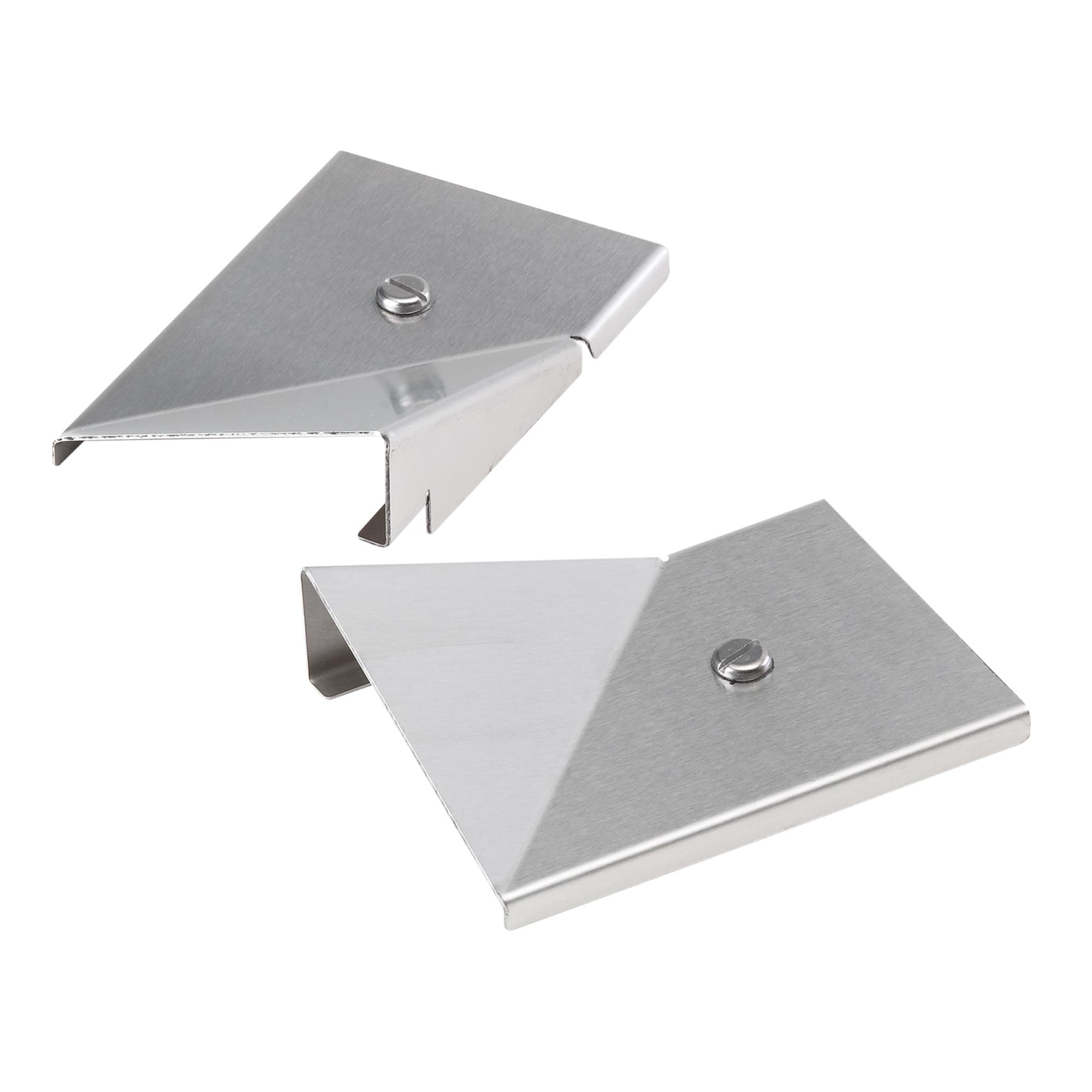
The CTS44TCRSS is a transition cover manufactured by nVent Hoffman, designed for use with the CLEAN TRAY series cable management systems. Constructed from Type 304 stainless steel, this component facilitates the transition between sloped and flat sections of cable trays. It features a right-hand orientation and is dimensioned at 4.00 x 4.00 inches (102 mm x 102 mm). The product is classified as an enclosure general accessory and raceway duct fitting, intended to maintain environmental integrity while allowing structural transitions in indoor industrial installations.
Verify that the required orientation matches the right-hand specification of the CTS44TCRSS. Confirm compatibility with the specific CLEAN TRAY series model in use. Ensure the application environment is suitable for indoor use, as the standard Type 1 rating may not suffice for harsh outdoor conditions without additional protection. Check for the corresponding left-hand variant if the installation geometry requires it.
Select the CTS44TCRSS when a right-hand transition is needed within a stainless steel cable tray system. Compare against the CTS44TCLSS if a left-hand orientation is required instead. Consider the material grade Type 304 for standard indoor environments. Ensure the 4x4 inch dimensions align with the existing tray infrastructure to maintain proper fit and function.
This part belongs to the nVent Hoffman enclosure accessories line, specifically categorized under raceway duct fittings and cable tray components. It serves as a specialized connector within the CLEAN TRAY ecosystem, allowing for complex routing paths by bridging different elevation changes. The product is distinct from full enclosures, serving purely as a functional transition element for wire management.
The CTS44TCLSS is the confirmed left-hand counterpart for this component. No other direct substitutes are documented in the provided data. Ensure the replacement maintains the same 4x4 inch footprint and Type 304 stainless steel construction to preserve system integrity.
 CTS44TCRSS
Choose LED drivers by current, string voltage, dimming and thermal limits. Understand constant-current operation and the checks needed for your load.
Read More
Choose an AC to DC converter by input range, output demand, isolation, efficiency and thermal derating. Compare architectures and check installation needs.
Read More
ChipApex – May 8, 2026 Texas Instruments (TI), the global leader in analog and embedded semiconductors, has officially notified customers of an upcoming company-wide…
Read More
Hsinchu, Taiwan – April 18, 2026 – United Microelectronics Corporation (UMC, NYSE: UMC), a leading global semiconductor foundry specializing in mature process technologies, has…
Read More
In the world of embedded electronics, getting a device to “think” is only half the battle. The other half is getting it to communicate…
Read More
Learn the relay definition, coil and contact operation, NO and NC forms, load ratings and suppression choices. Compare mechanical, reed and solid-state types.
Read More
Recently, a survey by the Electronic Components Industry Association (ECIA) revealed that the sales sentiment of global electronic components remained optimistic in the third…
Read More
Understand tactile switches, PCB and keyboard differences, four-pin wiring, debounce, force, travel and replacement checks for reliable control inputs.
Read More
Choose a rocker switch by AC/DC ratings, contact arrangement, illumination, panel fit and sealing. Get practical checks for engineering and component sourcing.
Read More
Learn what a battery BMS does, how protection differs from charging, and which pack specifications to check when sourcing BMS components through ChipApex.
Read More
The global memory market is entering an unprecedented supply-constrained phase as soaring demand from artificial intelligence (AI) infrastructure collides with strategic capacity reallocations by…
Read More
[Shenzhen/Shanghai/Beijing, January 2025] — As global digital transformation accelerates, the electronic components industry has reached a critical inflection point in 2025. Emerging fields such…
Read More
The activity of extra discounts on wholesale prices is in full swing…
Please fill in your contact information and we will send you the latest wholesale price list.