 ChipApex | Global Electronic Components Supplier

SEARCH
Search Product
Search Post
— IC芯片 | 连接器 | 传感器 | 被动器件 —
Search productSearch post
— IC芯片 | 连接器 | 传感器 | 被动器件 —
Consult the customer manager about the wholesale price.
consultation hotline:86-132-6715-2157
email:[email protected]
Contact the product manager for consultation. One-stop consultation is available.
Do you want a lower wholesale price? Please send us your inquiry and we will reply immediately.
DG442LEDY-GE3 is listed in the Analog Switches, Multiplexers, Demultiplexers range at ChipApex. The manufacturer field lists Vishay Siliconix. Its product description is IC SWITCH SPST-NOX4 26OHM 16SOIC. Review the specifications below when checking this part for your BOM.
The DG442LEDY-GE3 is a monolithic quad single-pole-single-throw (SPST) analog switch manufactured by Vishay Siliconix. It features a normally open configuration and operates on single supplies from 3 V to 16 V or dual supplies of ±3 V to ±8 V. The device provides low on-resistance with a typical value of 16 Ω and maximum of 35 Ω at room temperature, alongside fast switching speeds with a typical turn-on time of 18 ns. It exhibits low charge injection of less than 8 pC and minimal leakage current. Packaged in a 16-lead narrow body SOIC for surface-mount installation, it supports an operating temperature range of -40 °C to +85 °C.
Verify component authenticity through authorized distributors or direct manufacturer channels. Confirm RoHS compliance status and check for specific material categorization documentation if required for regulatory adherence. Ensure the package type matches the intended PCB footprint design specifications.
Select this part when a normally open state is required for the analog switches. Compare against the DG441LE series if a normally closed configuration is needed instead. Verify that the supply voltage requirements align with the specified 3 V to 16 V single or ±3 V to ±8 V dual supply ranges.
This component belongs to the DG441LE/DG442LE family of precision monolithic quad SPST CMOS analog switches. It shares core electrical characteristics with the DG441LE but differs in its default logic state, offering a normally open function compared to the normally closed DG441LE. Both are designed for low error switching applications.
DG441LEDY-GE3: Identical electrical specifications but features a normally closed configuration instead of normally open.
Explore related parts through Interface, Integrated Circuits (ICs), all product categories, ChipApex homepage.
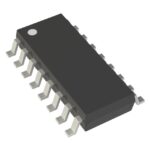 DG442LEDY-GE3

DG442LEDY-GE3 is listed in the Analog Switches, Multiplexers, Demultiplexers range at ChipApex. The manufacturer field lists Vishay Siliconix. Its product description is IC SWITCH…
Read More
DG442LEDY-GE3 is listed in the Analog Switches, Multiplexers, Demultiplexers range at ChipApex. The manufacturer field lists Vishay Siliconix. Its product description is IC SWITCH…
Read More
DG442LEDY-GE3 is listed in the Analog Switches, Multiplexers, Demultiplexers range at ChipApex. The manufacturer field lists Vishay Siliconix. Its product description is IC SWITCH…
Read More
Understand how oscillators generate timing signals, how they differ from crystals, and which frequency, output and stability specs matter when choosing one.
Read More
DG442LEDY-GE3 is listed in the Analog Switches, Multiplexers, Demultiplexers range at ChipApex. The manufacturer field lists Vishay Siliconix. Its product description is IC SWITCH…
Read More
DG442LEDY-GE3 is listed in the Analog Switches, Multiplexers, Demultiplexers range at ChipApex. The manufacturer field lists Vishay Siliconix. Its product description is IC SWITCH…
Read More
DG442LEDY-GE3 is listed in the Analog Switches, Multiplexers, Demultiplexers range at ChipApex. The manufacturer field lists Vishay Siliconix. Its product description is IC SWITCH…
Read More
Understand how a comparator switches at a voltage threshold, why hysteresis prevents chatter, and which output and input specs matter.
Read More
Compare thermistors, RTDs, thermocouples and temperature ICs. Learn how range, accuracy, response, interfaces and mounting affect component selection.
Read More
DG442LEDY-GE3 is listed in the Analog Switches, Multiplexers, Demultiplexers range at ChipApex. The manufacturer field lists Vishay Siliconix. Its product description is IC SWITCH…
Read More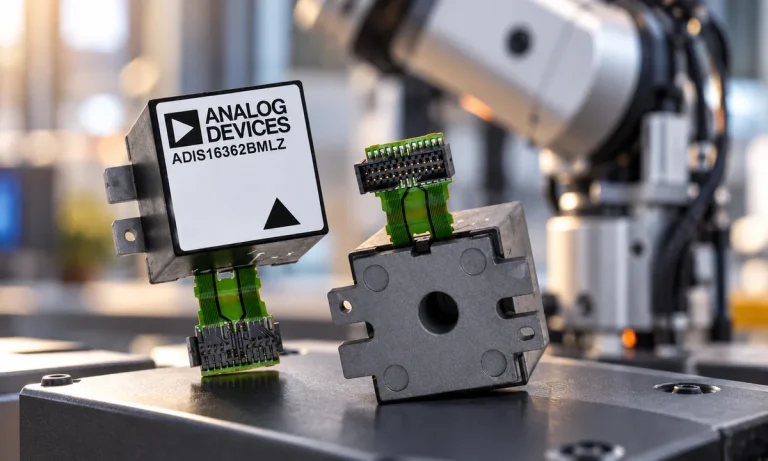
Learn what an IMU measures, how accelerometers and gyroscopes work together, why orientation estimates drift, and what to compare.
Read More
See when an inductor behaves linearly, how DC bias and saturation reduce inductance, and which current and temperature curves to check.
Read More
The activity of extra discounts on wholesale prices is in full swing…
Please fill in your contact information and we will send you the latest wholesale price list.





