ChipApex | Global Electronic Components Supplier

SEARCH
Search Product
Search Post
— IC芯片 | 连接器 | 传感器 | 被动器件 —
Search productSearch post
— IC芯片 | 连接器 | 传感器 | 被动器件 —
Consult the customer manager about the wholesale price.
consultation hotline:86-132-6715-2157
email:[email protected]
Contact the product manager for consultation. One-stop consultation is available.
Do you want a lower wholesale price? Please send us your inquiry and we will reply immediately.
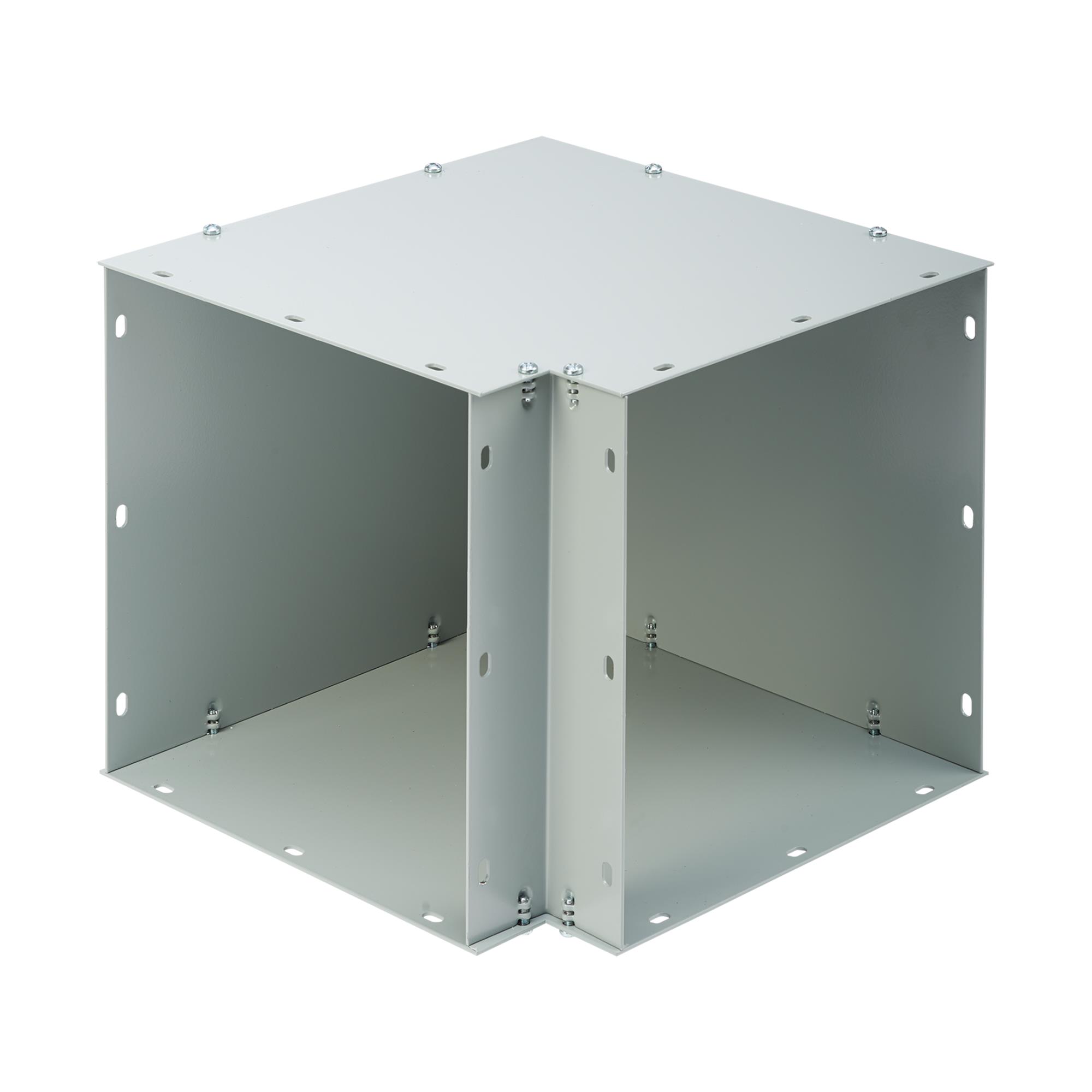
The nVent Hoffman F1212G90E is a 90-degree lay-in wireway elbow designed for indoor cable management. Constructed from mild steel with a gray painted finish, it features a NEMA Type 1 rating. The component measures 12 inches in height and width, with a length of 14 inches. It utilizes 14/16 gauge steel construction to ensure durability. All sides are removable, allowing for flexible installation orientation while maintaining the lay-in capability for easy wire insertion.
Verify that the required bend angle matches the 90-degree specification. Confirm the cross-sectional dimensions align with your existing 12x12 inch wireway system. Ensure the environment meets NEMA Type 1 indoor requirements. Check that the mild steel material and painted finish are suitable for the specific installation conditions.
Select this model when a directional change in cable routing is required within an indoor environment. The lay-in design facilitates maintenance and future additions without removing entire sections. Ensure compatibility with adjacent straight wireway segments of the same 12-inch profile. Consider the 14-inch length for adequate space during cable bending.
This component belongs to the Hoffman Lay-in Painted Wireway series, which provides standardized solutions for organizing electrical conductors. The F1212G90E specifically addresses the need for right-angle transitions in flat-cover wireway systems. It complements straight runs and other fittings to create complete cable management pathways.
Direct substitutes must match the 12x12 inch dimensions, 90-degree bend angle, and NEMA Type 1 rating. Verify that alternative elbows also feature removable sides for lay-in compatibility. Ensure material thickness and finish specifications align with existing system standards.
 F1212G90E

Choose an AC to DC converter by input range, output demand, isolation, efficiency and thermal derating. Compare architectures and check installation needs.
Read More
As 2025 draws to a close, the global semiconductor industry stands at a crossroads. Intertwined with escalating geopolitical tensions, supply chain disruptions, and groundbreaking…
Read More
Every audio power amplifier design starts with the same fundamental challenge: converting a low-voltage line-level signal into the high-current drive required by a reactive…
Read More
Over the past week, the global electronic components sector has witnessed dual transformations in policy and technology: Coupled with mounting pressure from a worsening…
Read More
Hsinchu, Taiwan – April 18, 2026 – United Microelectronics Corporation (UMC, NYSE: UMC), a leading global semiconductor foundry specializing in mature process technologies, has…
Read More
Learn how rectifiers convert AC to DC, compare half-wave and bridge circuits, and select voltage, current, recovery and thermal ratings for your design.
Read More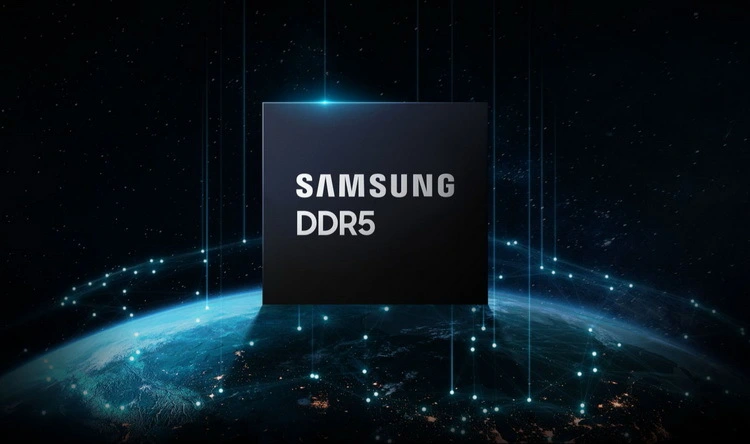
The global memory market is entering an unprecedented supply-constrained phase as soaring demand from artificial intelligence (AI) infrastructure collides with strategic capacity reallocations by…
Read More
Compare thermistors, RTDs, thermocouples and temperature ICs. Learn how range, accuracy, response, interfaces and mounting affect component selection.
Read More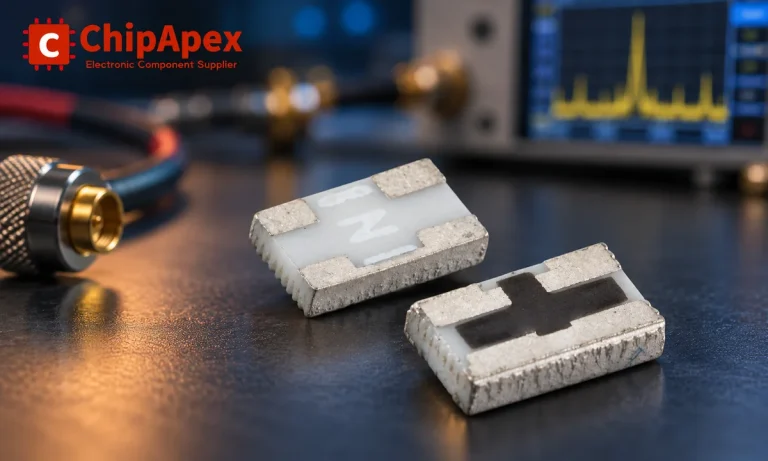
Understand RF attenuator dB values, fixed and programmable types, impedance, power limits and noise tradeoffs before choosing parts for an RF signal path.
Read More
Compare Pt100 and Pt1000 RTDs, two-, three- and four-wire connections, excitation and self-heating. Build an error budget from element to reported temperature.
Read More
Stay ahead with ChipApex Insights — technical deep dives, market trends, and sourcing tips for memory, microcontrollers, power management, and industrial-grade components. Trusted by…
Read More
In embedded design, the tug-of-war between cost and performance is constant. On one side, you have Microcontrollers (MCUs)—cheap, simple, and efficient. On the other,…
Read More
The activity of extra discounts on wholesale prices is in full swing…
Please fill in your contact information and we will send you the latest wholesale price list.