 ChipApex | Global Electronic Components Supplier

SEARCH
Search Product
Search Post
— IC芯片 | 连接器 | 传感器 | 被动器件 —
Search productSearch post
— IC芯片 | 连接器 | 传感器 | 被动器件 —
Consult the customer manager about the wholesale price.
consultation hotline:86-132-6715-2157
email:[email protected]
Contact the product manager for consultation. One-stop consultation is available.
Do you want a lower wholesale price? Please send us your inquiry and we will reply immediately.
FAN2519S25X is listed in the Voltage Regulators - Linear, Low Drop Out (LDO) Regulators range at ChipApex. The manufacturer field lists Fairchild Semiconductor. Its product description is IC REG LINEAR 2.5V 50MA SOT23-5. Review the specifications below when checking this part for your BOM.
The FAN2519S25X is a fixed positive low-dropout (LDO) linear voltage regulator manufactured by Fairchild Semiconductor. It provides a fixed output voltage of 2.5 V with a maximum output current of 50 mA. The device utilizes CMOS technology and features a maximum dropout voltage of 0.075 V at full load. It operates within an input voltage range up to 6.5 V and supports a junction temperature range from -40 °C to +125 °C. The component is housed in a SOT-23-5 surface-mount package.
Verify the specific manufacturer origin, as this part was produced by both Fairchild Semiconductor and onsemi following corporate restructuring. Confirm the exact suffix designation matches the required output voltage and package variant. Check for RoHS compliance status relative to the production date, as older batches may differ. Ensure the source document explicitly identifies the component as the FAN2519S25X variant to avoid confusion with other fixed voltage outputs in the series.
Select this component when a stable 2.5 V rail is required for low-current digital or analog circuits. The SOT-23-5 package is suitable for space-constrained designs. Consider the 50 mA current limit against peak load demands. Verify that the input voltage remains within the 6.5 V maximum rating during all operating conditions. Evaluate thermal performance based on the power dissipation calculated from the voltage drop across the regulator.
This component belongs to the FAN2519 family of micropower LDO regulators designed for cost-effective performance in portable applications. The family shares similar architectural features but varies in fixed output voltage options. The S25X suffix specifically denotes the 2.5 V output version packaged in tape and reel format for automated assembly processes.
Publicly confirmed substitute part numbers are not available in the provided documentation.
Explore related parts through Power Management (PMIC), Integrated Circuits (ICs), all product categories, ChipApex homepage.
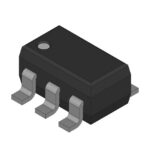 FAN2519S25X

See when an inductor behaves linearly, how DC bias and saturation reduce inductance, and which current and temperature curves to check.
Read More
Learn why PTC resistance rises with temperature, how it differs from NTC, and which ratings matter for sensing and protection.
Read More
Choose LED drivers by current, string voltage, dimming and thermal limits. Understand constant-current operation and the checks needed for your load.
Read More
FAN2519S25X is listed in the Voltage Regulators - Linear, Low Drop Out (LDO) Regulators range at ChipApex. The manufacturer field lists Fairchild Semiconductor. Its…
Read More
FAN2519S25X is listed in the Voltage Regulators - Linear, Low Drop Out (LDO) Regulators range at ChipApex. The manufacturer field lists Fairchild Semiconductor. Its…
Read More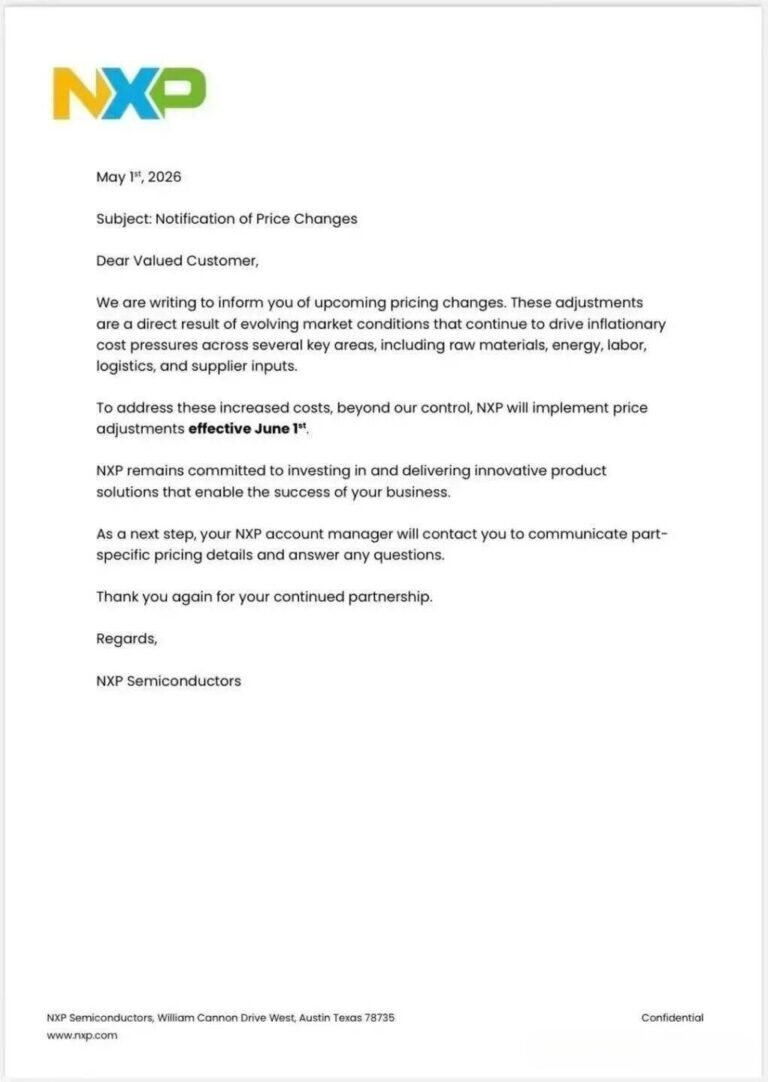
FAN2519S25X is listed in the Voltage Regulators - Linear, Low Drop Out (LDO) Regulators range at ChipApex. The manufacturer field lists Fairchild Semiconductor. Its…
Read More
Compare thermistors, RTDs, thermocouples and temperature ICs. Learn how range, accuracy, response, interfaces and mounting affect component selection.
Read More
Understand voltage controlled oscillator tuning, phase noise and PLL operation. Check supply noise, output loading and requirements before selection.
Read More
Choose an AC to DC converter by input range, output demand, isolation, efficiency and thermal derating. Compare architectures and check installation needs.
Read More
FAN2519S25X is listed in the Voltage Regulators - Linear, Low Drop Out (LDO) Regulators range at ChipApex. The manufacturer field lists Fairchild Semiconductor. Its…
Read More
Compare RC, crystal and MEMS oscillator circuits. Check ppm, jitter, load capacitance, startup margin and output compatibility before choosing a clock source.
Read More
See how a MEMS gyroscope measures angular rate, why its angle estimate drifts, and which range, noise, interface and temperature specs to compare.
Read More
The activity of extra discounts on wholesale prices is in full swing…
Please fill in your contact information and we will send you the latest wholesale price list.




