 ChipApex | Global Electronic Components Supplier

SEARCH
Search Product
Search Post
— IC芯片 | 连接器 | 传感器 | 被动器件 —
Search productSearch post
— IC芯片 | 连接器 | 传感器 | 被动器件 —
Consult the customer manager about the wholesale price.
consultation hotline:86-132-6715-2157
email:[email protected]
Contact the product manager for consultation. One-stop consultation is available.
Do you want a lower wholesale price? Please send us your inquiry and we will reply immediately.
LM2576HVT-ADJ/LB03 is listed in the Voltage Regulators - DC DC Switching Regulators range at ChipApex. The manufacturer field lists Texas Instruments. Its product description is IC REG BUCK ADJ 3A TO220-5. Review the specifications below when checking this part for your BOM.
The LM2576HVT-ADJ/LB03 is a high-voltage step-down switching regulator from Texas Instruments, part of the SIMPLE SWITCHER family. It operates with an input voltage range of 4V to 60V and delivers up to 3A output current. The device features an adjustable output voltage starting at 1.23V, fixed internal switching frequency of 52kHz, and integrated protection against overcurrent and thermal overload. Packaged in TO-220-5 for through-hole mounting, it supports operation across -40°C to 125°C junction temperature.
Verify the exact suffix LB03 against official TI documentation to confirm package type and tape/reel specifications. Ensure compatibility with existing PCB footprints for TO-220-5 packages. Cross-reference datasheet revisions to confirm pinout consistency with legacy designs.
Select this component when input voltages exceed 40V but remain below 60V. The adjustable output allows flexibility for various load requirements. Consider thermal management due to power dissipation at higher input-output differentials. Verify that the 52kHz frequency aligns with EMI constraints of the target application.
This part belongs to the LM2576HV series, designed for high-input voltage applications. It replaces older linear regulators in high-dissipation scenarios. The HVT designation indicates a through-hole package variant within the broader LM2576 family, offering robust performance in industrial environments.
LM2576HVT-ADJ/NOPB serves as a direct functional equivalent with RoHS compliance. Verify pinout compatibility before substitution. Other LM2576 variants may differ in package or current rating.
Explore related parts through Power Management (PMIC), Integrated Circuits (ICs), all product categories, ChipApex homepage.
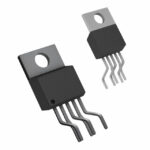 LM2576HVT-ADJ/LB03

Learn how a diode conducts, how to identify anode and cathode, and when to choose rectifier, TVS, Zener or photodiode types for a circuit.
Read More
LM2576HVT-ADJ/LB03 is listed in the Voltage Regulators - DC DC Switching Regulators range at ChipApex. The manufacturer field lists Texas Instruments. Its product description…
Read More
LM2576HVT-ADJ/LB03 is listed in the Voltage Regulators - DC DC Switching Regulators range at ChipApex. The manufacturer field lists Texas Instruments. Its product description…
Read More
LM2576HVT-ADJ/LB03 is listed in the Voltage Regulators - DC DC Switching Regulators range at ChipApex. The manufacturer field lists Texas Instruments. Its product description…
Read More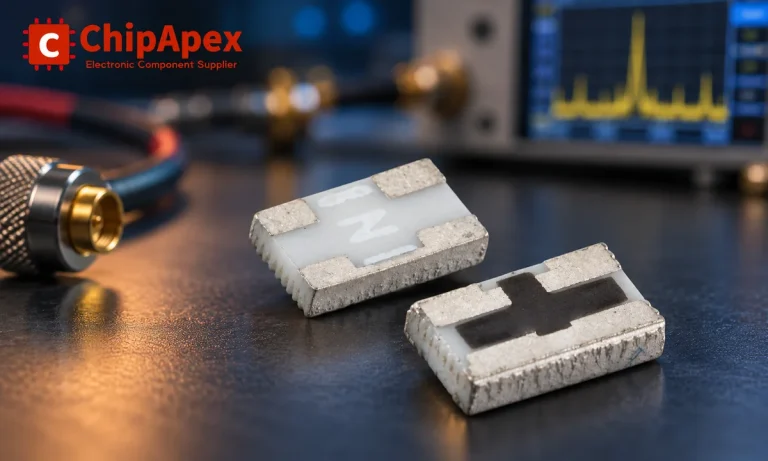
Understand RF attenuator dB values, fixed and programmable types, impedance, power limits and noise tradeoffs before choosing parts for an RF signal path.
Read More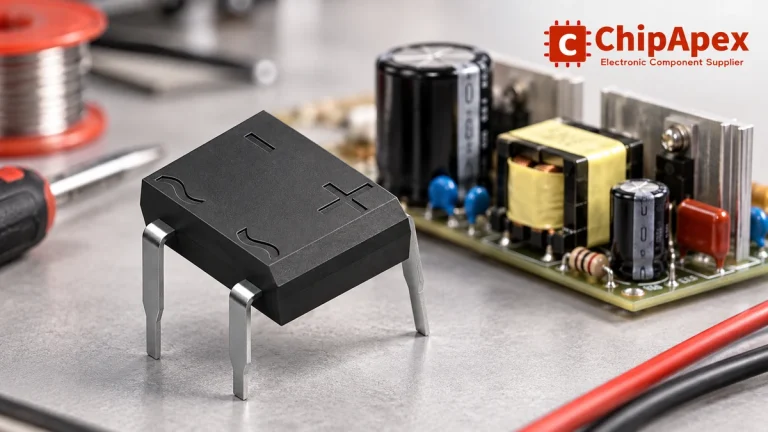
Select a bridge rectifier by reverse voltage, capacitor charging current, startup surge and cooling. Work through a stated DC voltage and ripple example.
Read More
LM2576HVT-ADJ/LB03 is listed in the Voltage Regulators - DC DC Switching Regulators range at ChipApex. The manufacturer field lists Texas Instruments. Its product description…
Read More
LM2576HVT-ADJ/LB03 is listed in the Voltage Regulators - DC DC Switching Regulators range at ChipApex. The manufacturer field lists Texas Instruments. Its product description…
Read More
LM2576HVT-ADJ/LB03 is listed in the Voltage Regulators - DC DC Switching Regulators range at ChipApex. The manufacturer field lists Texas Instruments. Its product description…
Read More
LM2576HVT-ADJ/LB03 is listed in the Voltage Regulators - DC DC Switching Regulators range at ChipApex. The manufacturer field lists Texas Instruments. Its product description…
Read MoreLM2576HVT-ADJ/LB03 is listed in the Voltage Regulators - DC DC Switching Regulators range at ChipApex. The manufacturer field lists Texas Instruments. Its product description…
Read More
Learn what an IMU measures, how accelerometers and gyroscopes work together, why orientation estimates drift, and what to compare.
Read More
The activity of extra discounts on wholesale prices is in full swing…
Please fill in your contact information and we will send you the latest wholesale price list.





